Kenya’s inflation gallops at fastest pace in 7 years

A fuel attendant serves a motorist at a fuelling station on Koinange Street in Nairobi County on August 14, 2025. 

Photo credit: File | Nation Media Group

Kenya’s inflation jumped by the quickest pace in seven years to 5.6 percent and is expected to accelerate further in the wake of costly fuel linked to the Iran war.

Data from the Kenya National Bureau of Statistics (KNBS) shows the inflation surged 1.2 percentage points in April from 4.4 percent the previous month.
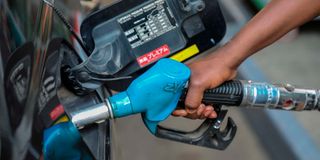
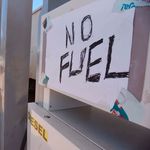
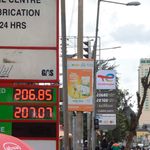
The jump is linked to the high cost of fuel following disruptions in the Middle East, which saw petrol and diesel prices rise by 10.8 percent and 17.9 percent, respectively.

Fuel prices have a significant impact on inflation in the East African nation, which relies heavily on diesel for transportation, power generation, and agriculture, while kerosene is used in many households for cooking and lighting.

The 1.2 percentage monthly rise is the largest since 2019 as Iran's war shakes up the economy, threatening jobs and earnings. It has surpassed the expectations of the Central Bank of Kenya (CBK), presenting a new headache for the apex bank, whose primary goal is maintaining low and stable inflation. CBK had forecast inflation to peak at 6.2 percent in July 2026 but had expected the cost of living measure to stand at 4.8 percent in April before rising to 5.7 in May and six percent in June.

“The price increase was primarily driven by a rise in prices of items in the food and non-alcoholic beverages category (8.8 percent), transport category (10 percent) and housing, water, electricity, gas and other fuel category (2.4 percent) over the one year,” KNBS indicated in its April release of the consumer prices index.

“These three divisions together account for over 57 percent of the total weight across the 13 major expenditure categories.”

This implies that the average household spends at least Sh57 out of every Sh100 in disposable income to meet food, transport and energy expenses such as lighting and cooking.

The average cost of a litre of petrol rose Sh198.67 from Sh179.35 in March, while diesel was up Sh30 to Sh197.81 despite the State offering a subsidy and halving value-added tax.

Public service vehicles and boda boda increased fares by 20 percent in April in response to the costly fuel, KNBS says.

The cost of refilling a 13-kilogramme gas cylinder equally rose by 7.3 percent to Sh3,361.56 from Sh3,132.34.

Electricity prices were spared from the first-round effects of the Iran shock as prices dipped by 0.6 percent in April ahead of the adjustment to the fuel cost charge, which is priced into power billing.

The price of key food commodities crept up in the month, including spinach, potatoes, cooking oil, sukuma wiki, sifted maize flour and beef.

“With the oil price shock and assuming that the conflict lasts for the next three months, the forecast overall inflation does go above the five percent mid-point, peaking in July 2026 after which it progressively declines,” CBK Governor Kamau Thugge said earlier in April.

Kenya targets an inflation rate of between 2.5 percent and 7.5 percent, a range which the government assesses as the most appropriate rate of change in prices to not only deliver economic growth but also contain the rise in consumer prices.

The country’s inflation rate has not surged past five percent, the sweet spot target for inflation by the government, since June 2024 while changes in consumer prices have been contained below 7.5 percent since August 2023.

The lower inflation regime saw salaries increase last year surpass inflation for the first time in six years, despite employers having offered workers a smaller pay increase.

Inflation-adjusted earnings, a barometer for measuring employees’ purchasing power  – also known as real wages – grew by two percent last year, marking the first time since 2020 that growth in workers’ earnings has surpassed the increase in consumer prices, says the Kenya National Bureau of Statistics (KNBS).

Workers’ real wages had fallen for five consecutive years, including a negative 0.3 percent in 2024.

CBK’s March 2026 market perception survey and the agriculture sector survey showed that inflation expectations will hold in the target range in the coming months but noted upward pressure due to higher energy prices.

The apex bank paused its rate easing cycle for the first time in nearly two years, adopting a wait-and-see approach to where consumer prices move next.

CBK deploys its interest rate setting mandate to counter inflationary pressures.

Kenya’s benchmark interest rate fell from 13 percent in August 2024 to 8.75 percent at present, supported largely by a slowdown in the change of consumer prices and a stable exchange rate.

The Kenyan shilling has continued to trade on a narrow range against the US dollar, changing hands at between Sh129 and Sh130, even after the onset of the US-Israeli war on Iran at the start of March.

Follow our WhatsApp channel for the latest business and markets updates.

PAYE Tax Calculator

Note: The results are not exact but very close to the actual.