Kenya issued over Sh5 billion-worth of export certificates this year during its own avocado export ban, moving into heavy non-compliance and triggering a nationwide shortage after early exports that risk damaging the country’s global fruit reputation.
Industry-wide sources claim that Kenya’s avocado sector, a top player in the global market, changed two years ago, following the introduction of a closed season to prevent exporting of unripe fruits. This coincided with the non-compliant authorisation of heavy exports by a handful of leading companies during the bans.
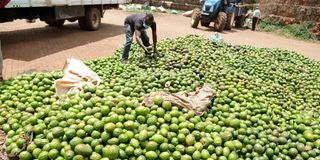
These companies have sourced country-wide during the last two bans, and risk hurting the reputation of Kenyan avocados in world markets as unripe, rubbery and bitter.
In a week-long investigation, FarmBizAfrica tracked down large consignments of banned exports to the Netherlands and onwards into European supermarket chains, where key quality controllers shared dated photos of the fruits, together with their branded packaging and photos showing the fruits’ low quality.
In Kenya, Waithaka Wagura, chief executive of the Avocado Exporters Association of Kenya (AEAK), confirmed: “Yes, it happened and there is an artificial shortage of avocado as the season opened.”
The season additionally reopened almost a month later than normal, on April 2, locking out hundreds of legitimate exporters as orchards were emptied ahead of and into ripening.
Mr Wagura said AEAK had raised formal complaints to the regulators.
Kenya’s Horticultural Crop Directorate (HCD), the licensing authority, refused to comment on the export certificates issued during the ban while stating that it would take action to pursue wrongdoers.
Kenya Plant Health Inspectorate Service's (Kephis) Managing Director, Theophilus Mutui and the AEAK, both explained that legitimate exemptions were only for second flushes of crops, usually only from Western Kenya and the North Rift. That region produces around 30 percent of the country’s avocados across its large first flush and the much smaller second flush.
The second flush from Western and North Rift is normally equivalent to around 3 percent of the country’s harvest. But, in 2026, during just 12 weeks of the closed season, the HCD approved Sh5.832bn of avocado exports weighing 33,205 tonnes, according to tentative figures released by KenTrade.
This volume is equivalent to as much as a third of Kenya’s normal annual avocado production across all regions and both flushes. The ban also requires farm inspections for the small number of permitted exports to confirm that their fruits are ripe.
FarmBizAfrica found more than seven sites where avocados were sourced and exported during the ban without farm inspections.
Despite the huge scale of the in-ban exporting, the HCD claimed to stakeholders that it had further extended the ban because the crop was late and limited due to late rains.
In reality, said one industry chief executive, naming three large avocado exporters, “these companies never stopped exporting, and they have left the country with scanty supplies of fit avocados.”
“People are just quiet about it, yet people’s jobs and the whole industry shall be heavily impacted because of the actions of a few exporters. Agriculture and Food Authority and other regulators are aware of the exports done, because they are the ones who issue the licence for the same. They are hurting everyone in the industry.”
The shortage is now affecting almost 300 exporters and the entire oil processing industry, which has recently benefited from major investments, including international ones.
“... there are not enough fruits to meet the demand and we are hoping that in July, during the second session of the avocado season, more fruits will have matured,” said Mr Wagura.
The reputation damage for Kenyan avocados on the off-season exports has also been severe, with industry sources claiming the same events last year triggered the later rerouting of Kenyan avocados via Morocco. Claimed avocado exports more than doubled from Morocco last year to 141,000 tonnes, according to FAO data, from less than 60,000 tonnes a year earlier.
This amounted to more than Morocco’s entire avocado production, lending support to the claim of rerouting of Kenyan avocados to shake off the brand damage from Kenyan-sourced fruit being unripe.
Kenya is Africa’s biggest avocado exporter and has been expanding its sales to Europe and is trying to push into the mass markets of India and China.
On March 31, HCD Director Christine Chesaro stated at a stakeholders meeting that a list of exporters who had been issued export certificates in breach of the ban had been compiled, and action to be taken.
But she declined to confirm any action when FarmBizAfrica contacted her on April 6.
The director said the HCD needed to ask the exporters who had breached to see if they would permit their names to be released.
Unlock a world of exclusive content today!Unlock a world of exclusive content today!