Time flies with great content! Renew in to keep enjoying all our premium content.
Prime
Food insecurity in Africa still looms large despite doubled production
he President of the Alliance for a Green Revolution in Africa (AGRA), Alice Ruhweza, delivers her remarks during the launch of AGRA's Impact, Learning and Foresight Report at the Radisson Blu Hotel, Nairobi Upper Hill on August 31, 2026.
Africa’s food production has roughly doubled in real terms over the past two decades, but the gains have failed to keep pace with the continent’s growing population and demand, leaving hunger and food insecurity stubbornly high.
A new review of Africa’s agrifood sector by the Alliance for a Green Revolution in Africa (AGRA) says farm output has doubled in real terms since 2005, while cereal yields have increased by about 40 percent and farmer incomes doubled.

Agriculture’s gross domestic product (GDP) growth also accelerated from about 2.3 percent to almost four percent, reflecting significant expansion of the sector.
But the gains have not translated into overall food security or prosperity for farmers on the continent, according to AGRA’s Impact, Learning and Foresight Report released in Nairobi on Monday.
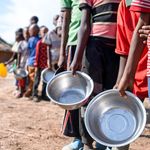
The report says hunger has increased across the continent even as agricultural production expanded, while Africa’s food import bill has continued to rise.
The challenge is particularly acute because much of the increase in production has come from putting more land under cultivation rather than sufficiently raising productivity.
“Twenty years of evidence show that Africa’s agrifood sector can move when the conditions are right. The task now is to turn that progress into income, resilience, dignity and opportunity for farmers,” said AGRA president Alice Ruhweza.
The study says cereal yields in sub-Saharan Africa remain behind those of other regions, while continued reliance on land expansion has implications for deforestation, biodiversity and human conflict.
Africa is also facing a rapidly changing food landscape. The continent’s population could double by 2050, while food demand is projected to grow by about 50 percent by 2035. Urbanisation and changing diets are expected to increase demand for processed and higher-value food.
At the same time, climate change is expected to increase pressure on agricultural systems. The report estimates that climate change could cut cereal yields by five to 10 percent by 2050, while about 65 percent of arable land is already degraded.
The continent has, nevertheless, built significant capacity to support a more productive food system, AGRA argues.
Local seed industries have expanded, with 20 national seed companies now operating across sub-Saharan Africa, compared with just 12 private African seed companies in the early 1990s. Fertiliser use has more than doubled per hectare, while networks of agro-dealers and extension providers have expanded.
Regional food markets have also grown. Intra-African agricultural trade increased from $5.4 billion (Sh699 billion) in 2003 to about $17 billion (Sh2.2 trillion) in 2023, with processed goods accounting for 46 percent of the trade.
Yet weaknesses remain beyond the farm gate. The report says small and medium-sized enterprises involved in aggregation, processing and distribution move about 65 percent of food consumed in Africa and account for 30 to 40 percent of value added in food chains, but farmers still struggle to access reliable markets and finance.
Among AGRA-supported programmes, extension and input supply reached more farmers than output markets and inclusive finance, highlighting the difficulty of converting higher production into higher and more reliable incomes.
The report identifies three interconnected “traps” holding back transformation: a productivity trap that limits reliable production, a value trap that prevents production from generating sufficient income and jobs, and a capability trap involving weak institutions, finance, data, coordination and accountability.
“The question for the next decade is not only what Africa can produce, but whether the systems around farmers allow them to prosper,” said former Ethiopian prime minister and AGRA board chair Hailemariam Dessalegn.
The review warns that Africa’s current trajectory will not deliver the Kampala Declaration and Comprehensive Africa Agriculture Development Programme targets for 2035.
It calls for greater integration of farming with markets, processing, finance, infrastructure, trade, climate resilience and job creation, arguing that agricultural transformation can no longer be left to agriculture actors alone.