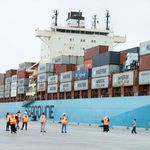
Kenya’s tea exporters are navigating a rapidly changing global trade map, with geopolitical tensions in key shipping corridors forcing costly detours and disrupting long-established supply chains.
Fresh industry data shows that while export volumes rose in 2025, the gains came against a backdrop of rising logistics costs and longer delivery timelines after shipping lines avoided the volatile Red Sea route.
The route is a critical artery for Kenya’s tea exports to Europe, the Middle East, and parts of Asia.
The strain on global logistics last year emerged as a key risk to the country’s top agricultural export by value, the Tea Board of Kenya (TBK) said, compounding pricing pressures and currency headwinds that slowed earnings growth despite higher volumes.
“Challenges that affected the markets include continued disruptions along the Red Sea shipping route occasioned by the attacks on vessels transiting through the corridor by the Yemen Terrorist group,” the sector regulator said in performance update for the 2025 crop season.
“This prompted several shipping lines to suspend their operations through the route, thus reverting to using the Southern tip of Africa as an alternative transshipment route, whose shipment duration is much longer and costs more.”
This shift has had direct cost implications for exporters because vessels rerouted around South Africa’s Cape of Good Hope face longer journeys compared to the traditional Red Sea-Suez Canal passage. The longer transit times have also introduced uncertainty in delivery schedules, affecting buyers and traders accustomed to predictable supply cycles.
The report shows that Kenya shipped 652.8 million kilogrammes of tea in 2025 compared with 594.5 million kilogrammes in the prior year, reflecting a 9.8 percent growth despite the impact of the disruptions.
However, the growth in volumes did not translate proportionately into earnings, which rose by a modest 2.87 percent to Sh186.91 billion, highlighting the growing cost pressures in the export chain.
The regulator attributes a share of the mismatch between tea export volumes and earnings to softer international prices and an unfavourable exchange rate.
“The average export unit price was slightly lower in dollar terms at USD 2.21 per Kg compared to USD 2.27 in 2024, while the mean exchange rate of the Kenyan shillings to the USD was lower at 129.50 compared to 134.82,” TBK says.
The report, however, notes that logistics disruptions are increasingly shaping trade outcomes by raising the cost of getting tea to market.
The geopolitical instability has also altered regional trade dynamics, particularly in Africa and the Middle East, where conflict has disrupted traditional trade routes. For instance, Sudan —once a key transit and consumption market — recorded a 13.56 percent drop in imports in 2025 compared to the previous year.
The report notes that “market access challenges occasioned by internal conflict in Sudan” contributed to the decline, underscoring how political instability is directly affecting Kenya’s export footprint.
The Red Sea crisis has amplified an existing structural risk of Kenya’s heavy reliance on specific corridors and markets, while increasing the cost of diversification.
The concentration of exports in a handful of markets continues to expose the sector to external shocks. The TBK report shows that the top 10 destinations accounted for 81.5 percent of Kenya’s tea exports in 2025, leaving the industry vulnerable to disruptions in key regions.
The industry has, nonetheless, shown resilience, with exporters expanding their global footprint to 100 destinations last year from 96 in 2024.
This expansion reflects market development efforts, including trade missions and business-to-business engagements aimed at cushioning the sector from geopolitical shocks.
“With a view to consolidate and expand the tea markets, the Tea Board of Kenya, in collaboration with the industry stakeholders, organized B2B meetings and participated in several trade missions and exhibitions in the UAE, Iran, China, USA, Germany, Algeria, and Hong Kong,” the regulator says in the report.