Regulators plan to open Kenya’s carbon exchange in early 2027

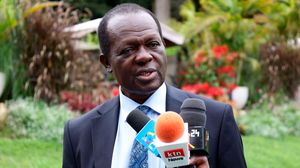
Nairobi International Financial Center Authority CEO Daniel Mainda makes his remarks during the Finance and Appropriations Bill 2026 Fiscal Dialogue held at KCA on May 28, 2026. 

Photo credit: Francis Nderitu | Nation Media Group

Within the next eight months, Kenyans will be able to buy and sell carbon credits in a centralised marketplace, should plans to establish a carbon exchange by the end of the first quarter of 2027 be realised.

A carbon credit is a certificate that allows an organisation to buy and sell the rights to emit greenhouse gases, meaning that entities that reduce their emissions can sell their credits to those that have exceeded their prescribed limits.

The Nairobi International Financial Centre (NIFC), the Capital Markets Authority (CMA) and the Nairobi Securities Exchange (NSE) have set the end of March 2027 as the deadline for setting up and commencing operations of the carbon exchange.

“Part of our mandate as the Nairobi International Financial Centre is to explore what the country can do to attract capital that targets new innovation such as the trading of carbon and virtual assets and we are seeing a lot of interest in this," NIFC chief executive Daniel Mainda, told the Business Daily.

"One of the incentives we are lining up is a carbon exchange and we are working together with the NSE and CMA in setting it up."

Plans to accelerate the establishment of a carbon exchange follow Kenya's setup of the National Carbon Registry in February 2026.

This platform enables the centralised authorisation, tracking and reporting of carbon credits generated across sectors of the economy.

Delivering the 2026/27 budget speech on June 11, National Treasury Cabinet Secretary John Mbadi revealed that the government was drafting carbon credit regulations to provide a legal framework for trading the certificates.

“Kenya is emerging as a key player in the carbon credit space leveraging its rich natural resources and strong base in renewable energy," Mr Mbadi told the National Assembly.

"To actualise formal trading of Carbon Credits, the government is preparing Carbon Credit Regulations, which will allow both public and private sector players to benefit through trading of credits generated in Kenya and the region."

One of the companies expected to benefit from the establishment of a locally domiciled carbon exchange is the energy-generating company KenGen, which has significant renewable energy resources through its geothermal plants.

“Currently, a total of 6,384,398 Certified Emissions Reductions are up for sale. Kengen continued to benefit from its overall reduction of carbon emissions from the atmosphere through participation in the Clean Development Mechanism," the company says in its latest annual report.

"Kengen has six projects registered under the Clean Development Mechanism with the potential reduction of emissions of 1.5 million tonnes of Carbon dioxide equivalent annually."

Agricultural firm Sasini Plc has also suggested that it could generate revenue through carbon credits as it works to green its energy supply using solar and biomass technology.

“Sasini can generate revenue through carbon credits by already reduced emissions via solar power and biomass utilisation as well as participation in Carbon Offset Programmes to attract sustainability focused buyers and investors," the company stated in its 2024 sustainability report.

By setting up its own carbon exchange, Kenya aims to follow Egypt in establishing a local marketplace for trading carbon credits.

As of June 30, 2026, the Egyptian Carbon Exchange had registered 139,989 issued carbon credits, with each unit representing one tonne of carbon dioxide or the equivalent of other greenhouse gases verified for trading.

PAYE Tax Calculator

Note: The results are not exact but very close to the actual.