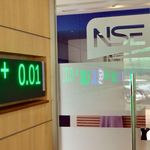
Dollar investors in blue chip stocks at the Nairobi Securities Exchange (NSE) earned a return of 18.8 percent in the first half of the year, nearly matching local currency returns as a stable shilling protected their portfolios from currency losses.
Data from the Morgan Stanley Capital International (MSCI) emerging and frontier market indices shows that the NSE dollar return accelerated in the second quarter of the year after share prices of Safaricom and large banks rose by double-digit margins of between 10 and 88 percent.

The MSCI tracks the performance of selected large and medium sized companies in 10 African frontier and emerging markets, as part of its global series of indices that are closely watched by foreign investors.
In quarter one, the NSE’s index had gone up by 0.9 percent, following a dip in share prices in March amid a selloff caused by the jitters over the US-Israel war on Iran.
The conflict hit financial markets hard, triggering an equities sell-off as investors turned to holding dollars as a hedge, fearful of the negative impact of higher inflation due to elevated fuel and food prices.
In shilling terms, the overall half-year return of the NSE —as measured by market capitalisation—was up 27.8 percent, or Sh817.2 billion, to reach a record high of Sh3.76 trillion as at June 30.
However, this was boosted by the listing of Kenya Pipeline Company (KPC) on March 11 and Family Bank Limited on June 23, together adding Sh212.16 billion in new wealth to the market.
Excluding the new listings, the NSE would have ended the half year period with a gain of 20.5 percent or Sh605 billion, which would closely match the dollar returns for the firms tracked by the MSCI.
Kenya’s NSE is represented by 17 companies on the MSCI frontier and small caps indices that are selected based on a number of metrics, including liquidity and financial stability, giving them the exposure to the foreign investors in what helps boost their price discovery.
Safaricom, Equity Group, East African Breweries Plc (EABL), KCB Group, Co-operative Bank of Kenya and Standard Chartered Bank Kenya are listed on the MSCI frontier markets index, as at the most recent review of May 2026.
BAT Kenya, KenGen, Kenya Re, Kenya Power, DTB Group, Carbacid Investments, Bamburi Cement, Jubilee Holdings, CIC Insurance Group, Centum Investment Company and HFCB Group are on the MSCI frontier markets small cap index.
Other countries included on the frontier markets indices are Zimbabwe, Tunisia, Morocco, Nigeria, Senegal, Mauritius and Côte d'Ivoire.
South Africa, which has the largest and most liquid stock market in Africa, and Egypt, are classified as emerging markets by the MSCI.
In the half year period, Nigeria and Zimbabwe had the top performing markets on the continent with index gains of 56.1 percent and 48 percent in dollar terms. They were boosted by price gains on banking and commodities stocks respectively, and stronger currencies that handed foreigners an exchange gain on their portfolios.
Tunisia, South Africa and Côte d'Ivoire also outperformed the NSE with respective gains of 42.3 percent, 23.5 percent and 21.3 percent.
Meanwhile, Senegal trailed with a gain of 6.2 percent, as Egypt, Morocco and Mauritius recorded negative returns of 12.7 percent, 7.1 percent and 3.5 percent on weakening currencies.
An appreciating local currency gives foreign investors an exchange gain when valuing their returns, given that they get more dollars upon conversion when exiting compared to their entry cost. In case of a depreciating local currency, they would get fewer dollars for repatriation.
This exchange rate is therefore a key consideration for foreign investors, given that it can either boost or diminish their true returns when compared to local currency returns.