The one thing that I have always appreciated about the Despicable Me and Minions is that creators of these films know exactly what they are cooking and who they are cooking for. From the deliberate choice of the colour palette to the distinct character design, the production teams are fully aware that these films are primarily meant for young audiences.
Yet, they consistently find ways to sprinkle in jokes that grown-ups will catch, all while keeping the overall tone as silly as possible.
You have never heard of the Minions and are wondering what I am on about. The Minions are small, yellow, deceptively cute creatures characterised by their distinctive gibberish language (Minionese), childlike personalities and unwavering devotion to villainy and bananas. Their cinematic appearance began with their introduction as sidekicks in Despicable Me (2010), where they served the aspiring supervillain Gru. They continued this service in the sequels Despicable Me 2 (2013), Despicable Me 3 (2017), and Despicable Me 4 (2024). Their rising popularity eventually led to their standalone origin franchise, beginning with Minions (2015), which explored their prehistoric origins and historical search for evil masters. This was followed by the prequel Minions: The Rise of Gru (2022), which depicted their first encounter with a young Gru.
Throughout this entire series, they have remained defined by their innate, historical urge to serve the most despicable bosses. With that in mind, the most impressive thing here is that the creators have never strayed away from what makes these movies awesome: silliness. That foundational understanding of their identity and their audience remains unbroken, and because of that, it was inevitable that we would get more Minion movies.
'Minions & Monsters'
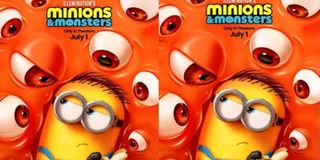
Minions & Monsters is a 2026 American animated comedy film directed by Pierre Coffin and written by Coffin alongside Brian Lynch. Produced by Illumination on a substantial budget of $85 million, it stands as the third instalment in the “Minions” prequel series and the seventh instalment overall in the broader “Despicable Me” franchise. The film stars Pierre Coffin voicing the Minions, alongside an ensemble cast including Trey Parker, Allison Janney, Christoph Waltz, Jesse Eisenberg, Jeff Bridges, Zoey Deutch, Bobby Moynihan and Phil LaMarr.
Taking place in 1927, exactly 41 years before the events of the 2015 Minions film, the plot follows the Minions as they land in Old Hollywood with the aim of making movies.
From a technical perspective, Illumination and the production team did an expectedly great job with this. The colours are bright and vibrant, combined with flawless animation and exceptionally good sound design – the sort of technical element average cinema-goers will overlook. I must emphasise the animation is incredibly fluid and visually gorgeous. Even when the story ventures into its theoretically scary parts, the animators find a clever way of making those moments visually appealing and non-threatening to a younger audience.
A film class in disguise
The big surprise with this movie is how it relates to cinema history. If you have ever been to film school, or if you are a film student who has sat through lectures covering the history of early cinema, this movie will be a pleasant experience. Because it follows the Minions during the dawn of the golden age of cinema, when the industry was rapidly evolving, their journey in Hollywood to make movies becomes an interesting examination of the film business’s historical nods. That threw me off because Minion movies are meant to be slapstick silliness.
If you understand the silent era and the monumental technological transition into the “talkies,” there is a good amount of detail to appreciate here. The movie is littered with clever nods and historical details about early cinema. Because of this unique angle, the movie serves a fantastic secondary purpose: it is the kind of film you can weaponise as an educational tool. If you have a child or a younger sibling who is showing a budding interest in filmmaking, but they find it incredibly hard to sit through black-and-white silent classics to understand how early movies were structured, Minions & Monsters might be an interesting alternative gateway because it acts as a vibrant, accessible introduction to that era. Though I caught glimpses of the Hollywood theme in the marketing trailers, I never expected the filmmakers to commit to that level of historical accuracy and intricate detail.
A structured Minions film?
Another major surprise is the narrative structure. With a typical Minions movie, I usually know exactly what to expect. I know the general direction the story will take, and I know it will ultimately lean on silliness. While that is still present, the filmmakers spent the entire first half of this movie carefully setting up a legitimate story.
Instead of just using the characters as vehicles for slapstick gags, they give us characters with clear ambitions and dreams. The narrative arc follows traditional, satisfying storytelling beats.
You experience high points where everything goes right for the protagonists, followed by genuine low points where their Hollywood dreams are challenged. The film captures the chaotic concept of fame and the fickle nature of becoming a Hollywood star remarkably well.
It portrays that classic entertainment trajectory where you experience the highest of highs, only to drop into devastating lows where you must dust yourself off and discover a completely new way to gain back your creative spark and trying to find the way back to the top.
Because of this narrative approach, these are characters you can actually follow and get attached to throughout the runtime. This is particularly true for creative people or anyone who has ever harboured a big dream. There is a surprisingly strong thematic focus on the artistic process and the joy of creating.
Balance
These mature, film-literate themes raise an obvious question for parents: does the movie still appeal to a young audience? The answer is yes. As the movie progresses, especially once the actual monsters are introduced, the film lets loose and goes back to its core identity.
The filmmakers strike a balance between the classic Minions we recognise from the older films and the version of the characters presented in this new era.
The world presented here is more expansive, with interesting side characters. Several characters are written with depth. At face value, they may seem primed to flip and become traditional antagonists, but they remain strangely positive and supportive influences on the story.
The film introduces executives who will feel instantly recognisable to anyone who has dealt with corporate higher-ups. The corporate lingo and bureaucratic approach to problem-solving are hilariously accurate and make the world in this film recognisable.
“Minions & Monsters” is a good film. As much as I was looking forward to seeing what Illumination would do with a 1920s setting, the final product exceeded my expectations, and I can confidently say that this is the best Minion movie to date.