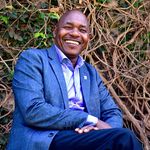
All roads led to teaching, even the ones Prof Jack Mwimali took to escape it. The secretary and CEO of the Council of Legal Education is the finest product of teachers, the best student of his mother and father. Family genes are hard to shake off, he has learned.
He was a naughty boy growing up, breaking his hand two or three times in rugby, football and WrestleMania. He had hoped the gene had missed his children, skipped a generation, but woe unto him. “In fact,” he says, “in many cases, when I am mad and want to discipline my children, I see my younger self in them.” He is a funny guy, that Mwimali.
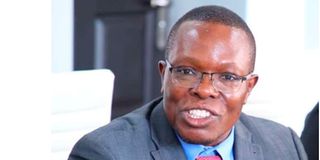
But he is also a bodybuilder, something he has been doing since 1998. A strongman, you would be forgiven for thinking he comes at the world with the ‘full force of the law’. Forgiven, but wrong. Because underneath that giant patina is a reticent recluse, a man who prefers to do his own laundry. Not a revolutionary act, but given the circumstances, perhaps a revelatory one: everything has to be the best in class.
It is often said that professors and academics are quite uptight. Are you uptight, Prof?
Haha! Perhaps. I may not be the best judge of my own character. But I believe I’m amiable and a good listener. That’s probably what drew me to academia. To teach and impart knowledge, you also need feedback from the people you’re interacting with; otherwise, you’re just speaking to yourself.
Tell me something cool about yourself.
I’m a bodybuilder. I’ve been bodybuilding since 1998.
Let’s talk about your house of pain. What led you to bodybuilding?
Two reasons. First, I was asthmatic and struggled with colds and certain allergens, so I went to the gym to develop my chest and improve my breathing. I also used to be a very rough boy when I was young. I broke my arm about four times, and it got very weak. I went to the gym to try to strengthen that right arm.
What’s something most people don’t know about bodybuilding?
It requires a lot of discipline. At first, there’s a lot of pain as your muscles adapt. But after a while, you feel you can’t do without it. In fact, if you don’t exercise, you feel lethargic and off the whole day. It’s almost addictive.
Do you have a memorable bodybuilding experience from your younger years?
Not particularly. But I remember when I was in Sweden, I went to the gym at the University of Lund. Some renowned Nordic strongmen trained there. I would look at them and the level of intensity with which they were training, which was quite interesting. I resolved to try doing a bit of what they were doing. As much as I could not lift as heavily as they did, I was quite competitive. I surprised myself.
What’s the hardest part about being a bodybuilder?
When you wake up, and there’s that lethargic feeling. Yet you know that if you do not exercise for the next four or five days, by the time you go back, you’ll get those aches. You have to push yourself. But in most cases, once you have started, you pick up. Even though you may have felt that you didn’t want to go, the moment you’re there, it all flows.
How has your exercise regimen changed you?
It has helped my concentration. Leadership and research require a lot of intensity, and working out relieves pressure and improves sleep. It gives you a good night’s sleep so that by the time you wake up, you feel refreshed.
Secondly, just as long and drawn-out research requires discipline, so does bodybuilding. You have to be disciplined in how you approach your training schedule.
Speaking of, Prof, what’s your guilty pleasure?
I have a sweet tooth [chuckles]. I eat a lot of sweets. In fact, if you get to a place where there are sweets, people will be surprised because I take a lot of them. I literally chew on them.
There was a time I used to go to the supermarket and buy a packet, and within a few days, they’d be finished, so I deliberately stopped buying them. But at meetings, if there are sweets, I’m usually the one taking them [chuckles].
What do sweets do for you? Did you have them a lot in childhood or not at all?
I’m not sure. Maybe it’s because I didn’t have many sweets growing up. I was raised in a very remote rural area in Trans Nzoia, near Saiwa Swamp, where we walked barefoot for about five kilometres. But we never felt any different from other students. We never felt that we were being treated badly; it was life, and we lived it fully, eating maize stems as sugarcane.
But many childhood games had disciplinary consequences. If you made a wire car, people assumed you had cut a fence to get the wire, and you’d get beaten. I guess that is what we derive pleasure from – that prohibited fruit made it even sweeter.
What do you miss about your younger self?
Haha! I was very strong-headed. In fact, I often see my younger self in Gen Zs. I was very argumentative, and I held very strong positions. Grown-up me is more pragmatic. I have to listen to and take the views of others.
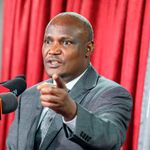
Prof Jack Mwimali, the secretary and CEO of the Council of Legal Education.
Photo credit: Pool
Is that why you gravitated to bodybuilding?
Maybe. I would have played rugby. I once broke my arm when I was playing as a football goalkeeper. When I caught the ball, it went with my arm. There was a time I was jumping a hurdle and landed on my arm and broke it. The third time was while wrestling. I was a naughty boy.
Have any of those traits been passed on to your children?
Oh, a lot of them. In fact, sometimes when I want to discipline them, I remember my younger self. Once, I was marking exam papers and warned my son not to touch them. Of course, the warning excited him, and he doodled on one of the papers. I was furious, but when I looked at his face, I saw myself. I just told him not to do it again [chuckles].
My daughter once abandoned her bicycle and insisted on riding her brother’s, which was bigger. I warned her several times. She hit a tree and got injured. After the hospital visit, she still went back on the bicycle. That was me back in the day [chuckles].
What’s an aspect of fatherhood that surprised you the most?
How humane it makes you. As a single person, you tend to think in terms of personal benefit. As a parent, you sacrifice and put your children first; you can give them everything that you have. As a hard-headed person, I never thought I could make sacrifices, especially for those tiny little people.
What shortcomings from your father are you correcting with your own children?
It’s not a shortcoming, but my dad was a teacher from 1956 to 1981, when he became an administrative chief. He was a disciplinarian par excellence, very firm and sometimes harsh. We thought he was unreasonable, but later realised he knew what he was doing, even though he sometimes went too far.
I have my own ways of dealing with my young ones, but not to the extremities of my dad or my mum, who was also a teacher from 1963 to 1998.
But the teaching gene refused to skip you?
In fact, at one time, I thought I would not want to be a teacher. I did everything not to be a teacher. By the time I turned 40, I looked back at what I had achieved in life. I had surpassed them in academia.
But my dad had 14 of us, and by the time he was 40, most of us were schooled. I was surprised at how he had achieved that with a shoestring budget. Yet I, who earn much more than he did, was not able to do half of what he did.
How has that shaped your relationship with money?
I’m very poor at spending on myself. I’m frugal because I saw how my parents struggled and sacrificed. I can go to a big club and just have a good time by myself. But that childhood feeling that it is a waste of money persists.
What’s your worst money habit?
I behave like a woman when it comes to shoes and bags. I have many shoes and bags. But my shoes are not high-end. Having grown up in a humble background, I buy mitumba shoes, and I find them much more comfortable and fitting than the ones I buy at a shop. In many cases, while at the garage to repair my car, a miller or vendor will come, and I’ll buy shoes from them.
What lie has success disabused you of?
That success takes you out of the village. I still acknowledge those humble beginnings, and it helps me be more empathetic. I wasn’t always the sharpest student in class, but somehow doors would open for me.
I would get scholarships and chances to do certain things that those who were much better than I could not access. That has taught me humility. I trust that these opportunities are provided to us by God, and we should be responsible, not just rake in the benefits.
What is a contrarian view, belief or habit that you hold that most people may not agree with?
If you had asked me 10 years ago, I would have had an answer. Now, I’m very centrist. I believe in pragmatism and listening to opposing views. In fact, I feel let down if you have a contrary view and you don’t raise it for whatever reason.
What do you still need to unlearn to become a better version of yourself?
One of the worst things about me is that I’m very persistent. If I take a course, I tend to pursue it to the bitter end. You make a decision, you stick with it, knocking on the same wall even if it’s not coming down. I have to unlearn that.
What are you looking forward to doing most this weekend?
I love my own company. I have a building in a very remote area out of town. That’s where my house is. I love escaping the hustle and bustle of town and being in that home, doing stuff around the house, cleaning.
By the way, I still wash my clothes, and every time someone washes for me, I feel it is not as clean as I would have wanted. So I do the washing myself.
By hand?
I have a machine, but I still wash by hand somehow. Because I feel the machine doesn’t wash properly. It still leaves stains on the collar and all that. I guess it’s just a way of having personal time with myself. Because as I wash, I think. I’m not very good at singing, but since to an extent I am introverted, I can sing for myself without any care in the world when I am washing up [chuckles].