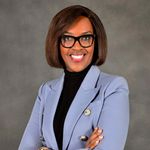
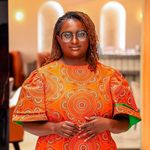
Margaret Wawuda Mliwa can tell you all about the shape of loss. Four years into her marriage, her husband died. As a child, she had to contend with an ailing mother who’d disappear from home for long stretches due to mental illness. Piece by piece, she’d disappear; mother and daughter passing each other as if along a corridor, one into death, the other into life. She buried it somewhere in her heart, but realised, “I had to start talking about it, for my children.” It’s what they say: what the mother owes, the daughter pays back.
The Regional Director (Eastern Africa) for the Ford Foundation, and a mother of two sons, appreciates the irony woven in. How she grew up with a doting father. “A feminist,” she says. Meanwhile, her sons are growing up without one. “But I’m lucky,” she says, “I have brothers and brothers-in-law to stand in.” Besides, she’s never been the type to be defined by what she’s lost. She keeps moving. Does her best. Many times, that is enough.
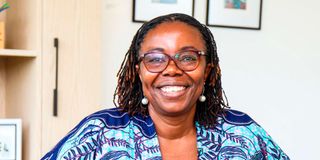
To be me is to be the authentic me. And the authentic me is someone who looks for ways to bring out the best in others and myself. And allow the lesser of me and the greater of others, and live for the greater good.
When you look back at your life, what feelings come to you?
I am a really fortunate woman. Fortunate in the sense that I was brought up in a loving family that cared, and specifically a father who was very supportive of my siblings and me. We were born 10 of us; I was the eighth. He was very protective of me and would not allow me to do the household chores just because I was a girl; my brothers had to contribute to that work. I am also lucky that he cared about education, and he did his best to push my siblings and I through school. Fortunate because he was a very kind human being.
How are you unlike your father?
I think I am a replica of my father in many ways. He was generous because nothing belonged to him, and he would always try to help people. I find myself in such spaces. My house is like a boarding house, because I have many people who live with me, so I can help them become better.
Secondly, I think my father thought of people more than himself. And he was very inclusive. Let me share a personal experience: my mother had a mental health issue. That meant she was mostly hospitalised, and my dad had to take up another role, taking every other person who had a mental health illness to the hospital. I don’t think I can go past what he did. He influenced a lot of who I am today.
As a child, seeing your mum going through that, what does that do to you?
Oh my God, it was so traumatising, especially because there were times my mum disappeared and we had to look for her. She would tell us we are not her children, and she would push us away from her. I remember taking food to her at the mental hospital, and just seeing her in that state after treatment, I can’t even explain it. I pushed it to the back of my mind until 2018, when I joined the Ford Foundation.
When you think of your mother today, what stays with you the most?
Her quietness and thoughtfulness. When I became a mother, if I am being really honest, I didn't have a relationship with her. I was so afraid that my children would feel the same way I was feeling about her. So I decided to deliberately start growing a relationship with her. And over the years, I made sure I spent a lot of time with her. I discovered a woman who was quiet, intelligent, and very strong-willed, and would never speak ill of anyone, even if you probed. She died in 2022.
Sorry for your loss. What's your motherhood philosophy?
Let children be children. And let children find themselves. I can offer guidance, but the ability for a child to make decisions about their lives lies with them, be it career or how they want to live. It helps them start developing their ability to make informed decisions about their lives early on.
When a child, especially a daughter, is growing up, the mother is more or less the abiding lighthouse. Growing up and seeing your mum sick, did that make you want to show your children strength or fragility?
Sometimes I even wonder whether I am mother enough. Having grown up without a mother figure, I also expect people to grow up that way, very strong and able to navigate challenges that come their way. To some extent, I think it's helped me also to be able to detach from young people, and that has influenced a lot of how I relate to young people [chuckles].
What sort of child were you?
Well, I loved fun. I grew up laughing at Christmas carols. I loved reading, introduced by my eldest sister when she would bring the Rainbow Magazine. And sometimes I tell people by the time I was 13, I was reading adult books [chuckles]. I found my peace and space in reading, and of course, music and dancing.
Ford Foundation Regional Director for Eastern Africa, Margaret Wawuda Mliwa loves to read, music and dancing.
Photo credit: Bonface Bogita | Nation Media Group
What kind of reader are you?
A book at a time. Because you see, my curiosity is so high, and I don't like suspense. I have to finish that before I pick on another.
What book challenged the way you see people?
When I was 16, I read a book written by Prof Euphrase Kezilahabi called Rosa Mistica. It changed how I view myself as a woman and the dignity that comes with me. It changed the way I view life, relationships, and the value relationships bring in my life.
Rhumba and dancing. Is it linked to your father?
No. I think there's something for me in drums. When I hear the beat of a drum, it clicks something in my body. I used to do a lot of drama in schools, and when I became a teacher, I was the drama patron producing plays and creative dances. Drums just calm me down and give me peace.
Does your Swahili background have a hand in it?
I was brought up in Taita, where we have quite a lot of traditional dancers. The Mwazindika (a traditional dance) has a very unique rhythm when you are beating the drums.
Can you play drums yourself?
Not as professionally as others [chuckles]. I feel the same when I listen to jazz. There is something the instruments do to calm me down.
Has any of your children been bitten by that creative bug?
Yes. My second born. He listens to music a lot. He is quiet, and sometimes I wonder when he learned all these songs.
What's an underrated joy of motherhood?
Seeing your children make mistakes, grow out of them and navigate the spaces in which they have fallen.
What is an epiphany that changed the trajectory of your life?
When I got married, my husband died after four years. That was difficult because I started thinking, what does this mean for my children and me? My eldest son was two, and the other was four months old. I was married into another ethnic community and navigating those relationships with my in-laws and the decisions I had to make…I realised I was on my own and had to bring up these two sons of mine, so I went back to school, and that meant I had to sacrifice a lot, which is how I got here because I am originally a high school teacher, and I needed more income to support my nieces and other dependents.
Is it ironic that you grew up without your mum and now your children are growing up without their father?
I think about it a lot. I feel sad that my children have grown up without the joy of fatherhood because I fully experienced what it looked like to have a loving father. In fact, I tell people my father was a feminist who lived 100 years ahead of his time. I think about the opportunities he provided me to learn through experiential learning. He’d ask you to do things and ask you what you’ve learned. Sometimes, I feel my sons growing up without a father has affected them. I have been lucky to have male friends to support me, my brothers and my brothers-in-law.
What shapes us more – presence or absence?
Presence.
Margaret, tell me something cool about yourself?
I am a very jovial person. Happy. Overoptimistic. I don’t see problems, but ways of solving them, and sometimes people think I am unrealistic. I believe we can change things. Two, I have a relationship with God. I call it personal because it is my way to relate to God.
Ford Foundation Regional Director for Eastern Africa, Margaret Wawuda Mliwa.
Photo credit: Bonface Bogita | Nation Media Group
What do you wish people understood about you more?
I am too trusting, so sometimes one can suffer the consequences of overtrusting. I wish people understood that I let things go. If we quarrel now, by 4pm I’ll have forgotten that we had a tiff. I carry no baggage; I desire to keep moving.
When was the last time you did something completely spontaneous?
I went somewhere and saw a good house, and I said, “Wow, this is beautiful. I would like to buy it,” and the owner offered to sell it to me. So I bought it [chuckles]. If I like something, I go for it.
What was it about the house that attracted you?
I liked where it was, the backyard and the space.
What is a habit you have that you are proud of?
Ability to accommodate people and their differences. If we differ in opinion, it does not mean you are a bad person; I recognise it is just a matter of different opinions. In fact, I prefer having different personalities in my life.
How do you show yourself love?
That is a constant criticism on my part. I give so much of myself to others that when people show love to me, I feel uncomfortable because I have always been a giver.
But when you just want to be Margaret, just a girl, what do you do?
Being out with friends, laughing. I love performance theatre and art, sitting there watching plays, dances, spoken word, that sort of thing.
What matters less to you now?
That's a very interesting question. I think what matters less to me now is what people think about me, which you cannot change. You can only change the way people feel about you.
What does that mean?
How do you extend grace and love? Moving away from judgment to people letting you know them and extending kindness, generosity, and humility. Death to ego and self. Meet Margaret first, rather than the Regional Director of Ford Foundation.
What have you learned the hard way?
Sometimes your intentions can be misunderstood from what you meant them to be.
If you aren't at home or at work, where are you most likely to be?
I'll be in church. Or farming. Or walking in the forest, but mostly I like kitchen gardening and planting fruit trees.
Margaret, what is something you long believed to be true but with time you realise is not?
Change takes time. When people have a certain level of literacy, they are able to make decisions for the greater good. But I have discovered that it is relative in the sense that you never start thinking about how people live, how people make decisions. I've discovered that change takes time, and socialisation also plays a very big role in decision-making.
When you think of the weekend, what food comes to mind?
I really love kimanga. Kimanga is a Taita meal made from cassava and beans mashed together. It's awesome.
Kimanga, it sounds so dry.
It is. But you have to take it with a cup of tea. In fact, it's like a brick. If you eat kimanga, you will not be hungry for the next 10 hours [chuckles]
What is the soundtrack of your weekend?
I like Bob Marley and reggae. Conscious music. But I also listen to a lot of Christian music.
What are you looking forward to doing this weekend?
On Friday, I am attending a leadership meeting on pathways for women at Radisson Blu. On Saturday, I'm going to the AWAKE (A Woman Appointed, Known, and Elevated) meeting at the International Christian Church in Nairobi. It is a women's ministry.
Who do you know that I should know?
My sons. They are aged 30 and 28. They're wonderful young people, and they love debates, so they can talk about a wide variety of things. And maybe they picked it up because I dig into current news a lot. Mama’s boys, haha!
What is their favourite thing about mum?
They discovered recently that I love flowers. So I see them, they buy me flowers, and that was a part of me I didn’t know. And then they also jot me down some cards. I love words. Because words ignite my mind so much. And I think about words a lot.