Kennedy Osano embodies the most glittering Kenyan dream – the idea that you can move from promise to the promised land through sheer work ethic, belief and, sometimes, luck.
Brilliance, yes. But also resilience. It is a Faustian bargain with a “brutal trade-off”, as he calls it: “If I don’t work this hard, we can easily go back to the life of not having enough.”
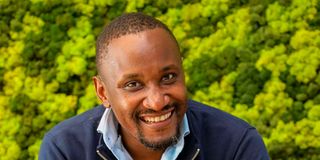
He wanted to make something for himself. Out of himself. So he did. Now Senior Key Accounts Director of African Business for British payments firm Ebury, he admits he has always chased bigger things. In Djibouti, he was given the entire 14th floor as his office. “I wanted the whole building,” he says.
Fatherhood, he adds, became the oxygen that fuels his ambition. That also explains his affinity for golf. Why not? It is par for the course. He is where the big boys are.
Only one thing is certain – he understands that while the dream is free, the hustle is still sold separately. That is the natural order of things.
Is it fun to be you?
If I had another choice, yeah, I would still choose myself. It is fun to leave your title behind and just be anybody else in society. But it is also hard. Work is demanding, and the title comes with expectations. You cannot just be a father, a brother or a neighbour — you are expected to carry the title in a certain way.
Was fatherhood the spur to your ambition?
It is complicated. I grew up without my father, so I wanted to be present in a way I never experienced. I have two girls, and you want to be an example of a partner, a boss, a neighbour and create a better world for them, so they know how to treat men as much as how men should treat them.
Do you feel you missed out on your youth?
A lot. There is a 17-year gap between my daughters. I wanted to give my firstborn the world and got lost in that. I became an adult and a father too early. I first had alcohol in 2014. I did not even date properly, haha!
What is different about fatherhood now?
Children are now raised by the internet. You have to be present, share meals, be their mirror and their inspiration.
What tips do you have for surviving fatherhood?
Be available. Do not make fatherhood transactional, and do not carry expectations. If your expectations of your children are too high, you risk disappointment.
You were growing up as your daughter was growing up. What was that like when looking for a significant other?
It's difficult because your child is aware. You cannot just bring anyone around. There is also competition – if you buy your girlfriend a handbag, you must buy your daughter one. So you focus on raising her first, then date later.
How are you raising them differently from how you were raised?
I raised my firstborn like a friend, but with boundaries that I'm also a parent. The younger one is actually a cartel; when she cries, everyone wakes up. I am definitely softer now than I was with the first one.
What are you proud of?
Raising my daughter to adulthood without sitting across her that she's been expelled from school, has disciplinary issues or lacks. She has a good head on her shoulders.
I am also proud of mentoring people who have gone on to get promoted, even surpassing me.
I don’t meet a lot of people who were CEO and left the role to become a director, especially in a society obsessed with titles. What was your ‘why’?
Yes, I was the Regional CEO of GTXN in East Africa. At Ebury, I manage business relationships across Africa.
Trade in Africa is heavily affected by payments, forex and pricing. Many businesses struggle with financial knowledge and access to funding platforms. At Ebury, we solve that.
What has success made harder for you?
You become a victim of your own ambitions. It is never enough. You reach a level, and you want more. I went to Djibouti and thought, what country is this? They do not speak English, I do not speak French or Arabic, and they had given me the whole 14th floor as an office. But I was like, this is not what I wanted. I want more. Probably the whole building.
Success also takes away your time with family, and they might never understand why you are not home on time.
From the outside looking in, you’ve made considerable success. What are you chasing, or running away from?
Poverty. If you have tasted both sides, you know it is something quite disrespectful.
I do not just want financial security for my family. I want to create an ecosystem where people around me can succeed. Back then, the teacher was the richest person, with a bicycle and cooked chapati. Then you come to Nairobi and New York and realise there are bigger things to chase.
Are you someone people would like to get stuck with in an elevator?
Yes. The first thing that interests me is: how are you doing? Even here, I have staff who are 52 years old and some who are 21. I want to know, “How was your day? How can I make it easier? What can I learn from you today?”
I have learnt to unlearn things as well.
What small change made a big difference in your life?
I picked up golf [chuckles]. I am a serious football fan… Arsenal… but golf, for a long time, was seen as elitist.
When you walk from one hole to another, there is nothing else. It is you and the ball. You cannot blame anyone else if it does not go in.
You relate that to life – it is me and my ambitions. But it also opens your world. You meet CEOs, managers, caddies – and they can all teach you something. Golf teaches patience.
What kind of golfer are you?
I am competitive. I always say whatever I put my hands on must succeed. Sometimes it consumes me. But when I am stuck and need help, I ask for it.
What can you tell me about golf that nobody else can?
Golf is like parenting. Nobody is good at it, but you have to do it anyway.
From the outside, it looks elite, sporty, easy – but it is a game of angles and positioning. And if you do not play with the right people, you do not get value from it.
Do you feel like you belong to the elite now?
Maybe I have poverty trauma – the fear of going back to where you were if you fail.
You remember looking at a pair of sneakers and not being able to afford them. Or even a mandazi. And now you look at your daughter and see that same child you once were. It is very dehumanising for a child to ask for something you cannot afford.
Do you still have a point to prove?
Yes. To every child who doubts themselves, who thinks you must come from a certain background to succeed.
I went from a village school to the University of Cape Town with nothing but hope and dreams. I have done it. I want to prove it by writing my father’s name in foreign countries.
When you strip away the titles – father, brother, director – what remains?
A son of a very proud community. I go back to my local school, the one that gave me my dreams, because they never sent me home. And I see a man who helps people at the workplace through mentorship and giving opportunities, without looking at tribe or background. I believe in meritocracy. I am here because I was given a chance.
What do you admire in others that you feel you lack?
The ability to give up.
That’s such corporate speak.
Ha ha! Sometimes I wonder if I overdo things because of trauma, or because they are supposed to be done.
Sometimes I carry a big burden for other people. I do not always know if I am doing it for myself or because I feel I should. I just do not know how to give up on myself.
You seem to have figured out many things. Which area of your life needs more work?
Letting things go. Not everything or everyone is meant to succeed.
Some people just want a wife, a job, and a home. They do not want an office or a title. And sometimes, even when you believe in people, they do not believe in themselves, and there is nothing you can do.
What do you want that you cannot have?
That’s deep. A corporate world that is fair and based on merit, not who you know, but what you can do.
And personally?
Can I have my youth back [chuckles]? Can I just go to a club and not worry about somebody sleeping or crying at home?
Kennedy Osano, Senior Key Accounts Director of African Business at Ebury.
Photo credit: Bonface Bogita | Nation Media Group
What’s stopping you?
I cannot. I am almost a grandfather. It is her decision now, not mine anymore, haha! And you cannot tell her anything because you had a child at 17, and she is 21 now [chuckles]. I cannot have that life back.
And two, I wish I could call my parents and tell them I succeeded or failed today. Or just go home and sit with them. I would trade everything to have them back.
My condolences. Osano, what has success not fixed?
The void my parents left. Nothing can fix that.
Dad taught us to be competitive and believe success was within reach. Mum was warm, but could also turn and hit you with a table. Them not seeing what they built – that void has only been amplified by success.
What question would you ask them today?
I would ask my mum: ‘Is my partner the right woman to marry?’
And my dad: ‘Have we made you proud enough?’
What is the best lesson you picked from them?
My dad believed success was always on the horizon.
My grandmother, who raised me, taught me that God cannot fill a full cup. You have to empty into others to receive more. Give advice. Give a hand. Push someone forward. Let those who thank you be more than those who curse you.
In the absence of your parents, who calls you to order?
My brother Felix, the CEO of Nairobi Hospital, and Kevin, our eldest and the family glue.
But the person who has made sure we’ve succeeded is my aunt, my sister’s mother. She took us – my two brothers, two sisters and me – in when my mother died. And my siblings have never played the victim card.
Do you feel like you are always fighting for your voice - your brother is a CEO, you are the lastborn...
Haha! I have always tried not to outdo my brothers. I love them.
Even when I buy a car, I cannot buy one bigger than theirs. I know they’ll be proud of me, but I never want to be bigger than them.
Ebury Senior Key Accounts Director of African Business Kennedy Osano.
Isn’t that selling yourself short?
No. Out here, I am a giant, but at home, I am a lastborn. They still send me to fetch sweaters.
And to be where I am, you cannot do it without their prayers. When I got my first job at DTB, my elder brother taught me how to put on a tie. I cannot outshine them.
What do you have that others don’t?
I believe in people. And I believe in good in any situation.
But I also have a strong ecosystem around the corporate space. I have great mentors, some of whom are not easily accessible, and that is a privilege I do not take for granted.
At home, I have guardians and prayers. When I call my brother about a situation, I am coming out with a solution.
What are you learning to say no to?
Jobs outside the country. I am no longer chasing money. I am chasing legacy.
It is very easy to rise to the top, but very difficult to remain there. For a long time, I was chasing the title.
I remember when I moved from DTB to Kingdom Bank [nee Jamii Bora Bank], someone asked me, “How do you leave such a big bank to go to a small bank?”
I told him I wanted to be a big man in a small bank. But in 38 days, I was gone, haha! I left Jamii Bora and went to Credit Bank.
I wanted to be seen. But now, I have a group of six people with whom we sponsor 24 children every year. That is the legacy I want to leave.
You are a risk-taker, but if I were to bet on you, what would swing the odds?
You can bet on me to tick every box. No doubt.
What kind of insecurities does a man like you have?
The voices in my head.
What are they saying?
Is this the right one or not? You never believe you are doing enough, even when you are staying up late. Funnily, people think you are doing enough — but you do not feel it. And then there is time. I am never home.
There was a month I was only home for two days. I kept wondering, will I come back and find my girlfriend gone? Am I good enough for these people? The insecurities are the compromises between the price and the place. Sometimes, you just throw money at it.
Your children are growing up without you due to your schedule. Do you feel guilt?
It is a brutal trade-off between the bad and the greater bad.
If you do not work, you cannot provide the life you want for them, and they go back to a life of not having enough. But if you work, you miss moments. You expose them to emotional gaps, not being there for milestones.
When my second daughter was being born, I was in the maternity ward, working.
What do you hope your daughters remember about you?
It is a difficult question. That I showed up.
My daughter has been in boarding school since class six or seven. Apart from one time when I was in Djibouti, nobody has ever picked her up from school. I pick her up mid-term, opening, and drop her.
I hope she remembers that dad is always there for her.
What have you come to terms with?
Nobody owes you anything. The world moves whether you struggle or succeed. Success has many relatives; failure has few.
What is the most difficult lesson you have learnt?
There is never enough. The more you get, the more you want.
Money has no rank. Whether you earn it digging or in an office, it serves the same purpose.
What do you consider a life well lived?
A life where my children have financial stability – but also the ability to multiply it.
They must be disciplined, kind, and respectful. And able to carry my name in a way that people can say their father was a good man.
How do you reward yourself?
I play golf. And I travel.
Which destination still has your heart?
Singapore. The order, the discipline – and the fact that such a small island can be that rich.
Do you remember your first salary?
Sh18,000 in 2009. They were paying me well [chuckles]. After a loan, I took home about Sh13,062.
What are you looking forward to this weekend?
Barbecuing. Nyama choma… goat. Calling friends over – work has been crazy.
And spending time with the little one. I have not seen her in two days because I get home at 1 am and leave at 6 am.
Who should we know?
Lilian Ngala. She is a gem. Many of my decisions – taking or declining jobs – have come from her guidance.
What do people often get wrong about you?
They think I come from a well-connected family. Or that I have it all figured out. Most of it works because I consult a lot. But I still struggle with decisions sometimes.
Give us some advice.
Nobody owes you anything – not a job, not an opportunity. You have to position yourself to add value – to society, to a company, to your family. People go for value.
The corporate world is brutal. If you do not adapt, unlearn and stay agile, nobody will need you in the next five years.