When the Narok county government increased entry fees for the Maasai Mara National Reserve by up to three times in 2024, it bit more than it could chew.
The results are in, and they show that tourist numbers have dipped for the second year in a row. Official statistics indicate that the number of tourists visiting the world-famous Mara was lower than that of the Amboseli National Park in 2025, the first time in years that the Kajiado-based reserve outperformed the Narok rival in visitor numbers.
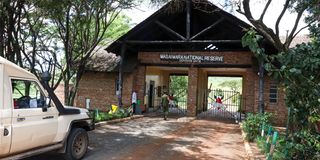
According to the Economic Survey 2026 by the Kenya National Bureau of Statistics (KNBS), there has been a sharp fall in visitors to the Maasai Mara. From a high of 420,000 in 2023, the number shrank to 343,000 in 2024 and further fell to 213,000 last year.
In contrast, the Amboseli played host to 295,000 visitors in 2025. This was an increase from 266,000 in 2024. In 2023, some 222,000 tourists visited Amboseli, and data shows a steady rise in numbers for the past five years.
Both the Mara and Amboseli are run by their host county governments, with the latter getting the mandate from the national government in late 2025.
In the bigger picture, 2025 saw the number of visitors to national parks and game reserves grow by 5.7 percent to 3.95 million.
National parks and game reserves across the country include the Nairobi National Park, the Nairobi Safari Walk, Tsavo East and West, the Aberdare, the Nairobi Mini Orphanage, Lake Nakuru, and Lake Bogoria, Shimba Hills and Hells Gate, among others. The number of visitors to the establishments stood at 3.74 million in 2024 and 3.64 million in 2023.
Statistics also show that more Kenyans are visiting national parks, with the number increasing from 2.33 million in 2024 to 2.56 million last year. In 2023, that figure stood at 2.36 million.
“Kenyan citizens remain the highest visitors to these attraction sites, followed by the non-resident foreigners. The number of Kenyans visiting the sites increased by 9.9 percent to [2.56 million]. However, the number of resident foreigner visitors to these sites declined by 16.7 per cent to 2.22 million in 2025,” the Economic Survey 2026 says.
Narok County’s revision of entry charges for the Mara came into effect in January 2024. It saw entry fees for Kenyan adults from outside Narok County rise from Sh1,000 to Sh3,000. Narok County residents who seek to enter the park are charged Sh2,000 per adult.
For foreign nationals within the East African region, the adult’s fees shot up to Sh4,500 per person.
For visitors from other countries, the fees for adults rose to $100 (Sh12,290) in the low season of January to June. For the rest of the year, foreign nationals pay $200 (Sh25,840). Before January 2024, foreigners would pay a flat rate of $80 (Sh10,332).
Mr Robert Simotwo, the executive committee member in charge of Tourism at Narok County, told the Business Daily that price revisions were strategic, adding that the changes were geared at a “high-value, low-volume tourism model”.
“This approach introduced distinct green and migration seasons and was accompanied by a significant revision of park entry fees from $80 to $100 during the low season and up to $200 during the high season,” he said.
While acknowledging the decline, the tourism boss said they observed sharper monthly declines as 2025 progressed. “This trend was particularly evident among price-sensitive segments such as families and non-resident tourists, indicating that the increased fees likely influenced travel decisions,” said Mr Simotwo.
Mr Mike Macharia, CEO of the Kenya Association of Hotel Keepers and Caterers, said the drop in the number of visitors to the Mara was inevitable. “This was expected after the increase in park fees,” he said. “However, I think the revenue levels will be more or less the same, which, in our understanding, was the wish of the county government: to earn more from less traffic.”
When he spoke on the performance of tourism in his Madaraka Day speech in 2025, Narok governor Patrick ole Ntutu painted a rosy picture of the sector.
“Tourism continues to grow through conservation and investment,” he said as he touted the planned Narok International Airport as a major enabler of international trade and tourism.
Mr Moses Monyorwa, a marketing lead with tour firm Savi Tours, said the increased fees has made the Mara less favourable for travellers.
“Tripling of the park entry fees made it unattractive,” he said, explaining that since 2024, billing is done per day compared to the fairly unrestricted terms before January 2024.
“A lot of people are also shifting to Tanzania instead of Kenya as it is more affordable and there’s generally more to see,” he added.
At the Serengeti, the entry fees for foreigners is $83 (Sh10,721), while East African residents and Tanzania residents are charged Tsh10,000 (Sh496). And for a foreigner staying inside the Serengeti, they are required to pay a $60 (Sh7,750) concession fee daily. This figure stands at Tsh35,000 (Sh1,737) for locals of Tanzania and East African countries.
According to Maasai Mara Travel, a tour firm, the Serengeti is approximately 30,000 square kilometres in size while the Mara is just 1,510 square kilometres.
Explaining the increased attention towards Amboseli at the expense of the Mara, Mr David Iteyo of Crowned Eagle Safaris said Amboseli’s numbers are increasing due to many factors that include better roads leading there and reliable elephant sightings.
He also said there was a rise in affordable hotels and lodges inside the Amboseli, as well as the stunning views of Mt Kilimanjaro that make the park a bucket list item for many travellers.
Eric Njoroge of Rav Africa Safaris said that the price increase in the Mara drove up the demand for Amboseli.
“Amboseli not only provides a cheaper alternative but also has quality accommodation, good food, and affordable entry fees,” said Mr Njoroge.
Adult non-residents pay $60 (Sh7,750) to access Amboseli for 24 hours.