From the corner office to the political storm: The Mwangi Wa Iria story

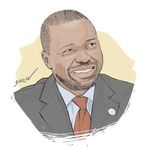
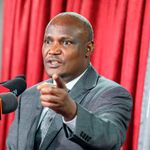
Former gover of Murang'a County, Mwangi Wa Iria.

Photo credit: Joseph Barasa | Nation Media Group

Every Kenyan joins politics with a burning desire for change. In the end, it is politics that changes them – and, often, not for the better.

Like many corporate executives whose professionalism is forged in years spent occupying the coveted corner offices of some blue-chip companies, Mwangi wa Iria joined entered politics with what appeared to be an almost evangelistic mission of transforming lives even as he thought he would help cleanse a system poisoned by corruption and ineptitude.
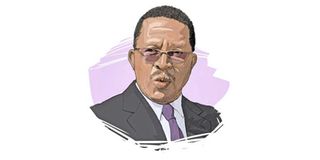
He drew confidence from his success at the Kenya Cooperative Creameries (KCC), where he had inherited a state corporation struggling to process milk, sell its products and pay farmers.

He renamed it New KCC and, with Sh200 million in government funding, embarked on a turnaround that put the processor back on the path to profit.

He also oversaw policies that helped raise the farm-gate price of milk from Sh5 to Sh30 a litre by 2006, he says.

More than a decade after he was first elected governor of Murang’a, Wa Iria is fighting to hold on to assets creditors have put up for sale, including his Karen home and a hospital.

At the same time, the Ethics and Anti-Corruption Commission is pursuing the former governor over claims that assets linked to him were acquired from corruption. The agency is eyeing Sh542.6 million linked to contracts awarded by the devolved government of Murang’a during his tenure. The allegations remain contested.

The sad turn of events for Wa Iria, after he had painstakingly forged a suave image in corporate Kenya speaks of the murkiness of politics.

Born Francis Mwangi on August 28, 1964 in Kahuro, Wa Iria grew up in what he describes as a typical rural setting, drawing water from the river, picking coffee beans and tending animals.

He attended Kiboi Primary School and Wethaga Boys High School before joining Moi University and later pursuing further studies in purchasing and supply in the UK.

In 1993, he joined East African Breweries Ltd as a junior sales manager. By the time he left in 2002, he had risen to national sales manager, giving him experience in one of the country’s biggest consumer businesses.

His next assignment would prove more consequential. In 2002, then-Cabinet minister John Michuki identified him as the man chosen to spearhead reforms at KCC.

“That young man has been found from this area and is none other than this man whom I have known since his childhood. I hope he won’t let me and you down in his duties,” Michuki said at Wethaga Catholic Church.

Wa Iria rolled up his sleeve and got to the work of reviving KCC. He renamed it New KCC, revived the processor and returned it to profit-making, he told this publication.

The turnaround became the foundation of his public reputation and would later provide him with the identity that followed him into elective politics.

His tenure, however, was not without controversy. He clashed with then Co-operatives minister Joe Nyagah over the future of the company. Nyagah accused Wa Iria of giving President Mwai Kibaki the impression that New KCC was capable of remitting to the Exchequer the Sh200 million it had received for reforms, even as the government was thinking of returning the processor to farmers.

Wa Iria’s contract was not renewed in 2007.

He subsequently joined the Aga Khan Foundation as a logistics officer before resigning in 2012 to join elective politics.

Besides KCC and the Aga Khan Foundation, Wa Iria served as national sales manager at Kenya Breweries, managing director of Ngano Feeds, chief executive of Freshco Seeds and general manager of the commercial division of Industrial Promotion Services.

It is this background that helps explain the unusual way in which he approached politics.

He was a corporate executive who entered politics carrying with him the language of management, production and enterprise – particularly in agriculture, dairy and cooperatives.

That Wa Iria was steeped into politics can be explained by the fact that his home county has arguably minted most Kenya’s billionaires, including Equity Group Chief Executive James Mwangi, former Equity chairman Peter Munga, Chris Kirubi, Jimnah Mbaru, Benson Wairegi and Gerald Gikonyo.

For a while, Wa Iria too, seemed keen on following in the footsteps of these entrepreneurs.

Then he took the plunge in 2013. Wa Iria abandoned the corporate world to contest the Murang’a governorship on The National Alliance ticket.

He emerged victorious, becoming the county’s first governor. It was the beginning of a career that would keep him at the centre of Murang’a politics for the next decade.

His first term was turbulent. In October 2015, some 34 of the 49 ward representatives voted to impeach him over several allegations, including gross misconduct and abuse of office.

His biggest undoing, according to the assembly? Acting like a know-it-all CEO.

“He carries himself as an oasis of wisdom and those of us mandated with oversight duties have no other business apart from drinking straight from that oasis with total submission,” said Waithera wa Maua, the MCA who sponsored the impeachment motion against the governor.

Yet Wa Iria survived the storm and returned to his office the following day.

The episode also revealed the combative side of the politician.

Critics and opponents accused him of being dictatorial, arrogant and a lavish spender, while Wa Iria portrayed the impeachment effort as a scheme by rivals who wanted to derail his administration.

He survived and sought a second term in 2017 under the newly formed Jubilee Party, which was led by then-President Uhuru Kenyatta and Deputy President William Ruto, the current head of state.

Wa Iria retain the Murang’a governorship in the August 2017 General Election, one of only 12 county bosses who successfully defended their seats. Official election results show he garnered 349,904 votes.

Wa Iria's second term increasingly became a launchpad for national ambitions.

In 2022, three years after securing his second term, he set sights on the presidency.

He became the presidential flagbearer of the Usawa Kwa Wote party, campaigning on an agricultural and household economic empowerment platform.

Predictably, his presidential campaign was centred on transforming lives through farming.

His slogan of “One Home, One Cow” sort to connect his political message to the dairy industry that had propelled him to the national limelight.

His proposition was that every family should have a cow capable of producing milk and generating income. So in love was Iria with the dairy industry, that his Usawa party adopted a cow as its symbol.

But his presidential ambition never reached the ballot.

In May 2022, the Independent Electoral and Boundaries Commission removed his name from the presidential nomination register after determining he had not met the required threshold for valid supporting signatures. Wa Iria protested at the Bomas of Kenya, insisting he had met the requirements.

By July, he had abandoned the presidential contest and endorsed Azimio la Umoja One Kenya Coalition's chief Raila Odinga. He even told Murang’a voters to support Odinga while seeking a place in a prospective government.

The failed presidential bid marked another turn in a political journey that had begun with a corporate executive convinced that management principles could be deployed in public service effectively.

His years in office also left a mixed legacy. Wa Iria's administration pushed dairy development and healthcare projects, including the establishment of the Kenneth Matiba Eye and Dental Hospital and investments in milk collection and processing.

His government also launched the “one home, one cow” programme in Murang’a, seeking to use dairy farming as a household income-generating activity.

But the political battles never quite disappeared.

EACC investigations have followed him beyond the governor’s office. The anti-corruption agency now says contracts valued at Sh542.6 million were irregularly awarded to Top Image Media Consultants between 2013 and 2017 and that proceeds from the contracts were channelled to Wa Iria, his household and associates.

The High Court subsequently froze properties in Nairobi's Umoja Innercore and Mweiga, Nyeri, pending determination of the EACC’s asset recovery lawsuit.

Wa Iria and the other parties have contested the allegations. In December 2022, the High Court also allowed EACC to freeze two properties belonging to Wa iria’s wife after the commission told the court that the assets might have been purchased using proceeds of corruption.

The commission was seeking to seize Sh542.6 million.

Now, as creditors pursue assets linked to the former governor, another chapter is being added to the story.

PAYE Tax Calculator

Note: The results are not exact but very close to the actual.