The dealmaker behind Kenya's biggest IPO now takes centre stage in investment banking

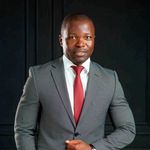
Rock Investment Bank Managing Director Belgrad Kenne.

Photo credit: Joseph Barasa | Nation Media Group

On March 4, an unfamiliar face sat next to Treasury Cabinet Secretary John Mbadi during a news conference following the successful initial public offering (IPO) of Kenya Pipeline Company.

Little known outside investment banking circles, his seat at the high table hinted at the pivotal role he had played in pulling together the country's largest IPO.
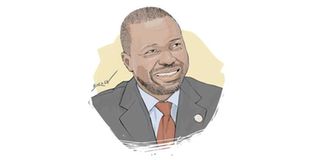
This was Dr Belgrad Kenne, the investment banker whose relentless drive and deal-making expertise helped steer the landmark transaction as the lead transaction adviser.

No sooner had the dust settled on Kenne's prominent role in Kenya Pipeline Company (KPC)'s record-breaking IPO than he found himself back in the headlines.

Fresh disclosures revealed that he is the majority owner of the investment firm that recently acquired a controlling 60 percent stake in Nabo Capital from Centum Investment Company in a transaction estimated at Sh271 million.

Company records show that Dr Kenne holds a 70 percent stake in Rock Investment Bank, equivalent to 1.75 million shares, with the remaining 30 percent, or 750,000 shares, owned by Glamour City Limited.

Less than a year after transitioning from an investment adviser to a fully fledged investment bank, Rock Investment Bank pulled off one of the biggest deals in Kenya's fund management industry, acquiring Centum Investment Company's controlling 60 percent stake in Nabo Capital at the end of June.

The transaction brought to an end Centum's decade-long stewardship of the fund manager.

It has been a remarkable run for the charismatic investment banker of Southern African descent, who nonetheless insists he is Kenyan.

“I try to influence people, mobilise and motivate them,” said Dr Kenne in an interview. “When you can bring parties together, that's when deals happen,” he said, alluding to some of the landmark transactions he has helped bring together, including the KPC IPO through which the Kenyan government raised Sh106.3 billion after disposing of a 65 percent stake in the company.

He reckons such deal-making skills are honed over the years.

“Beyond the soft skills, you need to have a strong foundation and be technically sound,” he says.

He is fluent in both English and French, having undertaken most of his postgraduate studies at French institutions.

Dr Kenne holds a Master's degree in Finance and Private Equity from the International University of Monaco.

He also earned a Doctorate in Business Administration (Finance) from the Paris School of Business, having previously graduated with a Bachelor's degree in Management from Riga Technical University in Latvia.

Paris-based Swensee Partners was his first stop before he set his sights on Kenya. Swensee Partners is an Africa-focused investment firm with offices in Abidjan and Nairobi, and representative offices in London and Johannesburg.

Dr Kenne's broad geographical exposure has proved invaluable, helping shape him into one of the country's emerging dealmakers.

Although he appears to relish media attention—regularly posting video interviews and newspaper cuttings on his blog—Dr Kenne insists he would rather be known for the deals he closes than the headlines he generates.

But for an IPO that was peppered with politics from the outset, it was perhaps inevitable that the man who orchestrated the transaction would become part of the story.

“I am a quiet dealmaker,” says Dr Kenne, noting that it was his track record that earned him the role, through which he effectively became the chief explainer of the IPO.

Along the way, Dr Kenne stepped out of advisory into executive management, serving as deputy chief executive officer of The Karen Hospital Group.

“It was a three-year assignment to help turn around the business. It was a step from advising to rolling up my sleeves in the trenches, and we did it,” he said.

On his personal website, Dr Kenne credits himself with formulating and implementing “Karen 2.0”, a three-year turnaround strategy that he says delivered 14 percent revenue growth, doubled the company's operating profit margin and increased shareholder value by more than 30 percent.

When the Kenyan government decided to sell a majority stake in KPC, Dr Kenne was the man for the job.

Only this time, unlike many of his previous assignments, the transaction unfolded in full public view.

He found himself steadily steering the ship through rough waters as the IPO struggled with weak initial subscription.

Beyond convincing investors to buy into the offer, Dr Kenne fielded questions from the media, analysts and other stakeholders.

Throughout the process, he remained confident that the IPO would succeed.

It eventually did, helped in part by increased participation from institutional investors and Uganda's decision to acquire a 20 percent stake in the company after securing enhanced shareholder rights, including a say in the appointment of the chief executive, restructuring decisions and tariff approvals.

The success of the transaction was important not only for the government but also for Faida Investment Bank, the lead adviser, and for Dr Kenne, who was at the centre of executing the landmark deal.

His deal-making continues, this time under his own outfit—Rock Investment Bank—which was first licensed by the Capital Markets Authority (CMA) as an investment adviser in 2025 before later securing an investment banking licence.

He believes Rock Investment Bank has a role to play in financing Kenya's development agenda and sees the firm's growth as part of that broader ambition.

Dr Kenne now appears set to give established investment banks a run for their money as he positions both himself and Rock Investment Bank at the centre of some of the country's biggest corporate transactions.

“Without an investment bank, it would have been difficult to execute a transaction like KPC,” he said.

“My eyes remain focused on the next deal even as we build Rock Investment Bank.”

PAYE Tax Calculator

Note: The results are not exact but very close to the actual.