Around the time the State put up for sale- six Cytonn Investment properties, the High Court in a separate case ruled in favour of the real estate firm, ordering the capital markets regulator and its Cheif Executive-Wyckliffe Shamiah, to pay the company Sh10.5 million in defamation damages.
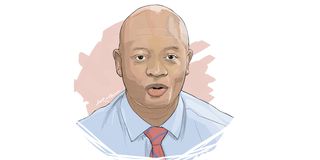
What followed was an escalation of an already muddied battle between Cytonn CEO Edwin Dande and those he believes stand in the way of the firm’s revival—a turn of events akin to the ratcheting up of hostilities in the ongoing conflict involving the United States, Israel and Iran, with both sides digging in.
Mr Dande was first to hit back, vowing to appeal the liquidation—a move likely to prolong a legal tussle that has dragged on for six years.
“Cytonn reassures creditors and investors that the advertised asset disposal is not final, remains subject to court oversight, and will be challenged through appropriate legal action,” he said in a post on X in March 17.
The properties earmarked for auction by the receiver manager are linked to Cytonn High Yield Solutions (CHYS) and Cytonn Real Estate Project Notes (CPN)—the two investment vehicles that collected investor funds but later defaulted.
Mr Dande says he is shocked by the zeal with which the official receiver is pursuing liquidation, noting that it is the first time in Kenya’s history that a court has imposed a liquidation order that no creditor had sought.
“It’s like going to the hospital, and the doctor recommends euthanasia (mercy killing). Why would someone do that unless they have an interest in your death?” he posed.
He maintains that the majority of investors and creditors are opposed to liquidation, arguing that once fully developed, the real estate assets could be worth over Sh20 billion against a debt of about Sh10 billion.
The Capital Markets Authority (CMA) has also indicated it will appeal the High Court ruling.
In its judgment, the court found that Mr Shamiah’s statements linking Cytonn to possible “criminal” conduct misled the public and unfairly damaged the firm’s reputation in the financial market.
“The CMA investigative unit is bound to deliver justice not only to members of the public but also to the plaintiff. It cannot be lopsided. A referee presiding over a crucial match must be careful in what he says lest the fans consider the match already decided,” the court ruled.
But the flurry of lawsuits and counter-lawsuits is only part of a deeper crisis.
Critics are increasingly pointing an accusing finger at Mr Dande, alleging that he is intent on blocking investors from recovering the Sh11 billion lost in one of Cytonn’s investment schemes, through a barrage of court cases.
Mr Dande, however, appears unfazed by claims that he is overly litigious. He says he lacks the advantages of old family businesses, where connections can open doors, and does not have the deep pockets of so-called tenderpreneurs—contractors accused of buying influence to tilt outcomes in their favour.
He insists that resorting to the courts is the proper way of settling commercial disputes.
“Litigation is as much a business tool as it is a justice tool,” he told the Business Daily in an interview.
Some view his aggressive litigation strategy as a sign of limited empathy for the thousands of investors who lost their money in Cytonn. The investor denies being cold-hearted.
“I have apologised many times… I am deeply sorry we took on too many projects and could not withstand the Covid and negative publicity shocks,” said Mr Dande.
“In hindsight, we would do one project at a time,” he added, noting that if he were not committed, he would have exited long ago.
“Recall, I don’t have to work here. I can work in any global market. I am deeply committed to returning capital to investors. I am focused on the work, not the politics,” he said.
An alumnus of Alliance High School who later attended the Wharton School—Donald Trump’s alma mater—and worked on Wall Street, Mr Dande returned to Kenya after a 15-year stint in the US and plunged into what has since become a tumultuous entrepreneurial journey.
In 2015, his former employer, Britam accused him of defrauding the company of Sh1 billion by orchestrating a walkout of eight senior executives to found Cytonn. Mr Dande denies the claims, maintaining that high-end clients voluntarily moved with the team.
Towards the end of 2024, the State withdrew the Sh1 billion theft charges against former executives of Britam Insurance, including Mr Dande.
Despite the dispute with Britam, Cytonn expanded its real estate footprint in Nairobi and Kiambu, deploying billions collected from investors through various schemes, including its controversial high-yield fund that promised high returns.
Between 2015 and 2018—widely seen as the peak of Kenya’s property boom—Kenyans chasing quick returns poured money into real estate, buoyed by demand from a growing consumer class.
Cytonn’s investors, popularly known as Cytonnaires, initially enjoyed attractive returns, drawing in even more capital. But clouds soon gathered over the sector as bad loans surged and once high-flying developers began to crumble.
There was widespread debate over whether Kenya was experiencing a property bubble—an idea that most developers, including Cytonn, dismissed, arguing instead that the issue was not oversupply but lack of purchasing power.
A 2017 study by four Strathmore University scholars found “circumstantial evidence” of a housing bubble in Nairobi, though it cautioned that the data was not strong enough to conclusively prove one.
Nonetheless, signs of strain were evident, and when the Covid-19 pandemic struck, many firms—including Cytonn—buckled.
While he accepts responsibility, Mr Dande rejects claims that Cytonn's schemes were fraudulent, arguing that the firm’s challenges stemmed largely from illiquidity triggered by the pandemic.
He contrasts Kenya’s response with that of developed markets, where governments intervened to support businesses adversely affected by the pandemic.
“In the US, the government pumped liquidity into companies to preserve jobs and businesses. In the UK, authorities helped explain to investors why real estate funds had to suspend withdrawals during Covid-19,” he said.
“But in Kenya, the regulator went on TV telling creditors to run away and the court issued liquidation orders. You see why we are called third world?” he added.
Pinned on his X account is a cover of The Road to Serfdom by Austrian-British economist Friedrich Hayek—one of the most influential works cited by classical economists advocating for limited government intervention in markets.
He has reserved particular criticism for the CMA, describing Kenya’s capital markets as “unjust.”
“We can’t have a few puppets strategically positioned to lock everyone else out of the capital market. 100 percent of all brokers belong to a few elites from one region,” he said.
Mr Dande, who often shares glimpses of his gym routines and running sessions online, says the adversity he has faced has shaped his outlook.
“So very little moves me now. Things are never as bad as they seem, nor as good as they seem. Give it time—everything settles and people move on,” he said.
Born Edwin Harold Dande, the Cytonn CEO describes his upbringing as modest, marked by discipline and hard work, before he moved to the US for higher education and later worked on Wall Street.
“Wall Street was gruelling—zero tolerance for mediocrity. Extremely performance-driven—you are either growing or you leave. That has stuck with me,” he said.
He admits, however, that he is working to temper a personality he describes as overly focused on “data, facts and law.”
“I have come to realise that even where data and facts speak loudly, people still want us to engage as human beings,” he said.
“So I need to step back and have more empathy, so that my message and arguments can be more warmly received.”