You walk to your bank and take a Sh30 million mortgage. The repayment period is 20 years, giving you monthly instalments that comfortably fit your income.
Life takes an unexpected turn two years later. Perhaps your business flourishes, you receive a substantial inheritance or you sell another property at a handsome profit, making you enough money to clear the mortgage balance.

Will the bank still demand the interest that would have accumulated over the remaining 18 years? Remember, you had already committed to paying decades of interest since you signed a long-term mortgage agreement.
It is a concern shared by many aspiring homeowners that discourages some from taking mortgages.
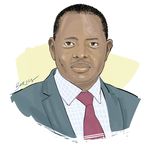
Kenya Mortgage Refinance Company (KMRC) Chief Executive Johnstone Oltetia says the fear is largely unfounded.
“Interest on a home loan is based on the outstanding balance and calculated on a reducing balance. The borrower can fully settle the loan early. The borrower pays the amount initially taken, plus the interest due for the period the loan was outstanding,” Mr Oltetia says.
“For instance, if a 10-year home loan is cleared after two or three years, the borrower only pays the outstanding principal balance plus interest for those two or three years. This leads to savings compared to keeping the loan for the full 10 years.”
It means borrowers who can clear their loans earlier than the planned frame stand to reduce the cost of borrowing.
“Early repayment does not attract any fees or penalties. Borrowers may, therefore, choose a longer repayment period for lower and more manageable monthly repayments, and settle early when they can,” Mr Oltetia says.
This challenges the other common assumption that selecting a long repayment period automatically means unnecessary interest.
Mr Oltetia says a longer tenure can provide flexibility by lowering monthly instalments while allowing borrowers to make additional payments whenever they have surplus income.
Some potential borrowers also worry that banks penalise customers who repay mortgages ahead of schedule because lenders lose expected interest income.
Mr Oltetia, however, says consumer protection rules demand lenders to be transparent and fair.
“Under the CBK Prudential Guidelines on consumer protections, lenders are required to treat consumers fairly and reasonably, avoid unreasonable contract terms and disclose all fees, repayment schedules and total cost of credit upfront,” he says.
“Borrowers are not charged any fees or penalties for settling their mortgage early. They may make extra or one-off payments at any time, which reduces what they still owe and lowers the total interest cost of the home loan.”
Understanding how mortgage interest is calculated can help borrowers make smart financial decisions throughout the life of the loan.
“Mortgage interest is calculated on the amount you still owe. As you continue making repayments, the loan amount reduces, and future interest is charged only on the amount that is still unpaid,” Mr Oltetia says.
This also explains why financial advisers often encourage homeowners to pay slightly more than the required monthly instalment whenever possible.
“Paying more than the required monthly amount reduces the amount you still owe faster, which lowers the interest charged over time. Even small extra payments can help save money because interest is calculated on the remaining loan amount,” Mr Oltetia says.
For borrowers who occasionally receive bonuses, business profits or other windfalls, Mr Oltetia says making lumpsum repayments could prove even more beneficial.
“Borrowers who make extra payments from time to time, in addition to their regular monthly instalments, reduce the amount they still owe the bank, pay less interest overall and build ownership in their homes faster,” he adds.
However, Mr Oltetia cautions against choosing an unrealistically short repayment period simply to finish the loan quickly.
“A practical approach is to choose a longer repayment period for manageable monthly instalments, then make extra payments whenever possible,” he says.
Despite the growing awareness of home financing, there are misconceptions about mortgages.
“A common misconception is that once you take a home loan, you must pay all the interest shown for the whole loan period,” Mr Oltetia says.
“The interest is charged only on the amount you still owe.”
He disputes the notion that mortgage is reserved for wealthy Kenyans.
“Through KMRC, borrowers can now access affordable home loans through participating banks and savings and credit cooperative societies (saccos). These loans are offered at fixed, single-digit interest rates, with long repayment periods and loan-to-value ratios of up to 105 per cent, which can reduce or remove the need for a large deposit upfront,” he says.
Another fear among potential borrowers is that missing a few mortgage repayments automatically results in losing their homes.
Mr Oltetia says that is not necessarily the case.
“Borrowers should talk to their banks or saccos early and honestly if they are struggling to repay. The lender may then agree on a practical solution, such as restructuring the loan, extending the repayment period or adjusting the plan to fit the borrower’s situation,” he says.
He encourages borrowers not to underestimate the cumulative impact of small additional repayments over time.
“Even small additional payments can reduce the loan balance faster, lower total interest paid, shorten the mortgage period and make owning a home cheaper in the long run,” he says.
Mr Oltetia says a mortgage should not be viewed as debt but a pathway to building wealth.
“Prospective homeowners should borrow within their means, repay consistently and make extra payments whenever possible. Choosing a home loan with affordable rates, predictable monthly repayments and a suitable repayment period can reduce borrowing costs and make homeownership more manageable,” he adds.
Hesitating, he adds, comes with a cost.
“Delaying the decision to buy can make homeownership more expensive since property prices rise over time. For many prospective homeowners, the best time to plan, decide and take action is now.”