Time flies with great content! Renew in to keep enjoying all our premium content.
Prime
Young woman defies Luo taboo and plays Orutu
Irene Labdi Ommes, 31, known as LABDI, is a Kenyan musician and composer, and a pioneering female Orutu player breaking cultural taboos around the traditional instrument.
The orutu, a one-stringed Luo musical instrument, was historically played by men during celebrations, storytelling, and ceremonies such as mourning. For years, cultural beliefs discouraged women from touching the instrument.
But Irene Labdi Ommes, 31, better known as LABDI, chose a different path.
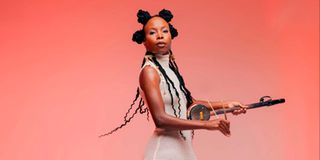
A self-taught orutu player, composer and experimental musician, LABDI is among a new generation of artistes blending traditional African sounds with contemporary influences. In this interview, she reflects on challenging cultural taboos, finding her voice, and the evolving place of African traditional music.
You are described as a rebel and a visionary. How do these identities show up in your music and life?
The rebellious side is demonstrated by the fact that I play the orutu, which traditionally was meant only for men. I actually taught myself how to play it, so when people see that they immediately think, wow, she is a rebel.
But that spirit also comes from my family. My great-grandmother used to make her own instruments and play them. In a way I feel like I’m carrying that energy. In my life and in my music, I try to follow what feels right to me, even if it is not the common path.
Your musical journey began with vocal training at Sauti Academy. How did your voice shape the artiste you are today?
Even before attending Sauti Academy, I was writing songs for my high school band. The funny thing is, I was not even singing them myself, haha. Later I decided to try singing and realised I could actually do it.
When I joined Sauti Academy, I learned how to treat my voice like an instrument. My voice was not so refined though, so they even placed me in a class called “raw talent.” That experience helped me understand my voice better and learn how to take care of it.
What was it that captivated you about orutu when you first held it?
I discovered the orutu while studying fine arts at Kenyatta University. My uncle, who is also a musician, had advised me to look for a traditional African instrument that matches my voice. When I saw the orutu, it honestly felt like it chose me. It only has one string, but it is incredibly complex. And its sound is just so beautiful and deep. When I heard it, it really moved me.
Playing the orutu has been taboo for women. What challenges did you have to overcome to play it?
I already knew it was not common for women to play it. There are many beliefs and superstitions around the instrument. Some people were surprised, others were curious. Some expected me to wear only traditional attire whenever I performed. There was definitely pressure, but I decided to follow my heart.
Irene Labdi Ommes, 31, known as LABDI, is a Kenyan musician and composer, and a pioneering female Orutu player breaking cultural taboos around the traditional instrument.
Photo credit: Pool
I really respect tradition, but I also believe culture has to grow. So I play Luo music like Ohangla, but I mix it with jazz, hip hop, and other sounds from my childhood. I didn’t grow up hearing just one kind of music. I want to let the orutu speak in both traditional and modern ways.
What responsibility do you feel toward young girls who see themselves reflected in your work?
My biggest responsibility is to myself. I have to keep playing and telling true African stories. When I do that authentically, it inspires others. I want girls to look at our culture and think, wow, this is actually powerful and cool.
How has the traditional African music scene responded to your advocacy for women in traditional instrumentation?
For a long time, I felt unseen. The traditional music space is small and male dominated. At first, I felt like I didn’t fully belong, not in the pop circles and not in the traditional circles. But with social media, I’m getting more visibility and people are responding well. I’m grateful that my hard work is finally being noticed.
Is rebellion necessary for cultural evolution?
Yes. Culture needs it to evolve. Most young people today see traditional instruments as old or outdated, so they prefer Western instruments. But if we reclaim our own instruments and reinterpret them in modern ways, culture can grow beautifully.
How did teaching yourself to play orutu shape your relationship with the instrument?
It strengthened the relationship. The journey became very intimate. It wasn’t just something someone showed me how to do, it was something I discovered on my own. I had to be patient and curious the whole time. Every new sound I discovered felt personal, like a small victory.
You have explored live electronic music, sound installations, and experimental ensembles. How do you decide which medium best serves an idea?
When I explore electronics or experimental music, it is really about breaking free from boxes. The goal is not even the final product. It is about the process, the exploration, and just enjoying the freedom to try something new.
Film scoring has become a major part of your career. What draws you to telling stories through sound?
Film music feels like painting with sound. Instead of the usual three minutes for radio, you get the chance to create these long emotional journeys. You are adding feelings to the images people are seeing on screen. It is about giving a voice to the story.
Your work on the Nakshi Race of the Okavango and Kuishi na Simba has received international recognition. How do you connect to environmental and wildlife narratives?
Wildlife has always been part of my life because my father worked in conservation, so I grew up understanding the relationship between humans and nature. And because of that, composing for wildlife films feels very personal to me. I also believe African wildlife stories should be told through African voices.
What did participating in the NEWF Compose Yourself Lab teach you about collaboration and composition?
That experience was a huge turning point. There were five of us from different African countries learning film composition. We ended up scoring a film that later won an award, and we even performed it live in Austria.
Irene Labdi Ommes, 31, known as LABDI, is a Kenyan musician and composer, and a pioneering female Orutu player breaking cultural taboos around the traditional instrument.
Photo credit: Pool
After that, so many doors opened, including opportunities to work with international partners. It really taught me the value of collaboration and the depth of composing for film.
Looking back, what moment affirmed that you were on the right path?
Being selected to perform at Sauti Za Busara was a huge moment for me. I had applied many times before I was finally accepted! There were moments when I almost gave up. I’m also trained in interior design, and I often wondered if I should just focus on that. But when those music opportunities finally came, it felt like confirmation that I was on the right path.
What is the next frontier for LABDI?
I want to keep growing, keep merging fine art and music, and continue telling African stories through sound. I also feel like the Kenyan music industry is slowly growing and starting to pay artistes better, which is encouraging.
But we still need more support and investment in the arts. In the next 10 years, I believe we will see a stronger and more vibrant industry, and I definitely want to be part of building it.