Time flies with great content! Renew in to keep enjoying all our premium content.
Prime
Why Kenyan firms pour millions into sponsorships deals
Jazz lovers enjoying performance at Kenny G’s “One Night Only” concert held at the Kenyatta International Convention Centre in Nairobi on September 27, 2025.
What connects sponsorship deals in Kenya's live music scene right now is not the size of the cheque but the reasoning behind writing one.
Brands are pouring millions of shillings into concerts and festivals, yet none of them expects to recover that money directly at the gate — even when a show sells out well in advance.
Ann Ngigi, Managing Director at YDX Agency, an experiential marketing firm that stages major concerts, says this is simply how the industry works now.
"When you see corporate brands invest millions of shillings in sponsorships for these artistic events, it's never guaranteed that they will recoup their money on that day's event," she says.
She adds that brands often spend even more once they arrive at the venue.
"Some brands spend even more money during the concert day than the actual money they gave to an artiste when they put up stands at the venue to promote their services or products."
According to Ms Ngigi, this only makes sense once the real purchase is understood. "What corporates are buying is time, something even an advertisement can get you," she says. "These corporates are never betting on guaranteed immediate return, but betting instead on the longer game of brand visibility, emotional connection, and cultural relevance."
This logic has been playing out across some of the country's biggest concerts over the past few years.
In November last year, Kenya Commercial Bank injected Sh8 million into Sauti Sol's fifth annual Sol Fest.
"Our partnership with Sauti Sol reflects our commitment to investing in home-grown talent and creating opportunities for creatives to thrive," said Angela Mwirigi, KCB's Director of Digital Financial Services, describing the thinking now driving corporate spending into Kenya's live music scene.
In 2023, beverage company Coca-Cola was among the corporations that sponsored Sol Fest, generating at least Sh15 million for the Sauti Sol franchise, according to industry sources who spoke to BD Life at the time.
That same year, Stanbic Bank committed Sh35 million to Boyz II Men’s show, then spent even more backing saxophonist Kenny G’s sold-out concert in 2025.
Three weeks ago, when David Mathenge, popularly known as Nameless, marked 25 years in the music industry, Safaricom came on board as official partner.
This trend was evident at Nameless’s anniversary show, where EABL’s support for Tusker and Kenya Cane was framed around shared milestones rather than a straightforward product placement.
“We supported Nameless @25 with our two iconic brands, Tusker and Kenya Cane, that are truly Kenyan and culturally centred,” said Faith Nyambura, EABL’s Head of Innovation and Spirits.
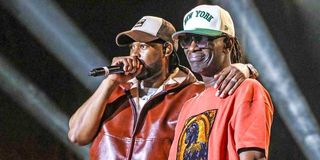
Kenyan dancehall artist Swabri Mohammed, popularly known as Redsan (left), and Kenyan musician David Mathenge, better known by his stage name Nameless, perform during Redsan@30, an event celebrating Redsan’s 30 years in dancehall music, at the Carnivore Grounds in Nairobi on August 29, 2026.
Photo credit: Bonface Bogita | Nation Media Group
“Tusker celebrated 100 years a few years ago, and Kenya Cane is celebrating its 50th this year, so these are milestones. For you to stay relevant in the industry for 25 years is not a joke, and for us, what we look at is what you are doing to keep connecting with the people for generations to come.”
It's who, not how many
Brands are also becoming far more particular about who fills a venue rather than how many people show up, and audience fit is increasingly weighed more heavily than raw attendance.
As such, a concert drawing 10,000 people can hold less value for a sponsor than a smaller one drawing 3,000 people who closely match its target market.
Ms Ngigi gives the example of a premium whiskey brand, which caters for a different audience from a beer brand.
“A cider may naturally fit into a brunch or millennial-focused social event, while a premium spirits brand could be more interested in an affluent, older audience,” she says.
This shift is changing how event organisers pitch potential sponsors. It is no longer enough to promise a headcount.
“Organisers need to explain who those 5,000 people are, what they consume, how they behave, and whether they overlap with the brand’s target customer,” Ms Ngigi says. “Not everybody gets a sponsorship deal.”
Getting the sweet spot
Nameless sees a similar dynamic from the artiste’s side, describing sponsorship as closer to a creative partnership than a plain transaction.
“Whenever you work with a brand, it’s supposed to be a symbiotic relationship. You’re benefiting from each other. You’re trying to synergise. So you look for ways they can benefit from your brand and your energy, and you can benefit from their brand and their energy. And when you get that sweet spot, you’ll want to work together again,” he says.
For brands entering an event, success rarely starts with immediate sales. Sometimes it simply means putting a new product into thousands of hands for the first time, a return measured in trial rather than revenue.
“If you are a new brand, you may say, ‘I want to be able to sample 5,000 people,’” Ms Ngigi explains. “Sampling equals sales later, as much as they are seen as freebies.”
Others are chasing something even less tangible than sampling, such as content.
“Monster Energy, for example, is using its current Monster Battle of the Moves events as a social-content play. Content is visibility for the long term,” she says, noting that the goal is not necessarily to sell the product at the event but to build familiarity and demand that could translate into sales later.
Measuring deal return
This makes measuring return on sponsorship considerably more complicated than simply counting tickets sold. Brands now track audience demographics, sampling numbers, social media engagement and online sentiment before drawing any line back to eventual sales, and the metric that matters most depends entirely on why the brand entered the sponsorship in the first place.
“If you went into this campaign for trial, then your KPI is sampling,” Ms Ngigi explains. “If you went into it for content, then it is content. Brands are always clear on what they want before writing those sponsorship cheques.”
Audience fit still matters more than scale even here.
“A premium whiskey brand seeking cigar smokers, for instance, would have little reason to celebrate if its sponsorship attracted a large crowd that primarily consumes shisha. The numbers might look impressive, but the commercial fit would be wrong. That is why a sold-out concert, while attractive to sponsors, is not necessarily the ultimate measure of success. What matters is what the brand gets from the crowd once it arrives,”Ms Ngigi says.
The in-demand audience
Emmanuel Munga, Events and Marketing Manager at Kijivu Solutions, points to millennials as the audience most brands are chasing right now, largely because they represent a relatively safe and durable bet for sustaining an existing client base.
“Most brands find this to be a safe space to invest in, mostly because they are looking to sustain their clientele or promote new products targeted to this particular audience,” he says.
He adds the artistes are the one who enjoy immediate financial return from these deals. “ In most cases, it's the artistes who make an immediate return on investmen...because they are leveraging their image, and brands also love that kind of association with the artistes.”
Sponsorship dependancy risk
However, not everyone views this trend favourably. Marek Fuch, founder of AfricaCentric Entertainment and Sauti Sol’s former manager, worries that Kenyan and East African artistes have become too dependent on sponsorship rather than ticket sales.
“Ticket sales should be the main revenue source from the event, and then you can have sponsorship at 30 to 40 percent as the cherry on top,” he says.
Mr Fuch contrasts this with artistes like Nigeria’s Burna Boy or South Africa’s Casper Nyovest, who sell out crowds of more than 40,000 after marketing campaigns running six months or longer, often built around events audiences already expect on the calendar every year.
In Kenya, he says, promotional windows rarely stretch beyond six weeks, a gap he believes pushes artistes toward sponsorship as their financial anchor instead of the direct relationship with ticket-buying fans that sustains the biggest shows elsewhere.