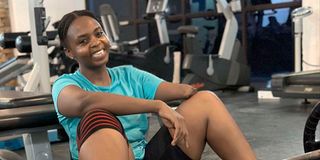
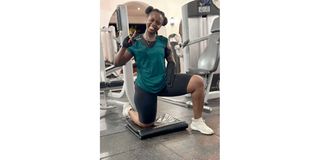
Lena Muthoni Gitonga’s life in the gym is built on constant reinvention. As an upper-limb amputee who lost her hand in early childhood following a road accident, every workout begins with a unique display of determination.
“Much of the equipment in the gym is built for able-bodied people, and because I am disabled and cannot effectively use the equipment, I have to reinvent, repurpose and reorganise things. It is called adaptive fitness.”
Lena works with two trainers, Jermain and Ali, who have adapted her programme over time to suit her unique needs.
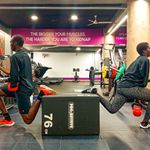
“On cable machines, we use ankle straps to match the length of my arm. Sometimes we use belts, chains or zip ties to stabilise weights. I just have to keep adjusting and make do with what is available.”
The 31-year-old fisheries scientist is also a regular traveller who packs heavily, her bags must include workout equipment.
“I can never pack light because, how will I train while out there? I rarely miss training, so I must factor my reality into my travel. I pack ankle straps and everything else I need to train when I am away from my regular gym.”
Lena’s training follows a strict rhythm. Mondays are for leg day, building lower-body strength that anchors her programme. Tuesdays and Thursdays begin with five-kilometre runs before transitioning into upper-body work.
Wednesdays focus on back training and functional conditioning, while Saturdays stretch into longer endurance runs of between seven and 10 kilometres. Sundays are for rest, although she admits recovery often feels like a psychological challenge rather than a physical one.
“I work out about five times a week, sometimes six. Consistency is everything. Muscle is an investment for the future.”
That future-focused mindset underpins her approach to fitness. For Lena, training is less about aesthetics and more about emotional stability.
“People see fitness as getting your body right,” she explains. “But for me it is for mental health first, physical health second, and then general wellness. That hour in the gym is where I reset.”
Inner strength
Being in the workout space has revealed her inner strength.
Lena Muthoni embodies strength, discipline and adaptive training.
Photo credit: Pool
“There is a post that went viral on social media of me doing one-hand snatches. Many asked how I was able to lift heavy with just one hand. I think it is all in the mind and in the training. Showing up daily for training builds two things in me – my physical strength and my mental capacity to face challenges.
“This helps me confront whatever is before me with great confidence. So when people ask me how I do it, I know they do not see how because of my disability, but doing it anyway proves that I can do as much as any other person as long as I am committed to it.”
Her relationship with fitness began long before she could articulate it in such deliberate terms. Growing up, she often accompanied her father to the gym, absorbing the routine as part of everyday life.
“Those strange African bonding moments where you hang out with your parent in the garage or at the gym,” she recalls. “I think that is where I subconsciously learned that movement is important.”
She formally began training in her early 20s while still in university. At the time, her motivation was simple.
“I just wanted to be fit. I wanted to walk upstairs without panting. It was not even about results. It was just choosing a healthy hobby.”
Her adaptation was always part of the process. Having lived with limb loss since childhood, she approached fitness as an ongoing experiment.
“My disability has been part of me for a very long time. So when I started training, it was about figuring things out as I went.”
Constant adjustment
That process of figuring things out has become central to her life. Standard gym equipment requires symmetry and grip strength – conditions she must constantly work around.
“If I am doing upper body, I know my left side is limited. So we ask, how are we going to balance? We incorporate ankle straps or create extensions. Sometimes my left side is weaker because it is not used as much, so we adjust reps or loads. It is constant problem-solving.”
Reinventing has helped her beyond the gym.
“Seeing beyond challenges and having the will to look for solutions is one of the most significant benefits I get from this – be it at work, at home or in social circles. It has taught me that there is a solution for those who are willing to look for it, and there will always be excuses and reasons for those who are lazy.”
Lena is careful to qualify this view.
“I am not one to diminish people’s disabilities, let’s clarify that. I am only saying there is something many people can do. They only have to search deeper to find out how.”
Adaptive fitness, she believes, strengthens mental resilience precisely because it demands creativity.
“The biggest thing is self-actualisation,” she says. “When you realise you can do something you thought was impossible, the mental win is bigger than the physical one.”
Breaking limits
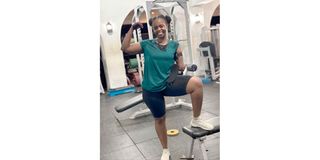
Lena Muthoni's approach to fitness is built on resilience and constant reinvention.
Photo credit: Pool
Moments of breakthrough have punctuated her journey. Exercises such as tyre flips, farmer’s carries and complex lifts once seemed out of reach, but through persistence and experimentation, they have become achievable.
“For the longest time, I thought some workouts were not for me. Then we tried with my trainers, adjusted and tried again. When you finally do it, you realise the biggest barrier was the story you told yourself.”
Running has offered similar affirmation. Completing long-distance runs has strengthened her confidence in her body’s capacity to adapt.
“I ran a marathon in 2025. The fact that I can comfortably run five kilometres continuously shows me I am handling my body well.”
Psychological rewards remain her primary motivation.
“When I am lifting weights, all the weight of the world is gone. You get a moment to breathe. Then you go back to your problems with a clearer mind.”
Fitness has also introduced her to a community she describes as uniquely supportive.
“The gym world is very helpful,” she says. “People assist each other whether you are disabled or not. Sometimes the help is too much, but it usually comes from kindness.”
Support balance
This tension between support and autonomy is one she navigates carefully. For many people living with disability, independence in everyday actions carries deep emotional significance.
“If I can do something on my own, even the simplest thing, it feels like winning a lottery. So the best thing people can do is to be patient unless we ask for help.”
Small acts such as tying shoelaces, setting up equipment or completing a lift unassisted can be major milestones.
“Those small steps matter. They are part of reclaiming your life.”
Attempting challenging exercises in public spaces exposes Lena to scrutiny, but also builds resilience.
“You fail in front of people. But that teaches you to try again. That confidence translates into work, relationships… everything.”
Her advocacy work reflects this philosophy. Through the Len-hand Foundation, she supports individuals navigating life after limb loss, offering mentorship, psychosocial support and advocacy rooted in lived experience.
“When you lose a limb, you go through stages – denial, acceptance, rebuilding. I was fortunate to have strong support growing up. The foundation is about creating that support for others.”
Much of the initiative’s work happens through direct engagement and digital outreach.
“People message me about their children or siblings,” she says. “We walk that journey together.”
Her long-term vision is to expand the foundation’s reach, particularly in adaptive fitness and mental wellness. Resource constraints remain a challenge. In many African contexts, specialised equipment is scarce, forcing athletes to innovate constantly.
“Someone abroad may have access to better tools, but here we have to repurpose. That is why representation matters.”
Failure has also shaped her journey. Attempting complex exercises in public spaces has reinforced resilience.
“You fail in front of people,” she says. “But that builds confidence. You tell yourself, tomorrow I will try again.”
Adaptability, she believes, is a transferable skill.
“The confidence of failing and retrying translates into everything else,” she says.