With the current supply constraints in the country, milk has become harder to find on some retail shelves. At Jaza supermarket, Willy Kimani, the founder and director, says reduced supplies have been noticeable for about a month and a half now.
“They started by stopping the promotions for milk,” he says. “That’s when we knew that there was an issue.”
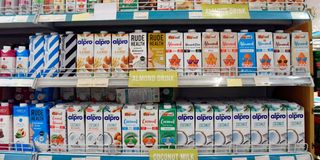
The shortage brings into sharper focus the question of what alternatives exist for Kenyan consumers.
According to Irene Jahenda, a nutritionist at Placid Nutrition Centre, options include goat milk, camel milk, and plant-based alternatives such as almond, soy, and oat milk.
“Cow’s milk has been popular for a very long time, first, because of its palatability,” she says. “It is preferred to goat or camel milk because of taste preferences.”
Its popularity is also due to its nutrient composition.
“As much as plant-based options can compete equally, when it comes to key nutrients such as protein, calcium, vitamins B and D, you’ll find that the cow’s milk actually contains higher levels,” she says. “However, if the plant-based milk undergoes fortification, it can compete on the same scale because whatever nutrients were previously missing have now been added.”
But even with all these options available, Kimani says the retail store has not seen a significant increase in demand for plant-based alternatives.
“From a consumer angle, there’s not much to show that substitutes have now gone up,” he says. “I think this is because their prices are a lot higher than most people are willing to spend.”
A spot check across local supermarkets found that plant-based alternatives retail at considerably higher prices than ordinary cow’s milk. Oat milk was among the more expensive options, retailing between Sh440 and Sh700 for one litre. Almond milk was similarly priced, ranging from Sh415 to Sh700 per litre. Soy milk was relatively cheaper, priced between Sh350 and Sh600 per litre.
Faced with these options, Kimani, whose store has managed to maintain the price of their own milk at Sh44 per 500ml, says customers often prefer to do without milk altogether.
But while the price of plant-based alternatives may be keeping some shoppers from making the switch now, others moved away from dairy long before the current supply constraints.
For Chichi Wambua, the decision came about five years ago, after she began paying closer attention to her health and diet.
“As a Kalenjin, cow’s milk was a staple for me,” she says. “I started questioning my culture when I removed dairy products from my asthmatic daughter’s diet. Once I changed that, I noticed that I stopped having to rush her to the hospital because of asthma.”
Chichi Wambua, a certified health and wellness coach, who studied plant nutrition.
Photo credit: Pool
Her own health further influenced the decision. Having struggled with polycystic ovary syndrome (PCOS), Chichi, who is a certified plant-based health and wellness coach, says her studies prompted her to reconsider the place of dairy in her diet.
“When I went to school and realised that cow’s milk is very high in saturated fats, and it can affect your metabolic health, hormone levels and inflammatory markers, I didn’t see the point of taking it anymore,” she says.
And once she gave it up, Chichi says the change was hard to miss.
“I felt better in my body, even noticed there was less inflammation on my face,” she says. “But of course, it wasn’t just the milk; I complemented it with a whole-food, plant-based diet.”
Now vegan, she consumes plant-based milk, mainly oat and soy milk, which she often makes herself to cut costs.
“Making your own milk is really simple. All you need is the plant, which can be anything from cashew, oats, soybeans, or even millet, some water, a blender, and a sieve,” she says. “A kilogramme of soybeans, for example, is about Sh160 and for a month, I tend to use either one or two kilogrammes.”
She uses the milk for tea, coffee, creamy dishes, smoothies, yoghurt, even ice cream.
“The only thing is that you have to get used to the taste because it doesn’t taste like dairy milk.”
For Careen Arudah, the switch to plant-based milk came about a year and a half ago. She had been drinking cow’s milk until she began finding its taste different from what she was used to.
“The taste was just so off compared to what it used to be like before,” she says. “That is what made me start exploring plant-based milk as an alternative.”
She now alternates between different types of plant milk depending on her needs, but almond milk remains her favourite.
The switch has also become an integral part of her weight-gain journey.
“When trying to gain weight, most people depend on oats, especially those of us who are hard gainers,” she says. “Sometimes, the taste of oats can be very boring, even when mixed with the normal milk. But with plant-based milk, it brings out a very different taste, which has helped me enjoy eating oats more.”
Careen Arudah, a lifestyle and weight-gain content creator in Nairobi, Kenya.
This combination, which she describes as a game-changer, has also helped to improve her appetite, a change that has coincided with a significant increase in her weight, from 32kg to 68kg.
But while Arudah has embraced plant-based alternatives, she acknowledges that they come with their own limitations.
“Sometimes there are some nutritional deficiencies,” she says. “Unless it is fortified, plant-based milk has low protein, calcium, iodine, and vitamin D.”
She also points out added sugars in some of the products, which might put off someone trying to limit their sugar intake. Arudah buys her milk rather than making it herself, typically purchasing a litre that lasts her about two days. She did not anticipate the expense, but she says she ended up liking the product enough to bear the cost.
One thing she wishes she knew earlier, however, is that not all plant-based milks are the same.
“I used to pick any from the shelf, thinking it would be a good substitute,” she says. “But they differ in taste, texture, and nutritional value, and it took me a lot of experimentation to finally find what works for me.”
Her experience highlights the importance of reading the labels on plant-based milk before choosing a substitute.
According to Jahenda, consumers should look out for the quantity of protein, calcium, vitamin D, and B vitamins in plant-based milk, and whether these are sufficient to meet their individual nutritional needs.
“These requirements will vary from one person to another, depending on factors such as age, sex, and
She also advises consumers to check for allergens and whether the product has been qualified by the Kenya Bureau of Standards (KEBS). For some consumers, religious certifications such as halal (Islam) or kosher (Jewish) may also be an important consideration.
Some groups, however, need to be particularly cautious when replacing cow’s milk with plant-based alternatives. These include pregnant and breastfeeding women, young children who are highly dependent on milk, and the elderly. These groups of people, Jahenda says, have nutritional needs that require closer attention when making the switch.
For consumers who cannot afford plant-based milk, Jahenda suggests turning to other locally available foods to provide the nutrients they would ordinarily get from milk.
“The key nutrients in milk include protein, calcium, and vitamin D, which we can get from other sources,” she says. “Omena is a good option, as are beans, lentils and green grams. You’ll get what you need from these, as long as you take them in the right quantities.”