Not too long ago, Mwenda’s Cocktail Pub was one of Nairobi’s favourite spots in the CBD where the city relaxed after a long day. It was the go-to spot where many would stream in, order a beer or cocktail, then another for the road, waiting for Nairobi’s traffic to ease before heading home.
Instead of getting stuck and bored in the chaotic traffic for hours, it made perfect sense for many—friends and strangers alike—to find their way after work to Mwenda’s, nestled snugly on Utalii Street. The decor blended modern aesthetics with traditional elements; the soft music was great, and the cocktails were eccentric.
The bartenders at Mwenda’s knew their craft, creating signature cocktails with finesse. Part of its charm was opening as early as 2 pm daily, and the early birds were rewarded handsomely with irresistible happy-hour deals. This had a gravitational pull, drawing in a loyal crowd even before the first glass was poured.
And so, everyone talked about Mwenda’s cocktails even before the pub opened for the day.
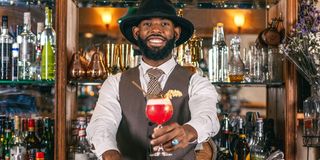
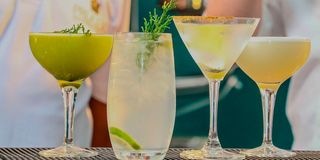
The Najivunia cocktail blends fermented sugarcane and black pepper with a zesty kick of lemon and Aperol.
Photo credit: Shutterstock
“Many loved the spot; it was always packed and quickly became popular for cocktails. They had some of the legit cocktails you’d ever have, made even better with happy hour deals. You’d get the third cocktail on the house if you came early. For beers, a bucket of five for the price of four, sometimes even six for five,” Alex Gakumo, a beverages businessman, recalls.
Much has changed now. What was once Nairobi’s thirstiest hour—a sort of social contract where 2pm marked the start of affordable indulgence—has gradually faded.
Nowadays, happy hour isn’t just about discounted drinks. It is about chasing sunsets from cozy rooftop venues, cocktail specials with live music, burger-and-beer pairings after hours, and even mocktails during lunch. And yes, there’s fantastic food offers too, not just drinks.
“I think what killed the happy hour drinks culture is competition. Everything is driven by competition. You look at what your competitor is offering, the margins you’re making, the overheads, and sometimes you realise offering that discount doesn't really pay off. So, your deals stop being as attractive, and gradually, you stop giving those discounts,” Alex explains.
He also believes the rush to outdo each other secretly drained happy hour of its soul. As competition grew fiercer, everyone chased sharper margins under the guise of ‘better’ deals, leaving the customer experience out in the cold.
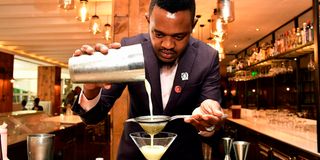
Mixologist Kelvin Thairu crafts a cucumber mocktail at Harvest Restaurant, Trademark Hotel, on April 6, 2023.
Photo credit: File | Nation Media Group
“Happy hour became heavily commercialised as it grew popular. I remember a time when you’d order a drink and be handed a small bowl of groundnuts on the side. Some places would entice customers with bites. Those incentives made you stay longer or come back. But then all that suddenly disappeared as competition exploded,” Kelvin Thairu, Tribe Hotels Group Bars Manager and a mixologist, concurs.
“With competition, the customer experience was abandoned. It was no longer about offering an enjoyable experience but about recouping costs and making margins. Many establishments stopped using quality liquor for cocktails, opting for cheap, low-quality options. Over time, customers started to notice they were being shortchanged; things weren’t as good as they used to be,” he explains.
Kelvin also believes the Happy Hour culture was heavily influenced by millennials, who have since changed their drinking habits. “Many people have slowed down on drinking. The aggressive drinking culture that supported Happy Hour a few years back is no longer here. Many who enjoyed drinking now are very cautious about how they indulge. These days, many want to drink but stay sober during the occasion. If someone used to have four or more cocktails, now it’s down to two or even one. Some ask for light cocktails or switch to mocktails after a good, strong one,” he explains.
For Kelvin, this shift is mainly about demographics. “In my view, it's the millennials who really drove the Happy Hour culture because they have the spending power. Look at Gen Z—they’re quite heavy drinkers like Millennials were a few years ago, but most of them don’t have the disposable income.”
As the culture shifts from traditional happy hours, he notes the focus is now on mocktails.
“Many people are switching to non-alcoholic and low-ABV cocktails, focusing more on flavour than strength. Customers are very particular about ingredients; they don’t mind paying more if quality or premium products are used, like fortified wines, vermouth, amari, and aperitifs such as Aperol, resulting in drinks under 10 percent ABV,” he says.
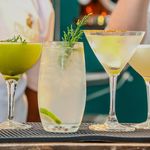
Tom Collins, Procera Gimlet, dry Martini and Kijabe Sour on display during a cocktail competition at Procera Gin firm in Industrial Area, Nairobi on December 5, 2024.
Photo credit: File | Nation Media Group
Joel Dan, a manager at Kentwood Address Runda, observes that many drinkers nowadays don’t seem attracted to Happy Hour deals.
“Most no longer respond to Happy Hour offers. Even if you put the deal later in the day, you won’t see the numbers. Nobody seems interested anymore. A customer walks in, notices the deal, and still asks for their ‘usual’,” he says.
While the culture may be fading, Kelvin quickly admits that Happy Hour once made good business sense.
“Happy Hour delivered solid returns. You attract people with discounted drinks for a limited time, then once that ends, they keep spending at full price. Realistically, how many cocktails can someone have during happy hour? One or two. After that, they settle in and spend normally—that’s when we maximise profits,” Kelvin adds.
Now, as Happy Hour’s popularity wanes, the approach has shifted to more curated, experience-driven offerings.
“With more people drinking responsibly, themed nights have become popular. Date-night packages, for example, are a strong selling point. People want value. Give them a good mix of food, drinks, and music, and they’ll be willing to pay. In the past, food stayed at full price, even during Happy Hour. Now, if you offer an all-in package—meals and drinks for, say, Sh6,000—it just makes more sense. The key question now is: what more are you offering beyond just discounted drinks? People want an experience, not just a deal,” Kelvin explains.
Beyond these curated experiences, Alex notes that entertainment has become increasingly important. “The value you used to get during Happy Hour now goes into entertainment, with venues booking DJs and live acts. There are still a few places offering deals, but customers are more drawn to big-name performances,” Alex concludes.