Kenyans embrace sourdough bread for healthier breakfast alternative

Sourdough bread on display at Zubi Bakery in the Gigiri area in Nairobi on March 5, 2026. Wilfred Nyangaresi | Nation

Photo credit: Wilfred Nyangaresi | Nation Media Group

Sourdough, one of the oldest forms of leavened bread, is fast gaining popularity among Kenyans who boost their gut health without giving up wheat altogether. It is made through the slow fermentation of flour and water by wild yeast and naturally occurring bacteria.

Unlike commercial bread that relies on industrial yeast to rise quickly, sourdough develops over many hours, sometimes days, allowing flavours to deepen as the dough slowly ferments.
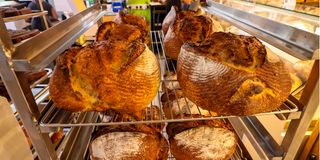
One of the bakeries catering to this growing appetite is Zubi Bakes, located on Limuru Road, Nairobi. At this bakery, the sourdough is not just an ingredient; it’s a continuous, actively fermenting community of wild yeast and bacteria (LAB- Lactic Acid Bacteria) which they have named Zaara.

“The wild yeasts and LAB colonies work at their own pace, they break down proteins, produce complex acids and develop flavour. When we check the dough at our normal intervals of six hours, 12 hours and the next day. We are reading the dough. The feel tells us everything- how elastic it is, how aerated, also how the smell shifts from just flour to bread like,” Moh Nanji, the director of Zubi Bakes says.

Moh is no stranger to the kitchen.

Growing up, his father owned a big restaurant in town, in the 1960s. He learned to bake pretty young, it was a family thing. However, it was a personal crisis that pushed Moh and his wife to venture into sourdough business.

“Our son got into a car accident, crushed into a garbage truck, the doctors had to operate and clean out his intestines. In the process, his gut microbiota was wiped out, and he became very sensitive to foods. He developed lactose intolerance, and the doctors also suggested there might be gluten intolerance.”

In search of a solution, they began baking bread at home. “We started with yeasted bread, using the normal commercial yeast and local flour and he was fine with it.”

Then they began experimenting with sourdough. “We made our own starter but it failed a couple of times. It’s very smelly at first, but you have to be resilient enough to continue. Eventually we got the hang of it.”

At the bakery, Moh says they have different varieties of sourdough bread.

“The whole process of making the bread takes between an 18 to 36. We mix the flour, water and salt. Then, for some loaves we add butter, for some we add olive oil. Some we add multigrain seeds. We also have a white loaf with olive oil.”

They avoid vegetable fats completely. “Even our tins are greased in butter. We want to stay as natural as possible. If we want to make the loaf a little more flavourful, we use olive oil.”

Moh says that the quality of the bread depends on ingredients used.

“Our flour is expensive because of the process we use. We get good quality butter from Rwanda, which is among the best in East Africa in terms of fat content. We also use olive oil imported from Egypt and Tunisia,” he says.

Sourdough’s slow fermentation, Moh adds is what makes it both unique and nutritious.

He notes: “It’s a very slow process. It takes a minimum of a day to make a loaf, from start to finish, and it’s the time that does the pre-digestion for you. That’s why sourdough is good for you because 70 to 80 percent of the gluten is pre-digested as the loaf rests through long fermentation.”

He says the starter is a tell-tale sign of how well the bread will turn out.

“Our starter looks like a little network when you open it up. It’s threads of flour and water, partially eaten by microbes and yeasts. In one teaspoon, there are millions of bacterial colonies. In the buckets, it’s in the trillions. Every day, we make between 30 and 45 kilos of starter, and then use that culture to integrate back into fresh flour, water, salt, and any fat that we choose to make the loaves. We’re just going back to the tradition of making real food,” he says.

From their humble beginnings when they baked about 10 loaves a day, Moh says their operation has grown over the last four years.

Displays of a selection of freshly baked products at The Good Grain Microbakery outlet along Waiyaki Way in Nairobi on March 5, 2026. 

Photo credit: Wilfred Nyangaresi | Nation Media Group

“Currently, we do a couple hundred a day. We also have the baguettes, frozen sourdough waffles, English muffins, croissants. Everything we do is sourdough. We’ve now introduced a gluten-free range, which is also sourdough and the amazing part is that it’s made with our wheat sourdough, which has gluten, but after 22 hours of fermentation, 95 per cent of the gluten is digested.”

Zubi Bakes also accommodates modern convenience without compromising the tradition. “You can freeze this bread. Take it out, put it in the toaster or oven, and it will be perfectly fine for three months. But when its left in the open it will grow mould in five days, sometimes three depending on humidity.”

Sourdough is one of the oldest forms of leavened bread, whose origins traces back to ancient Egypt. The method spread across Europe and became a staple before the commercial yeast came into the market.

In Europe, sourdough is ingrained in their food culture. Many Europeans eat it daily, whether as a sandwich base, or alongside their soups and cheeses.

French bakers often use levain, which is an elastic starter for baguettes and their loaves. Italians have stiff pre-ferment (dough starters) called biga for their rustic breads. Germans have the hearty rye sourdoughs and Scandinavian countries prefer sourdough since its long-lasting, tangy rye breads suit their cold climate.

“Sourdough is not limited to bread. There are people who do sourdough chapatis, cookies, waffles, croissants. People pair the breads with soups, butter, chocolate, depending on preference. Multigrain goes well with butter for breakfast, white sourdough goes well with soup. The possibilities are endless,” says Moh.

‘I started it as a hobby’

Another Nairobi sourdough baker, John Macharia, did not set out to build a bakery. In 2020, at the height of Covid-19 disruptions, he began baking bread at home. “I just did it as a passion project and it slowly built up steam.”

John says he used to give away extra loaves to friends and family, but his quality bakes impressed many. “People started asking to order the bread. Eventually after some time I decided to start a baking side-hustle on Instagram.”

He runs The Good Grain, a bakery dedicated entirely to sourdough.

“All our leavened products are sourdough. Anything from the breads, the focaccia, to the buns, to the doughnuts, everything is sourdough,” says John.

For him, the appeal of sourdough lies in its history. “I felt like it’s almost a lost procedure of how bread started. We forgot doing quality bread and started doing bread with the yeast, because it is more efficient, you can get bread to rise faster and it’s more commercially viable.”

Natasha Achola, a supervisor at The Good Grain Microbakery, displays a selection of freshly baked products at the bakery’s outlet along Waiyaki Way in Nairobi on March 5, 2026. Wilfred Nyangaresi | Nation

Photo credit: Wilfred Nyangaresi | Nation Media Group

At his bakery, the menu features several varieties of bread. “We have about six different breads. We have a seeded loaf, a rye and millet loaf, shokupan bread, which is similar to milk bread, the standard sourdough loaf, and a pumpkin loaf.”

Beyond the traditional loaves, the bakery also experiments with other sourdough pastries. “We do focaccia with different toppings, buns, and doughnuts,” says John. In fact, one product in particular has proven unexpectedly popular. “Our sourdough doughnuts, regardless of the age gap or spending power, are one of our fastest moving items.”

Despite the niche nature of sourdough, John says the reception has been encouraging. “Most people buy the bread because it’s good, not necessarily because it’s sourdough. Our repeat customers are usually people in their 30s and upwards who are more health conscious.”

“They also have more spending power and can afford about Sh400 on a loaf of bread, that’s higher than the commercial yeast bread.”

Like Moh, John began with baking about six loaves per day but with rising demand, he now makes up to 100 loaves in a day.
Their customer base, John says, has also continued to broaden.

“In the beginning we had a lot of foreigners or expatriates buying the bread. Now we have a more diverse Kenya group of customers, including Kenyan Indians to the Somali community, who are actually some of our best customers.”

Despite the rise in demand, the influence of sourdough is largely being driven by independent bakeries, home bakers and small food businesses that focus on the slow fermentation and minimal ingredients. Sourdough bread is not as readily available to Kenyans as the commercial yeast alternative.

Perhaps this is why it is still a premium product, with a loaf going for about Sh400 or more, depending on the bakery and ingredients used.

PAYE Tax Calculator

Note: The results are not exact but very close to the actual.