Here’s how to make authentic Kenyan dawa

Dawa — Kenya’s honey, lemon, and ginger tonic — fights colds and boosts wellness, from kitchens to cocktail bars.

Photo credit: Shutterstock

In many Kenyan homes, a cough rarely goes unanswered. “Umekunywa dawa?” someone will ask — Have you taken medicine?

But the “medicine” in question is rarely a pill. Often, it is a homemade blend of honey, lemon and ginger, the widely trusted tonic believed to soothe colds, clear blocked sinuses and warm the body.
While recipes vary from household to household, the intention remains the same: Comfort and relief.

For Nairobi pastry and bakery chef Anthony Mutahi, the familiar concoction is far more than a simple home remedy. In his kitchen, the classic dawa becomes a potent, citrusy, spicy concentrate with multiple uses.

“I have two versions,” he says. “One is the classic remedy for colds, sinus issues and sore throats, while the other is a wellness shot packed with vitamins and supplements.”

His approach to the drink departs from the more common method of boiling ingredients together in a pot.

“Heat can reduce the potency of some vitamins,” he explains.

Instead, Anthony blends his ingredients raw. His go-to recipe is a potent combination of six oranges, 12 lemons, two rosemary twigs, two stalks of lemongrass, a teaspoon of turmeric, a quarter a teaspoon of cayenne or black pepper, a quarter a kilogramme of ginger, celery sticks, mint leaves and garlic.

Dawa — Kenya’s honey, lemon, and ginger tonic — fights colds and boosts wellness, from kitchens to cocktail bars.

Photo credit: Shutterstock

“Everything goes into the blender, including the skins,” he says. “People usually throw away the peels but they are very nutrient-rich.”

He blends the mixture in batches with water before straining it overnight through a clean piece of cloth and bottling the concentrate which can be refrigerated for up to two weeks.

Anthony typically dilutes the concentrate with hot water and stirs in some honey when he drinks it, but sometimes, when his flu symptoms are particularly overwhelming, he warms it slightly in a microwave and takes it as is.

“The longest my symptoms have persisted while using this remedy has been three days,” he says.

For his wellness shot, he simply halves the number of lemons, adds celery sticks, leafy green vegetables and a sliced pineapple to the other recipe, and takes double shots daily.

Interestingly, Anthony rarely throws away the blended pulp after he strains the juice. He uses it to marinate meats and add flavour to bone, beef and chicken stock.

Kelvin Thairu, bar manager at Hero bar, describes the original dawa as a classic Kenyan cocktail first served at the Carnivore Restaurant.

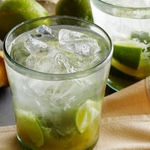
“It has three ingredients, muddled lime, raw honey and vodka,” he says.

The cocktail is built in the whisky glass, where lime wedges are pressed with a muddler, stirred with raw honey then combined with crushed ice and vodka.

“To serve, we add some more ice, garnish it with a slice of fresh or dehydrated lime and put in a dawa stick,” he describes. “The dawa stick, which can be a simple bamboo stirrer, allows you to keep mixing your drink as you sip.”

What most Kenyans call dawa, Kelvin says, is actually hot toddy, which includes honey, lemon, ginger and brandy.

“It can be alcoholic or non-alcoholic,” he says, steamed and served hot to guests who may be feeling under the weather. Vodka and brandy can also be swapped for whisky or rum, he says, though gin can be a little tricky.

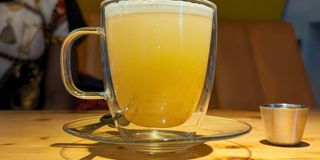
Mbalo Mutie, group head barista and Head of Coffee Excellence at Java House, says their classic dawa offering, is a fresh combination of locally produced honey, lemon and ginger.

“We steam some grated ginger with water, sieve, add the lemon and serve it with honey on the side,” he says.

“Over time, we have included variations of the classic dawa, and these include either mint, cardamom, turmeric or cinnamon.”

Depending on the season and guest preference, it is served hot or iced.

Mutie Mbalo, Group Head of Coffee Excellence at Java House, serves a cup of Java Dawa to a customer on March 5, 2024.

Photo credit: Pool

Whether as a cocktail, a hot mug or a wellness shot, most dawas share the same core ingredients: Honey, lemon and ginger. Registered clinical nutritionist Brighton Onyango says this is no accident.

“These ingredients contain compounds with health-supporting properties,” he says.

Honey makes the drink more palatable, soothes the throat, provides energy and supplies antioxidants. And while some may substitute the honey with brown sugar or syrups, the nutritionist says honey is superior, but it should be consumed in moderation especially by people with diabetes who might need to avoid it altogether.

Lime, rich in Vitamin C, supports immunity, reduces inflammation and can ease nausea.

“It can be substituted with another source of Vitamin C such as oranges, guavas and kiwis.”

Ginger also offers antioxidants and helps reduce inflammation, nausea and digestive issues. And while other spices with the same properties can be used as alternatives – turmeric, pepper, cinnamon, Brighton insists that none can be a perfect replacement for ginger.

“Each of them have their own unique effect,” he says.

In measured amounts, alcohol in the cocktail can add a social element, but Brighton cautions that in excess, the alcohol strains organs such as the liver, impairs sleep and judgement of an individual and can interfere with medications.

Brighton agrees that in preparation, some components could be degraded with exposure to high heat but it is also important to research the ingredients beforehand as some affect how well other nutrients are absorbed into the body.

“There’s not much nutritional loss in how the drink is served, whether hot or cold, but if one is looking to soothe the throat or ease congestion, it is more comfortable to have it hot,” he adds. “It is also important to note that while this concoction supports wellness, it does not replace prescribed medication nor undo unhealthy habits.”

Follow ourWhatsApp channel for the latest business and markets updates.

PAYE Tax Calculator

Note: The results are not exact but very close to the actual.