A substantial number of Kenyan homes priced above Sh45 million now feature open-plan kitchens. The design concept was borrowed from Western interiors and increasingly used by developers targeting discerning, well-travelled buyers while maximising space.
By removing the walls between the kitchen, dining, and living rooms, even townhouses sitting on as little as 0.07 acres are made to feel significantly bigger and less boxed in.
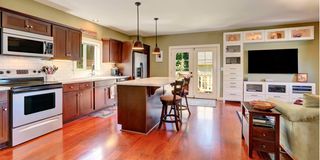
“It wasn’t necessarily a request from buyers at the beginning,” says Kingmax Mbarire, the CEO of Kingsville Real Estate. “It was what developers had seen in Western countries, and they were trying to replicate it in the Kenyan market.”
Because the concept was new, it quickly gained popularity and became a key selling point.
“Developers were looking for unique selling points. They saw what was happening in more developed markets and brought those ideas here. It worked for quite some time because it was something different.”
But now an open-plan kitchen is no longer as appealing to many homeowners, especially those with big families. Some homeowners are now converting external laundry spaces into secondary kitchens, often referred to as “wet kitchens”, typically used for heavy cooking, meal prep, and odour-heavy food preparation, kept separate from the main open-plan kitchen.
“Open-plan kitchens were a trend. Trends come, they catch on, and eventually they fizzle out. The market has now realised that the concept does not necessarily accommodate African, or rather Kenyan culture,” says Mr Mbarire.
Market correction
Some buyers, especially those who bought off-plan units, have come to realise that what looked appealing on a floor plan does not suit daily routines.
“We grew up with closed kitchens. In many ways, the kitchen is the heart of the home. Integrating it directly into the living room is not something we were traditionally accustomed to,” Mr Mbarire says, adding, “But the market is correcting itself. People know what works for them and what doesn’t.”
Amina Omar, 34, is among homeowners building a second kitchen. She bought her house in Nairobi for about Sh38 million and began by closing off the open kitchen.
She built a glass wall to deter her two children from crawling in, but also ensure privacy while cooking. A few months later, she realised that the wall was inadequate.
“I usually buy lots of vegetables and meat. The preparation turns my kitchen into chaos. It became so hard for my husband to enjoy watching football in the living room, pans falling from sinks and knives chopping chicken. The smell of food was also irritating. I have two house helps doing their work in the kitchen well past 9pm sometimes, we’d hear them laugh at our [husband and her] jokes, meaning no privacy,” she says.
She repurposed her laundry area into a wet kitchen, installing a cooker as expensive as the one in the main kitchen, costing about Sh109,000, which is reserved largely for preparing meals for the children.
The space has been fitted with waterproof cabinets, a double sink, and a sunproof glass roof that allows natural light to filter in but not the sun, a cooker with a hob, turning it into a functional, well-lit secondary cooking space.
“I moved the washing machine to the rooftop,” she says. “It just makes sense, why walk from the bedrooms upstairs, down through the sitting room and kitchen, just to do laundry?
She says that because plumbing and electricity nodes were already existing as it was a laundry area, what was messy was the drilling and tiling on the walls.
The cost? “I spent about Sh1 million.It may seem like an unnecessary cost, but I’m happier.”
The cost can be higher or lower if homeowners add a second fridge, put in one sink or a normal cooker. “
Returning to function
Kelvin Bwamu, an architect at Architecture by Cedar, agrees that open kitchens were shaped by global influences.
“People have travelled, watched American shows and seen these contemporary designs. Honestly, an open kitchen looks good, especially if you love contemporary designs,” he says.
Open kitchens not only make homes feel bigger than they allow for easier interaction within the home, since the person cooking is no longer shut away from everyone else. One can simply shout across the kitchen without opening a door, “Should I add paprika?”, and get a quick response back, “Babe, no.”
However, Mr Bwamu says many homeowners are now discovering that beauty and proximity are not enough. He argues that the kitchen performs a fundamentally different role from the living room and therefore it benefits from some level of separation.
“A kitchen is a service room. For example, when you go to a hotel, kitchens are usually positioned out of sight because they can be messy. There are smells, cleaning agents, food preparation and all sorts of activities that people may not necessarily want spilling into the rest of the house,” he says.
This has become one of the biggest drawbacks of open-plan living. As a result, Mr Bwamu says that an increasing number of his clients are requesting enclosed kitchens.
“More and more of my clients are saying, ‘No, let’s go back to enclosed kitchens.’ Even in new developments, people are opting for closed kitchens once again.”
He believes that the shift extends beyond kitchens and shows a wider reassessment of housing priorities.
“People are slowly moving back toward more functional homes. Just as we saw a fascination with spectacular houses and certain design trends, people are now beginning to focus more on practicality.”
Villas, townhouses
While some homeowners are returning to fully enclosed kitchens, others are embracing the hybrid approach. The wet kitchen, once considered a luxury feature reserved for high-end homes, is becoming more common.
Mr Mbarire says wet kitchens have become an almost standard feature in villas and townhouses. “For standalone homes, wet kitchens are becoming a must-have,” he says.
Unlike a traditional kitchen, a wet kitchen is designed mostly for heavy cooking. It is usually located in a separate section of the house or adjacent to utility spaces.
Kelvin Bwamu, the Principal Architect at Design Cedar, shares his insights about issues like land grabbing, fraud, and squatters and how they affect property ownership in Kenya.
Photo credit: Shutterstock
Additionally, real estate experts say that many, especially those who don’t have an alternative space, are turning their laundry areas or domestic staff quarters (DSQs) into second kitchens.
Mr Bwamu says this trend is partly driven by our local cooking habits. The nature of Kenyan cuisine differs from the cooking styles that influenced open-plan kitchen designs abroad.
Although open kitchens may work well for lighter meals, many Kenyan households regularly prepare foods that involve frying, boiling, simmering and extensive food preparation.
Consequently, beyond functionality, cultural considerations still influence housing preferences. Mr Bwamu says many families still value the separation between social spaces and service spaces.
In an open-plan design, those distinctions may become blurred.
“People feel like they are occupying each other’s spaces. The cultural aspect is still ingrained in many people, and some homeowners simply don’t feel comfortable with that arrangement.”
Bigger homes, bigger kitchens
The return of the enclosed kitchen is occurring alongside another shift in the residential market: the demand for larger homes. According to Mr Mbarire, buyers are prioritising space.
“Before, developers could sell one-bedroom apartments measuring as small as 45 square metres. Today, if you’re selling something that small, you are going to struggle.”
The pandemic, changing work patterns, and evolving lifestyle expectations have all contributed to the growing demand for larger living spaces.
“People want space now, they want bigger units and with bigger units comes the return of the closed kitchen.”
Mr Mbarire says this trend is evident among buyers seeking homes for owner occupation rather than investment purposes.
However, he adds that open-plan kitchens are still common and continue to make commercial sense for studio apartments and one-bedroom units.
“If someone is buying a studio or a one-bedroom apartment, they are primarily buying it as an investment. They don’t necessarily intend to live there long term,” he says.
In such cases, maximising space is the priority. The situation changes once buyers move into larger homes.
“For two-bedroom and three-bedroom apartments, these are people who intend to live there. Those buyers want closed kitchens.”
He notes that the same preference is emerging in the Airbnb market, where longer-stay guests favour enclosed cooking spaces.
Reinventing kitchen
The return of the enclosed kitchen does not mean a return to traditional designs because developers are also redesigning the concept to meet modern expectations.
According to Mr Mbarire, today’s closed kitchen has little resemblance to the kitchens found in older homes.
“A traditional home would simply come with an empty kitchen. The homeowner would buy the refrigerator, storage units and everything else.”
Today’s buyers expect more.
“A modern closed kitchen must be fully fitted and fully furnished.”
Developers are incorporating integrated appliances, modern cabinetry and premium finishes as standard features. “You have to provide a hood over the stove and oven, refrigerator, and storage cabinets. Some developers are even providing dishwashers and heated water systems.”
In high-end villas, Mr Mbarire says the specifications are becoming even more sophisticated.
“For villas, we are going further and creating even more storage space and integrating more technology into the kitchen. The modern consumer dictates that when you are building a house, whether it is a villa, townhouse or apartment, the development must include modern amenities. Modern developments are attracting stronger returns because they are offering what today’s buyers want,” he says.
He adds that the kitchen has become one of the most important selling points in modern residential developments.
Cost of modern living
The evolution of kitchen design is also reflected in property prices. In Nairobi’s higher-end residential market, the modern developments featuring larger units and upgraded amenities command premiums.
According to Kingsville Real Estate, a standard two-bedroom apartment in Westlands currently retails for between Sh14 million and Sh15 million. A two-bedroom unit with a domestic staff quarter can fetch between Sh15.5 million and Sh16 million.
In Kilimani, where the supply has increased substantially in recent years, prices are relatively lower.
“A two-bedroom apartment in Kilimani can currently go for between Sh10 million and Sh12 million because supply is much higher than demand.” Mr Mbarire says.
Living with the reality
While architects and developers are seeing a market shift, interior designers say the change is also being driven by experience. According to interior designer Sarah Okumu, the open kitchen was never entirely about cooking.
“The open kitchen represented a certain lifestyle. It was associated with modern living, entertaining guests and the type of homes people were seeing on social media, television programmes and international design platforms,” she says.
The design created a sense of openness and made homes appear larger, particularly in apartments where maximising space was important. She adds that kitchen islands also became statement pieces as the kitchen itself evolved into an extension of the living room.
However, Ms Okumu says that as families settled into these spaces, practical concerns became an issue.
She adds that one of the biggest complaints homeowners raise is the challenge of maintaining a tidy kitchen when there is activity from the living and dining areas.
“In a closed kitchen, you can prepare meals, leave a few dishes in the sink and deal with them later. In an open kitchen, everything becomes part of the living space. There is constant pressure to keep it looking organised because it is always on display.”
Cooking odours have also become a recurring concern making many homeowners opt for what designers call the dual-kitchen concept.
“What we’re seeing today is not necessarily a rejection of modern design. People still want beautiful kitchens, premium finishes and contemporary layouts. The difference is that homeowners are now asking whether those spaces genuinely support the way they live,” Ms Okumu says.