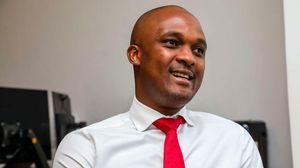
She was the kind of Human Resource (HR) boss companies fought to poach. Five months into one role, competitors would start calling to offer her a better job. Former employers kept the door open, eager to re-hire her.
But after Dorcas Kiai walked away from her last job in June last year, she was surprised at how hard it was to find employment.
For 18 years, Dorcas had worked as Head of HR in companies across the healthcare, non-governmental organisations, government, and banking industries.
Then last year, she resigned. She is no stranger to walking away from employment. Earlier, she had stepped out of another role when boardroom battles left her facing a choice of allegiances.
With a doctorate in Strategic Management from USIU, she knew she would get a job. But little did she know she would mark the beginning of one of the most defining periods of her life.
Rejections and anxiety attacks
She tried to return to formal employment almost immediately, but was rejected twice in succession. This was a first. It humbled her. Was she not as important as she thought she was?
“The fact that I’d worked for top employers didn’t mean I’d be picked immediately. This was a very different space,” she tells the BDLife. Dorcas quickly realised how top performers end up losing their professional identity, and it destroys them.
To ease the sting of the rejection, she decided a change of environment was ideal and travelled to New York, US, to visit a friend. That period, she says, gave her time to reflect.
“Should I keep trying to go back to employment? Should I start a consultancy?” She asked herself.
She began journaling more intentionally to help her cope with anxiety, uncertainty, and the loss of identity that came with having no job.
“I would wake up at 3am, 4am because of anxiety attacks,” she says. “I would journal in the morning and in the evening. Sometimes four, five hours a day.”
When she returned to Kenya, she faced eight more job application regret letters. She began reviewing the journals she had written and realised they could help others going through similar experiences, and perhaps earn from them too. In her years in HR, she had seen how employees silently struggled through transitions, loss, and uncertainty.
“A lot of people don’t speak out,” she says. “It’s a very lonely time.”
Transition guides
She began compiling her journals into books. Her first book, It Will Be Well, focuses on self-encouragement during anxiety and rejection.
The second, A Day At A Time, emphasises structuring daily life and focusing on the present. The third, Strength Like No Other, addresses emotional resilience during difficult periods. The fourth, The Edge of Fear, explores the decisions people face when transitioning in life.
But when she finished the books, she kept them away for more than a month, fearing to share her vulnerability.
“I knew if people read them, they would know my situation, they’ll now know Dorcas is not the well put together HR practitioner that they saw,” she says.
It was only after encouragement from a coach, Richard Oloo, that she began sharing them. She started with family and close friends, then expanded to her professional network.
The first batch of 1,000 books (250 copies per title) sold out within a week, each going for Sh1,000.
New opportunities soon emerged. One reader suggested she develop a wellness programme for organisations.
As demand increased, companies also requested support with recruitment and performance management. This led to the formation of Dr Dee HR Solutions.
“Wellness is my passion,” she says. “That’s what I thrive on.”
Today, her work focuses on helping organisations build systems that support employees holistically, in terms of physical, emotional, social, and professional wellbeing.
She now charges from Sh1.2 million to Sh2.3 million, depending on the size of the organisation.
Dorcas hopes to go back to teaching too, this time at a higher level.
How she got into HR
For her undergraduate studies, she studied Education, but never really fell in love with teaching.
“I was teaching in a college somewhere in Nairobi,” she recalls. I was barely in my 20s, teaching business studies, and these are guys who are actually very seasoned. Some of the questions they were asking I’d never even experienced, but here I was expected to give them feedback and teach them.”
That experience made her rethink her teaching path. Dorcas took up a role at the Korean Embassy as a personal assistant to the ambassador. She found herself handling HR matters for Kenyan staff, while also helping expatriates understand Kenyan labour laws.
“That’s when I realised this is what I wanted to do,” she says.
Working at the embassy also gave her time. Workdays ended at 4pm from Monday to Thursday and at midday on Fridays. With that flexibility, she enrolled for a Master’s degree in HR at the University of Nairobi in 2002, which was conveniently located just opposite the embassy at the time.
After completing her Master’s degree, Dorcas joined her first role as a HR professional, overseeing more than 2,000 staff.
After six years, she got restless and ready for a bigger challenge. She moved to a regional management role covering Kenya, Uganda, Tanzania, Rwanda, South Sudan, and Burundi.
“They [Eastern Africa Grain Council] had never had an HR department,” she says. “I set up the foundations – getting the right people, policies, and procedures on board.”
After three years, she left to take care of her daughter, who was facing health challenges. “For eight months I wasn't working,” she says. In 2016, she returned to her second employer, this time as Head of HR.
After four years, she quit and took up a consultancy role. Five months later, another company came calling; this time around, a parastatal. The organisation had grown to over 14,000 staff and needed someone to manage its work plan design.
“It was not easy working in government,” she says. “People who have been there forever wonder who this new person is coming to tell them what they need to do.”
That work caught the attention of a top CEO. The company, with more than 8,000 staff members, poached her to help manage its different regional teams.
“The organisation needed to scale down the staff to bring in efficiency while improving productivity,” she says. “It was one of those very intense moments of my life,” she says. “Last year in June, I decided to quit.”
When the calls stop
Two decades at the top, and now she was in uncharted waters: job hunting. The shock? Realising how quickly calls stop getting returned when your business card goes blank.
The people who she knew she could call, ask for certain things and be sorted immediately were taking three to four days just to tell her they will get back to her. Some would pick up her call, say they will call her back, and then never pick up subsequent calls.
“These are relationships you’ve had, and you’ve ‘known’ this person,” she says. “[When you have no job title] You’re on your own, basically. People are with you because of your position.”
She quickly realised that she did not want to harbour bitterness or resentment. She cleaned up her contact list. “I ended up with 100 contacts in my phone, and that includes family, who are my inner circle.”