For years, job seekers have been told the same thing: keep your résumé short and sweet. A single page, neatly formatted, with just the right bullet points to catch an employer’s eye. But in 2025, that rule is being challenged, not by humans, but by machines.
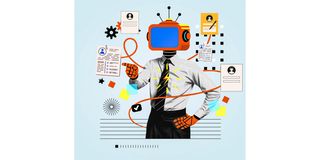
More and more companies are relying on applicant tracking systems (ATS) and AI bots to filter through stacks of job applications. These systems don’t get impressed by clever design or a tidy one-page layout.
Instead, they’re scanning for keywords, work history and specific details that match the job description. A résumé that’s too short may not provide enough information to make it through the first digital gatekeeper.
This shift is leaving many job seekers confused. Should they still stick to one page, or is it time to embrace longer, more detailed résumés that cater to AI? Some recruiters say brevity remains a virtue, especially for early-career applicants.
Others argue that clinging to the one-page rule could mean losing out on qualified candidates whose experience simply can’t fit in such a tight space.
HR professionals are now caught in the middle. On one hand, they don’t want to overwhelm themselves with long documents. On the other, they understand that the traditional résumé rules were written for human eyes, not algorithms.
And as AI continues to shape hiring practices, the question has become unavoidable: what does the modern résumé really need to look like?
Sakwa Wangara has watched the evolution of hiring from both sides of the desk, as a practitioner who has sifted through stacks of résumés, and as a lecturer training the next generation of HR professionals. Today, he says, the résumé no longer lives or dies by its layout or length, but by its ability to speak the language of machines.
“Recruitment used to be very manual,” he reflects. “We would sit with hundreds of CVs, do the longlisting, shortlisting, even psychometric reviews ourselves. That has largely been replaced by ATS. They’ve made the work easier.” By his own estimate, between 60 and 70 percent of recruiters now lean heavily on ATS, and the number keeps rising.
This shift has altered the résumé rulebook. For decades, job seekers were told to trim everything into a neat, one-page story. Mr Wangara doesn’t dismiss the logic — first impressions, he insists, still count.
“On that first page, I should already be impressed. Page two should just confirm what I saw on page one.” But he is quick to add that length itself is not the enemy. A résumé that runs to two or even three pages can still work in a candidate’s favour, provided it is sharp, achievement-driven, and rich in detail.
“I’ve seen long résumés that became very useful, especially in interview rooms, because they gave us context, depth, and evidence of what someone had achieved in past roles.”
The trap, he warns, is assuming brevity alone will impress either recruiters or the software. “It’s not in the length of the CV, but in the content,” he says.
Keywords, phrasing, and alignment with the job description (JD)_ are what determine whether a résumé makes it past the first digital hurdle. “The onus is on the applicant to tailor their résumé to the JD. If they don’t, the ATS will filter them out, even if they are strong candidates.”
Even design and formatting, which some applicants treat as an afterthought, matter to him. A résumé cluttered with mismatched fonts, sloppy margins, and grammar errors is a red flag. “It tells me you don’t pay attention to detail,” he explains.
Looking ahead, Mr Wangara sees both opportunity and complexity. With AI tools becoming mainstream, job seekers can now instantly refashion their résumés to match a job advert.
While this might help them beat ATS filters, it could also flood recruiters with cookie-cutter applications: “Recruiters themselves will need to upskill,” he cautions, “to navigate a world where applicants are using AI not just to write résumés, but even to assist in interviews.”
What, then, should job seekers hold onto in this shifting landscape? For Mr Wangara, the answer is clear: highlight skills above all else.
“We’re in an era where multinationals are overlooking certifications and education levels, and focusing instead on skills. That’s what tells us if you can deliver.” What should they leave out? Personal details that add little value. “Marital status, the languages you speak, unless a job ad has specifically asked for it, you don’t need that.” The résumé, he concludes, is not going anywhere.
For Irene Kathy Mutiso, the one-page résumé “rule” is fast losing its grip — especially in an era where algorithms are often the first gatekeepers.
Ms Mutiso is an Accredited Executive Coach, Hogan Feedback Coach, and Corporate Governance Practitioner with more than two decades of senior leadership experience in the financial services sector. As the founder of Kei Connect, a consultancy that helps organisations and individuals “Get it right with Kei Connect” through HR advisory, leadership coaching, she has watched the résumé evolve from a static document into what she calls a “hybrid career story.”
“ATS plays a critical gatekeeping role,” she explains, “however, it should not be the final decision maker. While it helps in filtering huge volumes of applicants, human intervention and judgment play a big role in determining things like cultural fit, leadership potential and overall candidate fit.”
She notes that the trend toward brevity, while appealing, can sometimes backfire. “Yes, brevity can sometimes mean missing vital keywords. The trick is to keep it concise but intentional; tailoring each résumé to the role and ensuring all the keywords are well captured and appear naturally.”
Her advice to job seekers today is simple yet powerful: “Include measurable achievements, numbers and outcomes always stand out. And drop vague clichés like ‘team player’ or ‘hard worker.’ They don’t differentiate you.”
Mutiso added that balancing efficiency with fairness requires both smart systems and human oversight. “I usually set the ATS parameters very carefully and I also ensure I have trained recruiters not to over-rely on automation, otherwise we end up losing some strong candidates.”
On the long-debated “one-page rule,” she’s clear: “This only works for entry-level roles. More experienced professionals need room to highlight impact, leadership, and achievements.” In fact, she has seen longer résumés help candidates stand out, particularly “senior leaders, consultants, or technical specialists” whose breadth and depth of experience come through when “the résumé is well structured.”
For mid-to-senior roles, she said, substance beats minimalism: “A résumé that captures detailed impact, leadership stories, and measurable outcomes is more persuasive than an overly brief one. For me, a résumé should show impact, not just activity.”
That said, Mutiso believes striking a balance between keywords and narrative is what makes candidates most visible. “Keywords may get you noticed, but your career story is what wins the job,” she said, adding that while content matters most, “poor design can cost you.” Clean, professional layouts enhance readability, but it’s the achievements and relevance that carry the real weight.
She also acknowledged that personal branding now plays a bigger role than ever. “Employers want a holistic view. A résumé is important, but a strong LinkedIn profile or portfolio often seals the impression.”
Looking ahead, she predicts résumés will become “more dynamic and less static… more digital profiles optimised for AI systems,” with multimedia, interactive elements, and data-driven storytelling gaining traction.
The future, she believes, will be hybrid — “part document, part digital footprint”, with résumés sitting alongside digital profiles, skills assessments, and AI-driven reputation checks.