Time flies with great content! Renew in to keep enjoying all our premium content.
Prime
Immigration lawyer tips Kenyan students in US on avoiding visa trouble
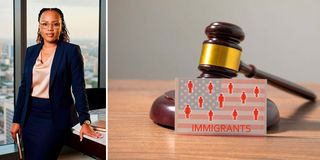
Gladys Mogaka, a US-based immigration and nationality law attorney who represents clients across all 50 states, Washington, D.C., and before the US Embassy and Consulate in Kenya.
Gladys Mogaka, an immigration and nationality law attorney in the US, says with the Donald Trump administration making sudden changes to immigration policies, international students on F-1 visas are caught in the middle.
She breaks down what every student needs to know. “Ensure you are knowledgeable on what your course requires to maintain valid status,” she says. “Because vetting and screening have been tightened, it’s best to apply for visa renewals as early as possible to avoid delays. Passports and Sevis records must be up to date.”
The third thing she flags is unauthorised employment. “Working without a work permit, even for one day, has very serious immigration consequences that will bar one from any future benefits that they would otherwise qualify for. This includes freelance work, volunteer work, or remote work not approved by the school, is also a major risk factor.”
When it comes to what gets students into trouble at the border, Gladys points to travel after a brush with law enforcement as one of the biggest risks.
“An arrest record, even for a minor infraction like a traffic violation, regardless of whether the charges were dismissed, carries a risk of being denied re-entry.”
Some offences are even more serious. “A DUI (driving under the influence) will automatically get a visa revoked the moment the student exits the country.”
Travelling without valid documents is another common mistake. Passports, visa stamps and I-20s must all be valid before a student even considers international travel.
Social media use
On social media usage, she recommends following what she calls digital hygiene standards, regularly checking social media accounts to make sure nothing can be misunderstood, and to “avoid reposting controversial content.”
“Immigration authorities frequently monitor social media platforms. They use the digital footprint to check for fraud, security threats and inconsistencies in visa applications. They utilise AI tools to perform surveillance.”
Her advice to international students is to keep political opinions to themselves. “Some can be misinterpreted to their detriment.” For students who travel and are then denied re-entry, she says the legal protections are thin.
However, if a student is denied entry, she says, “Remain respectful. Make sure you understand the reason for your denial. Inform the DSO (designated school official) immediately and an immigration lawyer.”
She stresses that no two immigration cases are the same. “Every case is highly fact-specific, and immediate legal advice is crucial.”
Termination from Sevis
Gladys explains the Sevis (Student and Exchange Visitor System) system is the government database used to track international students.
A student's record can be terminated for a criminal conviction like a DUI, failure to maintain a full course load, unauthorised employment, failure to report to school, academic dismissal, or even administrative clerical errors.
“Once any of the above scenarios occur, the Sevis system is alerted, and the visa is terminated.”
She notes that clerical errors can be challenged with supporting documents, but other revocations will need an experienced immigration lawyer.
Work after graduation
For students thinking beyond graduation, Gladys says pathways still exist. OPT (optional practical training) continues to provide temporary work authorisation in a student's field of study, and STEM graduates may qualify for a STEM OPT extension.
“The H-1B visa remains an option, with many employers still sponsoring qualified professionals, particularly in healthcare, engineering, technology, finance, and research. Some employers also sponsor workers directly for permanent residence through the Perm (programme electronic review management) labour certification process.”
Students with exceptional achievements may also qualify for an O-1 visa. And for those in genuine relationships, “marriage to a US citizen or lawful permanent resident may create additional immigration options, provided the relationship is genuine.”
If detained at borders
If a student is detained at the border, Gladys explains that the rules are different there. “Border inspections operate under different legal standards, often limited, than encounters within the United States.”
She advises students to remain respectful and answer questions honestly, and to “avoid making dishonest statements.” They should request to speak with an attorney if possible, though she acknowledges that “access to counsel at the border may be limited.”
Students should contact a trusted family member, attorney, or university international student office if permitted, and should not sign documents they do not understand.
She warns, “Today's immigration landscape is hostile. Stay informed, maintain strict compliance with F-1 requirements, keep documentation organised, and seek legal guidance early when problems arise. Do not wait for your status to be revoked before you seek guidance, and if it is not urgent, do not travel internationally. That vacation can wait.”