Questions, I have so many questions, but first, let's talk about this documentary.
Kenya, like any other country, has a set of its own issues, be it corruption, poverty, and even an literacy gap that feels out of place in the 21st century. At the heart of a lot of this friction is land.
Focusing on the western part of the country, land politics gets complicated when you throw in deep-seated cultural practices like wife inheritance and tribalism.
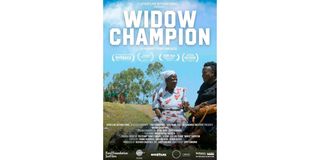
Last week (Wednesday 25th 2025) during the Goethe-Institut screening series Kamera Kwanza, I got the opportunity to watch Widow Champion, a documentary that explores wife inheritance, land politics, and a bit of HIV.
I went in expecting a grounded, raw look at the issue, and guess what, that’s exactly what I got. In many ways, that’s the film's greatest strength, but strangely I also found it to be its biggest hurdle.
Traditions
The film captures widows in rural Kenya and the challenges they face with land but, most importantly, with the in-laws.
Because wives often live on a communal compound with their husband’s family, tradition dictates that when a man dies, his widow must be "cleansed" by being inherited by a brother-in-law. And the documentary does a great job capturing that reality in its rawest form.
The core of the story in this documentary is Rodah Nafula. Her husband died, her in-laws kicked her out, and she ended up living in a village market with her three children for seven years.
The story evolves when a group stepped in and helped her win her land back through mediation. The majority of the story follows her as a “Widow Champion” as she tries to walk other women through the same path.
Who worked on this?
Directed by Zippy Kimundu and produced by Heather Courtney, the documentary features the activism of Rodah Nafula Wekesa. Key technical contributors include cinematographers Steve Ruiyi and Zippy, editors Jordana Berg, Franki Ashiruka, and a musical score by Polycarp "Fancy Fingers" Otieno.
Realism
From a technical standpoint, the film excels at capturing realism. The "fly-on-the-wall" filmmaking style allows the filmmakers to capture the real world, selective, yes, but they capture the reality of some of the people on that side of the country.
There are no sets, no fancy lighting rigs, and no VFX. Everything is tangible. You see it in the details, the chipped cups in the background, the wear and tear on the furniture, the heavy, awkward silence during a confrontation. There’s an authenticity here that you can’t fake with a costume designer.
Still on the realism, I love that the documentary captures the world, we spend time with the people, but we get scenes that take us out of the homes to the town and fields. This gives the viewer an idea of the economic status of the people in this particular area.
The film follows these cases over years, not days. We watch Mary Atieno’s struggle for over four years. That kind of patience in production allows us to see how the politics of being a widow is a constant, hovering presence that consumes the people at the centre over time.
The perspective shift
While the film handles the emotional weight of inheritance, and the centre of conflict resolution is the traditional path, I found myself wishing for more from the "other side."
We get a glimpse of the government’s role, but I wanted to sit in those offices longer. I wanted to see the bureaucratic mess of title deeds and the complexity of what happens when a man dies without a will.
Understanding the legal wall these women are hitting would have added a much-needed layer of systemic tension to the personal drama.
I also appreciated that at the end the movie backs up what it presents with data and numbers, though I wish they had gone for a cleaner background and fonts. The fonts didn't need to be that dramatic.
At times, the documentary felt less like a standalone piece of cinema and more like a vehicle for the organisation Rodah works for.
There was a heavy emphasis on the NGO’s process, to the point where it started to feel like a high-end PR film or a long-form ad for the "Widow Champion" programme.
As a filmmaker, I saw a much leaner, more powerful movie buried inside this one. If they had focused purely on one character—Mary Atieno’s four-year journey, for example—the narrative would have been piercing.
Instead, the film feels crowded. We follow Rodah’s arc, then we’re dropped into Mary’s, then we’re introduced to other widows. Every time you hit an emotional high with one person, the film jerks you back to someone else.
Pacing and aesthetic choices
Because the film tries to cover so much ground, the pacing feels rushed. At times I needed the story to slow down. I wanted to sit in the quiet moments and let the weight of a scene sink in. Instead, it feels like there’s an objective to keep moving forward; you aren’t given the space to breathe or process the trauma before the camera moves on.
The music is okay. It feels overbearing and, frankly, a bit generic. Close your eyes and the sound is the standard "documentary style" score we’ve heard a thousand times. In a film this raw, I would think silence would be a powerful tool.
I also missed the sense of scale. Kisumu is beautiful; the lake is stunning. We see a few drone shots, but they feel underutilised. If you’re showing what these women are fighting for, show us the land. Give us those breathtaking, memorable views of the Western landscape.
Final thoughts
I recently watched Gurmo, a short documentary from Somalia that took a creative visual style in telling its story. Compared to that, Widow’s Champion feels very safe. It follows a linear, almost predictable structure. While that ensures the audience won't get lost and is universally accessible, it lacks a creative spark.
Other minor things that bothered me is that, despite a short runtime, I found myself getting a bit tired because of the sheer number of unnecessary characters. Rodah’s family scenes provide context, but they often feel like they’re pulling focus away from the central fight.
And also as I was walking home I couldn't stop thinking about the title of the documentary. Yes it is effective and it gives you a clear idea of what the film is about. But, from just a creative point of view, is Widow’s Champion the best possible title?
Widow Champion is an important documentation of what’s happening in Western Kenya. It captures a devastating reality with total honesty. It’s a "good" documentary, but with a bit more silence, a bit more visual poetry, and a lot more focus, it could have been a masterpiece.
So now questions:
Is African documentary filmmaking all about struggle? Does creativity have a part in African documentary space? Can any positive stories come out of the continent? Would those stories get the same reception that struggle stories mostly focused on women get in the film funding and festival circuit? Lastly, when was the last time you watched a Kenyan documentary?