This is one of those rare moments I found myself genuinely taken aback by what a studio was able to achieve with a property that many had written off.
To understand why this film feels like such a victory for the fans in some areas and such a missed opportunity in others, we have to look at the history.
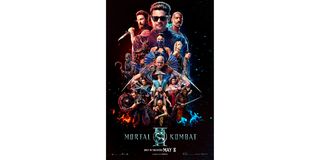
The first film was produced on a $55 million budget and made roughly $84.4 million.
It was far from a perfect movie. It suffered from what I would call a massive identity crisis, trying way too hard to be profound and serious while attempting to appeal to people who had never touched a controller in their lives. In that movie, the producers and director Simon McQuoid created a film that didn’t know what it wanted to be, ultimately pleasing neither the hardcore gamers nor the casual audience.
But with this sequel, which brings back McQuoid alongside writers like Jeremy Slater and producers James Wan and Todd Garner, it feels like the team actually listened to the fans.
They took the feedback, worked on the flaws, and delivered what is, at its heart, a very good popcorn movie. It isn’t trying to be high art or a deep philosophical challenge. It is your classic Saturday afternoon movie that you go into, have fun with, and go home.
The tournament format
The story picks up with Earthrealm (if you have never played the game, bear with me, at some point it might make sense) in a precarious position. Lord Raiden, played by Tadanobu Asano, and Sonya Blade, played by Jessica McNamee, are forced to scramble to find their final champions as the tenth Mortal Kombat tournament looms.
The central hook of the marketing, and the reason most of us were excited, was the introduction of Johnny Cage, played by Karl Urban.
Cage is a washed-up martial arts actor who initially refuses to believe the supernatural stakes until he is thrust into the middle of a war between realms.
The plot revolves around the tyrannical Emperor Shao Kahn, played by Martyn Ford, who steals Raiden’s power early on to become immortal. This leaves the Earthrealm fighters, including Liu Kang, Jax Briggs, and the previous protagonist Cole Young, fighting an uphill battle.
While the tournament rages, the narrative splits, following Johnny Cage on a side quest to destroy the source of Kahn’s immortality while also introducing the Edenian princess Kitana, played by Adeline Rudolph, who is acting as a spy within Kahn’s inner circle.
It is a simple premise, which is exactly what a Mortal Kombat story should be. Mortal Kombat II was produced on a reported budget of $80 million.
During its opening weekend (May 8–10, 2026), the film earned $40 million at the US and Canada box office and an additional $23 million in international markets, bringing its total worldwide opening haul to $63 million.
Embracing the game’s DNA
If you have ever played a Mortal Kombat game, and I suspect many modern moviegoers haven’t, you know the premise is one of the simplest in gaming history. The plot exists solely to give two characters a reason to punch each other. This sequel finally narrows down on that core identity and revolves everything around the tournament.
The fight scenes are the standout here. There are far more of them than in the 2021 film, and they are structured in a way that feels satisfyingly familiar to fans of the franchise. Because the film simplifies the lore to the level of the games, it is much easier to understand the stakes.
You have two groups of people fighting for survival, and the viewer actually has something consistent to hold onto. The visceral nature of these bouts is impressive. Some truly brutal moments feel authentic to the “Fatality” spirit of the source material, and do not get attached to characters.
One in particular that was unfortunately made available online by the marketing team is impressive. For those who haven’t played the games, it plays out like a tragic struggle between brothers, and the film does a great job of explaining that history so you don’t feel lost if you skipped the 2021 movie.
Everything stops just to focus on the technical craft of that fight, and it is glorious to watch. Similarly, the costume designs and world-building feel as if they belong in the game’s universe. The abilities and powers used by the characters feel natural and earned, accompanied by a soundtrack that hits all the right nostalgic notes.
Bait-and-switch
However, we have to talk about the “bitter taste” left by the film’s narrative structure. There is a classic bait-and-switch happening here. I, like many others, went in because the marketing focused almost entirely on Johnny Cage. We wanted to see a story fully focused on his journey from a narcissistic actor to a hero of Earthrealm.
Karl Urban is fantastic in the role, providing a much-needed human element to a story filled with supernatural beings. But almost immediately, the film starts pushing the character of Kitana down your throat.
The story keeps swapping back to her world and her perspective, and every time she comes on screen, the momentum dies. It feels like the filmmakers were trying to make two different movies at once. On one hand, you have the campy, violent, and fun story following Johnny Cage and Kano.
On the other, you have this overly serious, slightly bloated Kitana arc that feels like it belongs in a different franchise.
Kano, played again by Josh Lawson, remains the best part of the film alongside Cage. He is brought back in a very cheesy way, but he is so entertaining and “natural” that he makes the bizarre situations feel real. Putting Kano and Johnny Cage in the same room is pure cinematic gold, and I found myself wishing the entire movie had just stayed with them.
The problem with the finale
The climax of the film is where the logic really starts to unravel. The villain, Shao Kahn, is established from the very beginning as an incredibly powerful and formidable fighter. He is the kind of threat that takes out fan-favourite characters with ease.
Naturally, you expect the finale to involve a power-level struggle that makes sense within the rules the movie set up. Instead, the writers prop up Kitana to be the one who takes him out.
Throughout the entire movie, she is never established as a fighter on that level. Her victory feels entirely too convenient and unearned. It feels as though the writers were working backwards from a specific “pose” or a speech they wanted her to give, rather than letting the story evolve naturally.
If Sonya Blade had been the one to finish Kahn, it would have made sense. We see Sonya taking out powerful enemies throughout the film using her established skills. But for Kitana to just easily dispatch the main villain, a character who had just crushed some of the most powerful fighters in the realm, felt unsatisfying and illogical.
Johnny Cage’s development, by contrast, feels much more natural because you see his stages of struggle and his eventual unlocking of his powers through a believable arc.
A Bloated ensemble
This leads to a wider problem I see in most modern Hollywood productions. There is this need to include everyone and ensure every character is “represented”, which often results in a bloated, messy experience.
In Mortal Kombat II, it felt like they were actively getting rid of more interesting, powerful characters just to clear a path for Kitana to be the hero. One fan-favourite character goes out in a way that should have opened the door for something epic, but everything just redirects back to her.
I also wanted to see much more of Quan Chi. He is my favourite character from the games, and he is fascinating when it comes to abilities. While he is incredibly interesting here, he is reduced to a minimal role. In a potential third movie, I would love to see him given more to do. I would have also loved to see more of Kano, to put him in the same room with Johnny Cage for some witty dialogue.
Final thoughts
Despite my gripes with the bait-and-switch and the forced ending for Kitana, Mortal Kombat II is still an enjoyable experience. It is a clear example of a studio learning from its mistakes and attempting to correct the course.
They took the feedback, leaned into the tournament aspect, and delivered a film that feels authentic to the video game. It is a much better movie than the first one, even with its cringy moments.
If you can look past the illogical power scaling in the final act and the fact that you didn’t get as much Johnny Cage as the trailers promised, you are left with a solid, visceral action movie that actually respects the source material’s roots.
It is a great example of a group of people taking feedback and creating something that is, at the end of the day, just plain fun to watch.