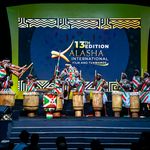
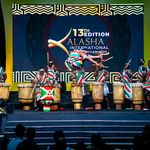
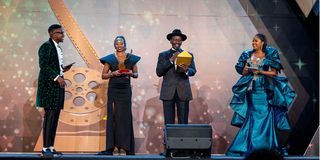
It is May 3, 2026. I am lying in my bed, doom-scrolling like everyone else on an early Sunday morning. My social media feeds are flooded with posts about the Kalasha International Film and TV Awards, which had taken place the previous evening at the Kenya International Convention Centre in Nairobi.
Looking at the winners celebrating online, I feel a genuine sense of pride for the culture. Kash Money takes home five awards.
A promotional poster for new Kenyan Netflix Original Series Kash Money.
Looking at the pictures of the production duo of Grace Kahaki and Philippe Bresson holding those trophies made me incredibly happy. They have been putting in the work for a long time, and the recognition is well-deserved.
It was equally gratifying to see June Wairegi and Omar Hamza take home trophies for Sukari. They have also been out there doing the Lord’s work for Kenyan film culture, and I am glad they got their flowers.
The Big Sad Nairobi
Other wins bring a smile to my face, too. The Dog won a couple of awards, and June Njenga took home Best Female Lead for Big Girl Small World.
Even the animation category offered a pleasant surprise with Lore taking the prize. "The Big Sad Nairobi is such a unique production”, I think to myself. In fact, stop motion is such a gruelling storytelling style; how did it not get recognised? But then I get distracted by a story by Shuga Mashariki, which won. It was easily one of my favourite young adult shows of the year (season 1), so seeing it recognised was satisfying.
But I get pulled deeper and deeper by the algorithm, and some posts begin to bother me. Nawi walked away with four awards, and frankly, I just don't think it's a very good movie. To me, Nawi plays out like an over-extended version of the first act of the 1992 film Saikati.
Aside from its striking cinematography and the performance of Michelle Lemuya Ikeny (who I think is a national treasure and should be protected at all costs), the story itself doesn’t hold up. But that is a debate for another day, so I keep scrolling.
My thoughts drift, I realised I was deeply grateful not to be on the judging panel. This edition's nominations themselves were spectacular, showcasing a massive leap in production quality across the board. Being nominated this year is a big achievement, and every single person on that list deserves to be congratulated.
Yet, seated there as my phone notifies me that I have 20 percent of power left, a few glaring omissions leave me annoyed.
The biggest snub that keeps bothering me is the show Subterranea. Our productions have a habit of playing it safe, churning out the same old dramas and crime stories while shying away from other genres, such as science fiction, horror, and musicals.
Subterranea, Kenya’s first sci-fi drama series produced by Kibanda Pictures.
Photo credit: Pool
Subterranea tried to break that mould by giving us a genuine sci-fi show with incredible performances. Why doesn’t Kalasha International have a category called, "We see you pushing boundaries, and we love it," for productions like Subterranea and The Big Sad Nairobi?
We have the Jury Award, but this year, that went somewhere entirely different. This would be dedicated specifically to projects that might not meet the traditional criteria for "best of the best," but clearly dare to innovate and stretch the boundaries of Kenyan storytelling.
Then, for a second, I go down a rabbit hole looking for “Best Video Game Award”. It’s nowhere to be seen. Did they just scrap the video game category to accommodate social media content creators, but without Crazy Kennar?
Sanaipei Tande
The other major shocker is Sanaipei Tande. Forget her past wins, when an artiste is exceptional, she is exceptional. This year, she delivered three completely distinct, fantastic and unique performances across three different productions.
The fact that she walked away empty-handed is baffling. Without a doubt, June Njenga did a spectacular job in Big Girl Small World and deserved her win, but we cannot ignore the sheer weight of work Sanaipei put in by anchoring three entirely separate roles. What’s the point here? A "Push the Envelope Award."
Then my mind drifts to Jimmy Gathu. Jimmy's performance in Chocolate Empire was another missed opportunity. A performance does not need to be an over-the-top, emotionally explosive theatrical showcase to be brilliant.
He brought a dialled-down, restrained and deeply effective nuance to his character that sold the role better than almost anything else I saw this year. That's the end of the negative aspects from the event, I think to myself, spoiler alert, it wasn’t.
The poster for The Chocolate Empire, a Kenyan film.
Photo credit: Pool
Because social media is designed to be addictive, I keep scrolling. The engagement online shifted toward a much larger talking point: the presence of the President. The headlines are massive, the government announced a Sh40 million cash prize kitty for filmmakers, at first, I think clickbait, but after a few credible posts, I realise it’s true (No, I didn’t ask Grok if the post was true).
The funding issue
I paused. That number, Sh40 million, sounded eerily familiar. I switch to a browser, but before I can go any farther, I remember Kalasha didn't happen last year. The 2025 awards were cancelled precisely because of a budget shortfall of exactly, yes, you guessed it, Sh40 million.
Suddenly, the picture changes. This new filmmaker kitty requires the projects to focus on government programmes. Is the State turning our creative industry into a public relations vehicle? I ask myself.
But I pause and challenge my own cynicism. Isn’t this how film funding in Africa works? Films are funded, but are required to align with a narrative. Is it inherently wrong for creatives to work with politicians? Musicians have done it for decades, I mean, Unbwogable was and still is an African political anthem. Musicians reap massive financial rewards from political soundtracks.
Why shouldn't filmmakers get a piece of that pie? Can’t an African politician be a cinephile and offer their own hard-earned cash for the sake of film culture? Plus, every person with a skill has a right to monetise their skill in whichever way they choose, right?
My mind drifts to the long-term cost. Kenyan cinema suffers from incredibly poor audience retention. If a filmmaker aligns closely with a controversial political figure, they risk alienating the small, precious audience they have fought so hard to build.
More deeply, it mirrors a tragic societal and political pattern. A voter in a rural village accepts Sh200 during campaign season, only to spend the next five years suffering from bad roads and underfunded hospitals. The politician vanishes, only to reappear five years later with another Sh200 handout.
And it’s clear, the fund is exactly what that is, substitute the rural voter with a filmmaker, the fund Sh200, the roads and hospitals with the cycle of issues (funding being the primary one) that Kenyan filmmakers are facing.
State funding should not be a short-term band-aid thrown at a systemic, structural crisis. By the way, how can we ignore the cognitive dissonance? This is the same state machinery that has tear-gassed high school theatre students in our institutions for exploring political themes in their drama festivals. Those very students are the future of Kalasha.
Creative independence
Public investment in cinema should be welcomed, but sustainable growth requires systemic policy, not political patronage.
While short-term incentives offer immediate political capital, true leadership builds the institutional frameworks that secure the long-term viability of our film culture. In my head, that statement sounds profound, maybe a bit corporate, but then I remember that I am not a seasoned politician. How would I know what works?
I cannot blame, nor look down on, any filmmaker who participates. But we must be completely conscious of the consequences of dancing with the state.
When the handout economy swallows the creative expression, it signals the beginning of the end for creative independence and the beginning of waiting for political handouts after every five years to bring ideas to life. I love all the social media posts (literally clicking the like button), but the heavy political presence diluted the celebration.
Staring at my screen, I debated whether to publish my thoughts immediately, but I decided to let the dust settle, excitement and anger to cool down, to allow rational and logical thinking. I decide to give it two weeks.