World Bank, IMF painful terms back with Iran war

Kamau Thugge

Central Bank of Kenya Governor Kamau Thugge.

Photo credit: File | Nation

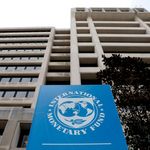
The fallout from the US-Israel war on Iran has forced Kenya to revive its dalliance with the World Bank and the International Monetary Fund (IMF), setting taxpayers up for pain as the country abides by tough conditions to access cheap financing from the pair.

Kenya last week indicated that it would require emergency financing from the World Bank, with officials emphasising the importance of a funded IMF programme amid continuing discussions.

“Support from the IMF and the World Bank would be from the fact that we are getting concessional financing, and it would replace expensive domestic borrowing, reducing debt vulnerabilities by cutting interest costs,” Central Bank of Kenya (CBK) Governor Kamau Thugge said.

The IMF normally sets the toughest engagement terms of the two multilateral lenders, including reforms on State corporations, spending cuts and increased revenues.

This signals new taxes, an aggressive pursuit of tax evaders and cheats and roping in of traders and workers in the informal sector.

The World Bank, for its part, has relatively softer terms that mostly lean towards support for socioeconomic outcomes like climate change mitigation, placing competition curbs on firms, and the integration of minority groups like refugees.

Both the IMF and the World Bank played hardball with Kenya in 2025 by freezing all funding after the country failed to abide by programme conditions.

The Iran war is seen putting pressure on Kenya’s domestic revenues, forcing increased deficit financing while also exerting exchange rate pressures, as the inflow of remittances is expected to slide.

But now Kenya must step up in meeting the set performance criteria to access funding from the two multilateral institutions, even as the country is deemed to have adequate buffers against shocks, including nearly six months of import cover.

Kenya’s request for additional emergency financing from the World Bank came against the backdrop of a recent decline in foreign exchange reserves, which fell by $1.3 billion (Sh167.9 billion) between March 5 and April 9 to close at $13.3 billion (Sh1.7 trillion), translating to 5.7 months of import cover.

The World Bank froze a Sh96.8 billion ($750 million) loan as Kenya struggled to honour 11 conditions, including amendments to the Competition Act to strengthen regulations that control the operations of firms with dominance in the market.

Kenya also struggled with the implementation of the Treasury Single Account and e-government procurement, and setting a framework for the faster approval of county government additional allocations bills.

The country is now seeking rapid additional funding from the World Bank by June to cushion the economy from the shocks of the US-Israel war with Iran.

This means that Kenya now expects a larger disbursement from the World Bank than the frozen Sh96.8 billion.

The CBK said that the additional World Bank cash is expected before the close of June, and will be drawn from the multilateral lender’s rapid repose financing schemes, marking an additional financing request beyond the earlier targeted Sh96.8 billion Development Policy Operation (DPO) loan to Kenya.

“We have had very good discussions with the World Bank on the DPO and also getting additional financing, given the kind of shocks that we are facing. We hope that we can reach an agreement with the World Bank on the Rapid Results Operation so that we can get additional financing over and above the DPO,” Dr Thugge told Business Daily on the sidelines of the just concluded Spring Meetings in Washington, D.C.

The CBK did not indicate how much in additional funds Kenya expects to receive from the World Bank, but termed it a ‘significant’ amount.

“Our hope and expectations are that this money will come in this financial year. The amount of financing is yet to be determined, but it is about getting additional financing from already existing commitments which are yet to be disbursed," Dr Thugge said.

Kenyan authorities are at the same time engaged in talks to unlock a new funded programme despite earlier hesitation.

The IMF says Kenya might, on one hand, look to avoid a new programme as it pushes to become a mature economy that can tap financing from the international capital markets, but has cautioned that shocks from the Iran conflict could lock it out of the market if interest rates rise.

A new funded programme is therefore seen by the IMF as an alternative to provide Kenya with a cheaper financing option.

“Kenya is, of course, a market access country or switching towards market access. These days, market access has become very volatile, and the government is continuously rethinking how to best address its financing needs,” said Abebe Selassie, the outgoing Director of the African Department at the IMF.

“They (Kenya) have done a lot of liability management operations to push back big lumpy repayments. As market conditions become difficult, Kenya has been thinking of relying on IMF resources.”

The IMF terminated a multi-year programme with Kenya in March 2025 before disbursing a final Sh109.8 billion ($850.9 million) tranche.

This was after Kenya failed to honour conditions agreed upon, including the restructuring of the national carrier, Kenya Airways, and putting restrictions on the use of cash from the fuel stabilisation fund, which was diverted to other uses. In total, the country failed to meet 11 of 16 conditions, others being placing curbs on spending, bolstering tax collection and settling suppliers’ dues.

Both the IMF and the World Bank trimmed their outlook for Kenya’s gross domestic product growth this year, attributing the sour view to the impact of the war, which has included higher fuel prices.

The IMF says Kenya must show its ability to deliver on a credible budget deficit reduction plan (fiscal consolidation) before it can unlock new funding.

“From our side, we have congratulated the government for the strong efforts being made to build buffers, particularly on the external front, but we have also pointed out that there needs to be a path towards credible fiscal consolidation, and we would like to see that for programme discussions to advance,” added Mr Selassie.

The CBK says Kenya does not technically require IMF funding as its current official reserves sit at nearly six months of import cover, providing a key support against external shocks.

Global and regional economists state that Kenya is largely cushioned against external shocks following recent key actions to improve debt sustainability, including Eurobond buybacks, which have eased refinancing and interest servicing pressures.

The government is set to receive an estimated Sh245.3 billion ($1.9 billion) from the sale of its 15 percent stake in Safaricom to South Africa’s Vodacom, with the flows expected to lift the import buffer up to seven months of import cover.

“Kenya acted very fast in terms of getting additional financing and has pushed out the maturity profile of their Eurobond debt down the road,” said David Cowan, Citi’s Chief African Economist.

“They also have some additional financing available to them. For instance, they [Kenya] still haven’t drawn down Sh129.1 billion ($1 billion) GCC (UAE) loan. Kenya can, for now, borrow cheaply from the Eurobond market, but if things turn against them, the money is there.”

The US-Israel war on Iran has largely disrupted energy supply chains, including fuel, liquid petroleum gas (LPG) and liquified natural gas (LNG).

About a fifth of the global crude supply flows through the Strait of Hormuz, a narrow sea channel that has been shut during the conflict.
Iran and the US announced the reopening of the Strait to sea traffic, but it remains to be seen whether a ceasefire holds between the pair of warring countries.

Experts in the energy sector have also warned that the reopening of the Strait won’t immediately restore energy supply chains as related oil and gas infrastructure across the Gulf countries suffered intense damage, reducing and even halting production.

Follow our WhatsApp channel for the latest business and markets updates.

PAYE Tax Calculator

Note: The results are not exact but very close to the actual.