The Treasury has expanded its domestic borrowing target by 52.29 percent or Sh570 billion in the current financial year ending June 30, signalling a further squeeze on households and businesses in the credit market.
Latest disclosures by the National Treasury show the government has increased its domestic borrowing target as of March 31, 2026, from Sh1.09 trillion to Sh1.66 trillion, of which Sh965.87 billion has already been tapped.
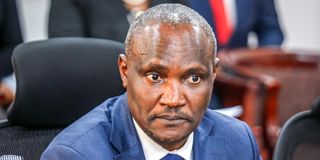
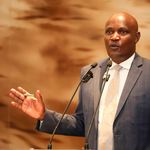
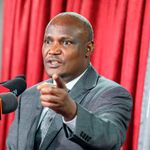
Treasury Cabinet Secretary John Mbadi had earlier projected a net domestic borrowing of Sh635.5 billion to finance part of the initial budget of the 2025/2026 fiscal year, amounting to Sh4.29 trillion.
Treasury records show that as of March 2026, the domestic borrowing of Sh1.66 trillion comprises net domestic borrowing of Sh1.12 trillion and internal debt redemptions (roll-overs) of Sh544.25 billion.
The government borrows from the domestic market through the issuance of Treasury bonds and bills, with commercial banks, pension funds, and insurance firms being the biggest lenders to the State.
The Treasury's records reveal an upward revision in total revenue estimates for the current financial year (2025/2026) from Sh4.43 trillion to Sh5.15 trillion, of which Sh3.36 trillion has been collected, leaving a financing gap of Sh1.79 trillion to be offset in the next three months to June 30.
The Treasury says it needs to mobilise about Sh904 billion from the domestic market, while the Kenya Revenue Authority (KRA) is expected to collect around Sh883 billion to offset the deficit.
“The expectation is that they (KRA) might narrow that gap. It (the deficit) might seem large, but we are pushing to minimise it. The expectation is that they (KRA) might narrow the gap, but domestic borrowing is where we have a challenge,” Albert Mwenda, the director-general of budget, fiscal and economic affairs at the Treasury, told the Business Daily in a telephone interview on Friday.
Mr Mwenda says the government is also in negotiations with foreign financiers to help bridge the deficit and reduce pressure on domestic borrowing, including tapping into the balance of the Eurobond proceeds amounting to Sh150.76 billion.
“But there are also other avenues to borrow externally which are being considered; it doesn’t mean that the entire Sh900 billion will be raised from the domestic market. It is only that you cannot plan or indicate that external alternative borrowing until it is confirmed, but I can say Treasury is also working on other avenues to minimise domestic borrowing,” he said.
“We still have money that we have the flexibility to use to fund the budget. Even if we used part of the proceeds of the Eurobond to pay the debt early, there is still a balance that is accessible. Even if we didn’t receive any other money, it is positive that the government has additional resources, so we are not exposed,” Mr Mwenda said.
The official said that negotiations are also ongoing with the World Bank for the possible release of the $750 million (Sh97.5 billion) Development Policy Operation 7 (DPO 7) for Kenya’s budget support, whose disbursement was delayed into mid-2025 due to unmet governance conditions.
“We have not factored IMF funding into the current fiscal plan for the current fiscal year. We don’t have any funding from the IMF because negotiations are still going on. For the World Bank, there is still engagement with the Treasury on DPO 7. You know there is funding that the World Bank was to provide, and there are engagements with a view to having them release those funds to us,” he said.
The World Bank funding is contingent on critical reforms, including the Conflict of Interest Bill and enhanced, transparent public procurement.
The Treasury, however, says most of these conditions touching on regulations have already been met, apart from the condition on ‘macro adequacy’, which is still under consideration.
“There is, I think, one area that they are still engaging the government on. Most of the others, like the regulations that were to be done, have all been done. It is just one area that we are engaging with the World Bank on. It is just the issue of macro adequacy. They have to do their own assessment of macro adequacy. They are in the process of doing that, and there are consultations on that going on. It just means looking at our fiscal plan, if the revenues do make sense, the capacity of the country to raise revenue and things like that,” said Mr Mwenda.
“There is a chance (to release the funds this financial year) as long as there are engagements. You can only say there is a risk, but there is also a high chance that these funds will come, which is why we have not written them off.”
The total government spending for the current fiscal year (2025/2026) was initially projected at Sh4.29 trillion against projected ordinary revenues of Sh2.75 trillion and Ministerial Appropriation-in-Aid of Sh567 billion.
The resultant fiscal deficit, including grants of Sh923.2 billion, was to be financed by net external borrowing of Sh287.7 billion and net domestic borrowing of Sh635.5 billion.
This budget has, however, been expanded to Sh4.695 trillion from an initial estimate of Sh4.3 trillion through a Supplementary Appropriations Act (2026) to address rising expenditure needs.