Why Kenya can rest easy over EU deforestation rules

DNNYERICOFFEE0706SGD

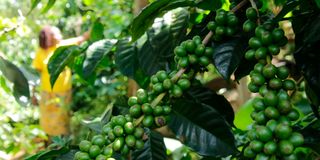
A farmer tends to her coffee in Nyeri County.

Photo credit: File| Nation Media Group

The European Union Deforestation Regulation will start to apply from the end of this year.

The law seeks to deter the export of products linked to deforestation into its jurisdiction. Kenyan traders are apprehensive about the short timelines for compliance to the regulations on export of coffee.
However, the bloc handed its partner nations a reprieve and extended the implementation to the end of this year.

Despite, some jitters, the EU says Kenya has more to gain than lose under the new rules.

What it means for the coffee industry

Over the last several months, there has been quite some discussion on Kenya's compliance with the EU's deforestation regulation.

As Kenya navigates this transition, the focus is on ensuring local farmers meet the new standards to maintain market presence.

What is the EU Deforestation Regulation (EUDR)?

The European Union has introduced a law to make sure products entering its market are not linked to deforestation. From December 2025, goods such as coffee, cocoa, timber, palm oil, and beef sold in Europe must prove they come from land that has not been recently cleared of forests.

This is part of Europe’s wider efforts to fight climate change and protect biodiversity. The EU deforestation came into force in June 2023, and its application was due to start at the end of 2024.

At the request of EU’s partner countries, a grace period of one year has been accorded until the end of 2025, to allow partner countries to comply.

Why does this matter for Kenya’s coffee industry?

Europe is Kenya’s biggest coffee market, purchasing approximately 55 percent of exports worth about Sh90 billion in the past five years. Smallholder farmers, who produce about 70 percent of Kenya’s coffee, are therefore directly affected.

Early analysis showed that Kenya’s coffee has not been considered a major driver of deforestation, which puts the country in a strong position.

Still, exporters will need to provide proof that Kenyan coffee is grown legally and without harming forests in order to keep access to the EU market.

What does compliance involve?

Exporters will have to provide the exact map coordinates of every coffee farm supplying beans to Europe. This level of traceability will prove the coffee was not grown on recently cleared forest land.

Because most Kenyan coffee is pooled through cooperatives, this means every contributing smallholder farm must be geo-mapped and recorded. It is a big task, but one that Kenya is already preparing for.

How does the EU support compliance?

The EU has been actively supporting Kenya to position itself as a leader in sustainable coffee, in close collaboration with the Ministry of Agriculture.

This collaboration aims at strengthening digital systems, training cooperatives, and providing technical expertise through regional initiatives, to help the exporter achieve compliance.

For example, the Agriculture and Food Authority is developing a national coffee information system to help farmers and exporters meet the requirements, while the Directorate of Resource Surveys and Remote Sensing, the Kenya Forest Service, and the Kenya Space Agency are mapping all coffee plots across the country.

What if exporters fail to comply?

Non-compliant coffee will not be allowed into the EU market. That could mean financial losses for traders and farmers. That’s why it’s crucial for everyone in the coffee chain to prepare now.

What are the benefits for Kenya?

Kenyan coffee could stand out as a “climate-friendly” product, opening doors to better prices and long-term contracts.

Stronger traceability will make the value chain more transparent and resilient.

Compliance aligns with Kenya’s own plan to plant 15 billion trees by 2032 and increase forest cover to 30 percent.

Farmers and cooperatives will gain from digital tools that improve efficiency and attract investment.

What’s next for Kenya’s coffee?

The EU has committed to work closely with Kenya to ensure smooth implementation of the regulation. All Kenyan coffee producers and exporters need to collaborate, ensuring that the remaining part of the compliance exercise is completed.

By acting early, the country can not only safeguard its coffee exports but also strengthen its reputation as a sustainable producer on the global stage.

PAYE Tax Calculator

Note: The results are not exact but very close to the actual.