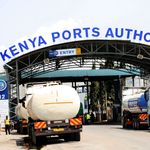
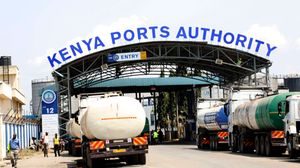
The Mombasa port faces fresh threats of competition following plans by Uganda to link its new railway line to Tanzania, providing direct access to the rival port of Dar es Salaam.
A Monday report by Reuters news agency cited a document by the Ugandan Ministry of Works and Transport, which said the SGR line would run from the border with Tanzania through the south and southwest of Uganda, ending at the town of Mpondwe on the border with the Democratic Republic of Congo (DRC).
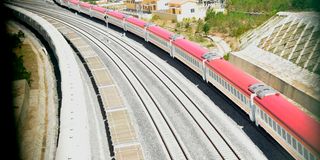
"The main objective of the project is to connect the vast and mineral-rich regions of both countries (Uganda and Tanzania) to the port of Dar es Salaam ... whilst saving time and transportation costs," it quoted the document as having said.
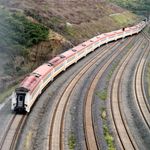
An SGR loop linking Uganda and Tanzania gives Dar es Salaam a chance in the race to control the trade routes to the Great Lakes region, which are currently dominated by the Mombasa port through the Kenyan soil.
Kenya’s Northern Corridor—the main arterial cargo highway that runs from the port city of Mombasa through Nairobi and Kampala to Kisangani in eastern DRC— has been competing with Tanzania’s Central Corridor.
Uganda uses the port of Mombasa for most of its exports, a decision that is informed by the country’s proximity to Kenya’s largest port. However, Uganda has been pivoting away from the Kenyan route.
Uganda — which had not previously signaled such plans — also opted to route its crude oil pipeline through Tanzania in 2016, dealing a blow to Kenya, which had positioned itself as the primary beneficiary of the project. Kampala cited security concerns and higher costs on the Kenyan side.
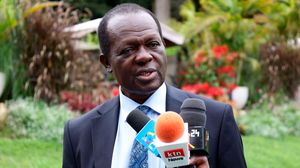
President Yoweri Museveni expressed frustration during a radio interview in Mbale City in November last year, warning of potential "future wars" if landlocked countries such as his are denied access to the Indian Ocean. President Museveni later clarified that he was talking about the need for strategic co-operation.
Nonetheless, the two countries have agreed to work towards linking their respective SGR, a process that has been delayed by funding hitches.
Kenya says it is on course to extend the SGR from Naivasha to the Ugandan border town of Malaba via Kisumu, having completed the feasibility studies. The Kenyan government is currently pursuing a Sh390 billion ($2.6–3.0 billion) securitised bond to finance the SGR extension from Naivasha to Malaba.
This "creative financing" strategy aims to bypass new traditional external debt by leveraging future tax revenues.
On the other side of the border, Uganda has also started the process of building its section of the SGR to Tororo, which borders Malaba on the Kenyan side.
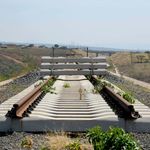
Kenya expects the extension of the SGR give impetus to the modern railway, which is facing cut-throat competition from trucks owing to its abrupt termination in Suswa, denying traders the convenience of last-mile connectivity.
However, Uganda’s plan to forge an additional rail link with Tanzania is likely to deflect some cargo from the Northern Corridor to the Central Corridor, which is anchored by the port of Dar es Salaam.
The document from Uganda's Ministry of Transport said that the African Development Bank could fund the project and that the DRC could seek to link to it later. Contacted by Reuters, the AfdB said it would consider financing the project if it were bankable.
In 2022, Tanzania inked a $2.2 billion (Sh283.8 billion) deal with two Chinese contractors late last month that will see the final section of the 2,102 km SGR, the longest stretch of the modern railway line on the continent, completed by 2026.
Analysts reckon that Tanzania’s signing of the contract with China Civil Engineering Construction Corporation and China Railway Construction Corporation gives Dar a fighting chance in the race to control the trade routes.
In 2014, the Government of Kenya entered into a tripartite agreement with the governments of Rwanda and Uganda to construct a standard gauge railway from Mombasa through Kampala, Uganda, to Kigali, Rwanda.
However, the SGR ended abruptly in the Rift Valley town of Suswa, with China reportedly refusing to finance the last leg of the modern railway after failing to strike an agreement with Uganda.
The Chinese-built SGR from Mombasa to Naivasha was constructed at a total cost of over Sh600 billion with loans from the Exim Bank of China.
The first phase of the SGR, linking Mombasa and Nairobi, was completed in 2017 at $3.8 billion (Sh490.92 billion).
However, the Uganda National Oil Company has officially secured a 20.15 percent stake in the Kenya Pipeline Company for Sh32.95 billion.