UAE outpaces Uganda, US in Kenya goods purchases race

Photo credit: Compiled by John Waweru | Designed by Gennevieve Awino

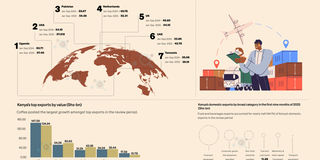
Driven by a surge in gold exports to Dubai, the United Arab Emirates was Kenya’s fastest-growing goods market in the first nine months of the year, the latest official trade numbers show.

Exports to the Gulf nation jumped by more than a quarter (26.3 per cent) to Sh42.76 billion between January-September, up from Sh33.86 billion in the same period last year.
The growth in value of purchases from the UAE, which made it a standout performer among Kenya’s major markets, coincided with a spike in shipments of gold to the Middle-East giant economy.

Kenya exported 1,217.79 kilogrammes of gold in the three months, to June, worth Sh8.19 billion, according to the data collated by the Kenya National Bureau of Statistics (KNBS).

The earnings from gold sales, captured as domestic exports, were markedly higher than Kenya’s average annual gold earnings of Sh1.81 billion in the decade to 2023, and above the full-year 2023 export value of Sh4.70 billion.

Harry Kimtai, the Principal Secretary in the State Department for Mining, attributed the boom to both global pricing and domestic reforms.

“The jump in gold exports may be attributed to ongoing reforms in the mining sector in Kenya, coupled with the global price rally that has seen gold attain the highest price in history,” he said in October, referring to the more than a 50 per cent surge in global gold prices in the review period and the ongoing formalisation of the artisanal mining sub-sector through registration of their co-operatives.

“The price rally has led most investors to liquidate their gold holdings.”

Uganda remained Kenya’s largest regional and global export destination in the review period, with purchases climbing 7.38 percent to Sh97.40 billion this year from Sh90.71 billion in 2024.

The United States followed with a modest 6.31 per cent rise, to Sh57.52 billion from Sh54.10 billion, while the Netherlands also posted a 5.09 per cent growth, from Sh49.78 billion to Sh52.31 billion.

However, Pakistan—a top buyer of Kenyan tea—saw its import bill drop 8.57 per cent, to Sh54.56 billion from Sh59.67 billion, while the United Kingdom purchases slipped 3.29 percent to Sh44.10 billion.

Overall domestic exports for January–September reached Sh726.27 billion, extending a multi-year growth streak, albeit at the slowest rate in at least half a decade from Sh712.71 billion in a similar period in 2024.

But export earnings from tea, the top export, fell from Sh147.09 billion to Sh134.94 billion, reflecting headwinds in key markets. The Kenya Tea Development Agency (KTDA) linked the decline to geopolitical turmoil.

“Geopolitical challenges and instability in key markets such as Pakistan, Russia, Sudan, and Iran also affected demand, though the situation has now slightly stabilised,” said the KTDA in its update in October for the year to June 2025.

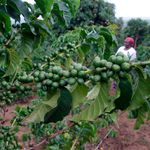
Other exports fared better, with inflows from cut flowers rising 12.52 per cent, to Sh60.83 billion, while coffee exports rose fastest at 38.59 per cent to Sh43.36 billion from Sh31.29 billion.

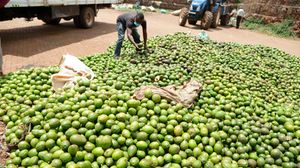
Fruits— including avocado— remained steady, growing 4.12 per cent to Sh35.44 billion, although vegetable exports fell 6.81 percent to Sh10.78 billion.

PAYE Tax Calculator

Note: The results are not exact but very close to the actual.