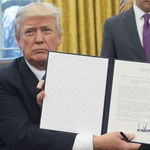
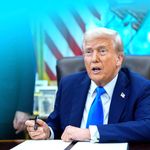
Disruptions stemming from President Donald Trump’s policy shifts have revealed Kenya’s deep exposure to the US economy, refocusing attention on Nairobi’s efforts to diversify and deepen its trade and development relations with other global powers such as China.
Since President Trump returned to the White House for a second four-year term in January 2025, Kenya has been rocked by a series of back-to-back policy changes.
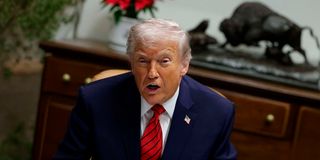
These include a freeze on USAid programme funding, delayed renewal of the Africa Growth and Opportunity Act (Agoa), cuts in funding to various UN agencies and programmes, the introduction of a 10 percent tariff on Kenyan exports, and the exemption of American multinationals from global minimum corporate income tax.
Big-ticket contracts worth more than Sh108 billion were terminated by the US government in Kenya in March 2025, even as President Trump’s administration moved to cut back on overseas support under USAid programmes in line with his “America First” agenda.
The move sparked chaos, triggering job losses and potential lawsuits by service providers, landlords, and contractors engaged by non-state agencies.
In August 2025, the US imposed a 10 percent reciprocal tariff on Kenyan exports before allowing Agoa, which provides preferential access to the key market for goods from Kenya and other select African nations, to lapse on September 30, 2025.
Analysts say the disruptions have exposed the risks of Kenya’s heavy reliance on Western markets and underscores the urgency of diversification.
Cavince Adhere, a scholar of international relations with a focus on China–Africa relations, notes that Kenya’s strategy is shifting beyond product diversification to include markets themselves.
"Kenya is strategic in terms of diversification, and the diversification is not just on product lines but also markets," said Mr Adhere, pointing at China as one of its viable alternative markets.
While the US and Europe have historically been Kenya’s strongest trading partners, China has overtaken them due to its vast industrial capacity, making Beijing Nairobi’s largest source market.
However, Mr Adhere cautions that the relationship is characterised by a persistent trade imbalance, with China exporting far more to Kenya than it imports. Despite this, he adds, Nairobi increasingly views China as a “formidable market” and is keen to position itself as a top export destination, particularly after Beijing offered to drop nearly 99 percent of tariffs for African countries.
The end of the Agoa window stripped Kenyan exporters of duty-free access to the US market, exposing goods to full duty rates ranging from 15 to 42 percent, in addition to the reciprocal levy.
Export-oriented sectors such as textiles and apparel were hit hardest, threatening jobs in manufacturing hubs largely located in export processing zones (EPZs) in Athi River and Thika.
The UN Trade and Development (UNCTAD) warned in September that the resultant tariff shock would disadvantage African exporters.
The agency projected that Kenya’s trade-weighted average US tariff would nearly triple from 10 percent to 28 percent, eroding competitiveness and discouraging investment.
“Manufacturers are paying a full duty range of 15 to 42 percent, plus a 10 percent reciprocal tariff. This is a heavy cost that would be waived through a negotiated agreement or Agoa extension,” said Tobias Alando, chief executive officer of the Kenya Association of Manufacturers, in December.
A bill proposing a three-year transitional extension of Agoa as countries negotiate longer-term bilateral arrangements has sailed through the House of Representatives. It now awaits approval by the Senate and President Trump to take effect and restore duty-free entry status.
The protectionist shift has also extended to multilateral institutions hosted in Nairobi. US funding reductions or withdrawals have affected UN-Habitat, United Nations Environment Programme (Unep), UN Women, United Nations Population Fund (UNFPA), and the Joint United Nations Programme on HIV/Aids (UNAIDS), weakening programmes on urban development, climate action, gender-based violence, reproductive health, and HIV/Aids prevention.
Further uncertainty looms from Washington’s plan to impose a 25 percent tariff on any country that does business with Iran. Kenya, which traded goods worth Sh9.27 billion with Iran in 2024—largely tea exports—could see its traders penalised if the policy is enforced.
The fiscal impact of the Trump administration’s protectionist shift has been compounded by Washington’s stance on global corporate taxation. In January 2026, the US reached an agreement with more than 145 countries to exempt US-headquartered companies from the global minimum corporate tax negotiated under the Organisation for Economic Co-operation and Development (OECD).
The move has dealt a blow to Kenya, which is among the countries that had already domesticated the OECD rules. The exemption weakens the Kenya Revenue Authority’s strategy to collect additional revenues from multinational digital firms such as Google, Meta’s Facebook and WhatsApp, Amazon, Netflix, X, Uber, and PayPal.
The disruptions have intensified focus on Kenya’s long-held plans to “US-proof” its economy amid forays into Asia and Europe for economic and development partnerships.
As pressure from US trade policy intensified, Nairobi accelerated efforts to diversify export markets, with China emerging as a key alternative.
President William Ruto said in July 2025 that Kenya had secured a breakthrough deal granting duty-free access for agricultural exports, including tea, coffee, and avocados.
“They have agreed to remove all the tariffs on our tea, coffee, avocado, and all other agricultural exports,” Dr Ruto said on July 29, 2025, adding that bilateral instruments were being finalised despite discomfort among some partners.
The remarks followed the President’s April 2025 State Visit to Beijing, which focused on trade, infrastructure financing, and market access. However, the proposed reciprocal arrangement unsettled some US lawmakers.
Republican Senator Jim Risch warned that Kenya’s posture signalled “not just alignment to China, but allegiance,” arguing that Washington should reassess relations with countries forging closer ties with Beijing.
Prime Cabinet Secretary and Cabinet Secretary for Foreign and Diaspora Affairs Musalia Mudavadi said Kenya was seeking long-term trade deals with the US to cushion itself from disruptions arising from policy changes.
“We are happy that Agoa is going to be extended for another three years. That is a very significant development, and therefore it has the effect of mitigating any possible disruptions in the flow of trade for our goods, particularly apparel, which are the main exports to the United States,” Mr Mudavadi told the Business Daily in an interview.
“Parallel to this renewal, we are negotiating other trade agreements, and our desire is that the process and pace will be good enough to allow the conclusion of a bilateral trade agreement so that everything moves smoothly.”
The US has bilateral trade agreements with 20 countries, including Israel, Australia, Colombia, and Morocco—the only African country on the list.
Others are Bahrain, Canada, Chile, Costa Rica, the Dominican Republic, El Salvador, Guatemala, Honduras, Jordan, Mexico, Nicaragua, Oman, Panama, Peru, Singapore, and South Korea.
“I know we may face challenges with different regimes, but the whole idea of meeting the legal frameworks of both countries is so that we are negotiating with a government and not an individual,” Mr Mudavadi said.
“Once you have signed a bilateral agreement, because governments are in perpetuity, then things work. We have to be patient and conclude the negotiations. We have to respect the laws of each government and hope that we shall be able to conclude,” he added.