The National Treasury has been pressured to cut the top tax rate for pay-as- you- earn (PAYE) to 30 percent from the current 35 percent to lift the burden on low-income earners.
A review of public submissions to the National Assembly Committee on Finance and National Planning showed that the Treasury has also been asked to overhaul the PAYE tax bands and raise the personal relief offered from Sh2,400 per month to Sh3,000.

The review of the bands is, however, unlikely to be carried out in this year’s Finance Bill based on the tasking analysis required before the overhaul.
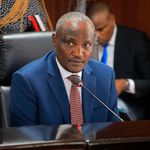
“The Committee recommends that the National Treasury relooks at overhauling all the tax bands. With the increased contributions to the Social Health Insurance Fund (SHIF) and the affordable housing levy, this has increased the burden on salaried employees,” said Kuria Kimani, the chairperson of the National Assembly Finance and National Planning Committee.
“We tried to do that in our report but realised that the data we need to analyse would be immense, so we are asking the National Treasury, which has the tools to do the analysis, to do the overhaul on all PAYE bands.”
Records revealed that the demand to overhaul PAYE tax bands dominated submissions to the Finance committee by stakeholders including the Institute of Certified Public Accountants (ICPAK), the Kenya Bankers Association, Deloitte, the Law Society of Kenya and the Grant Thornton Taxation Services Limited.
The stakeholders put out a unified pitch for new tax bands starting at 10 percent for the first Sh30,000 monthly income and 15 percent for the next Sh30,000 in monthly income and ending with a top tax rate of 30 percent for income above Sh500,000 per month.
Currently, the Income Tax Act has five tax bands which end with a top tax rate of 35 percent for all monthly income above Sh800,000 per month.
ICPAK noted that the current PAYE bands are narrow, subjecting low-income earners to higher rates.
“The current PAYE bands are narrow, meaning that the higher rates apply at relatively lower incomes. This imposes an unfair burden on low-income earners and makes our system more regressive than progressive,” ICPAK said.
The recommendation to increase the personal relief from the current Sh2,400 per month to Sh3,000 per month is expected to align with the lowest proposed monthly tax income band of Sh30,000.
The National Treasury has stayed cautious about PAYE cuts as it assesses the impact of recent external shocks to domestic revenue mobilisation, including the US-Israel war on Iran.
The Treasury, for instance, snubbed proposed measures to relieve low-income earners, including raising the threshold of tax-free earnings from Sh24,000 to Sh30,000 and reducing the PAYE rate for earners of up to Sh50,000 by five percentage points.
National Treasury Cabinet Secretary John Mbadi warned that the reduction of PAYE on low-income earners would result in a Sh35 billion revenue hole annually following an analysis conducted by a technical working committee at the exchequer.
President William Ruto had, however, overruled the Treasury experts, insisting on the adoption of cuts to payroll taxes ahead of the 2026 budget statement, which nevertheless omitted the provision.
“Some people in the National Treasury came back and said that it's going to be costly for us in the budget, but I told them, Let’s Do it!” President Ruto said at the end of May.
PAYE collections, which form part of income taxes, are the government’s largest revenue category and made up Sh1.09 trillion of Sh2.92 trillion in total revenue collected in the financial year ended June 2025.