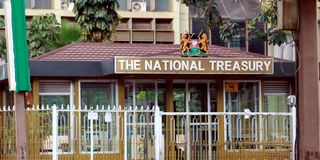
The National Treasury has remained silent on earlier promised tax reforms aimed at improving equity and predictability, including cuts to value-added tax (VAT) and corporation tax.
The measures form part of the medium-term revenue strategy (MTRS), whose implementation enters its final year in the fiscal cycle beginning July 1, 2026.
The pending tax concessions include a widely anticipated review of pay-as-you-earn (PAYE) rates for low-income earners. The measure was notably absent from Treasury Cabinet Secretary John Mbadi's 2026/27 Budget Statement presented in the National Assembly last week.
"The 2026/27 Finance Bill represents the last opportunity for the implementation of the medium-term revenue strategy (MTRS), which is in its final year," analysts at PwC said in a 2026 Budget note.
"Regrettably, the investor-friendly tax proposals contemplated under the strategy are yet to be implemented, which has significant implications for policy predictability. Predictability of tax policy is increasingly a competitiveness issue. With domestic lending rates still elevated, and regional peers offering more stable tax frameworks, investor sensitivity to policy direction has intensified."
The MTRS was adopted in October 2023 to provide a comprehensive approach to reforming the tax system, give government greater clarity on expected revenues over the medium term and create certainty around tax policy and administration reforms.
The strategy also sought to prioritise tax policy and administrative reforms, support taxation of evolving business models and build trust among stakeholders.
Pending reforms
The proposed reduction of corporate income tax from 30 percent to 25 percent was expected to boost foreign direct investment by improving Kenya's competitiveness.
"Studies have shown that high rates of corporate income tax discourage foreign direct investments and encourage investors to lobby for lower tax rates or tax exemptions," the MTRS states.
Kenya's corporate income tax rate stands at 30 percent, compared with a global average of 23 percent and an African average of 29 percent.
The high rate is also seen as contributing to aggressive tax planning and lower compliance.
The Treasury had also proposed reducing the VAT rate from the current 16 percent while seeking to raise collections through improved compliance.
"Studies have shown that low VAT rates accompanied by rationalised exemptions promote compliance and improve revenue collections. In this respect, the government will review the VAT rate downward," the MTRS states.
Attempts by the Treasury to implement some of the measures envisaged under the strategy have faced resistance, including the June 2024 protests that led to the withdrawal of the Finance Bill, 2024.
The withdrawn Bill had proposed an annual circulation tax requiring motorists to pay 2.5 percent of the value of their vehicles when renewing insurance.
The Treasury has also struggled to push through amendments to the VAT Act after Members of Parliament blocked attempts to move key goods from zero-rated to exempt status, including raw materials used in pharmaceuticals and animal feeds.
The government has, however, succeeded in implementing some reforms, including setting excise duty on alcoholic drinks based on alcohol content, revising taxes on gambling and lotteries, and increasing taxes on products with negative health effects such as sugary drinks and coal.
The delay in implementing the tax concessions has largely been attributed to revenue pressures, with the exchequer consistently missing collection targets and retreating from plans to lower taxes.
The Treasury has estimated that reducing PAYE for low-income earners, including raising the tax-free threshold from Sh24,000 to Sh30,000, would reduce annual revenue by about Sh35 billion.
"The first simulation was that we are going to lose revenue of about Sh35 billion per year (from the PAYE reduction)," Mr Mbadi said in May.
The Treasury CS omitted the PAYE proposal from last week's Budget Statement despite intense lobbying for its adoption.
He noted, however, that the government had provided some relief by maintaining the reduced VAT rate on petroleum products, helping cushion consumers from high global fuel prices linked to the conflict between Israel and Iran.