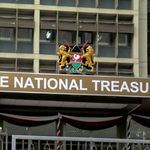
Treasury likely to miss the 2028 debt cap target amid cash shortfalls

Despite repeated commitments to fiscal consolidation, debt accumulation has continued, exposing a widening gap between the policy intent and execution of the plan.

Photo credit: Shutterstock

Kenya looks set to miss the legally binding public debt limit by the end of the five-year adjustment window, highlighting the challenge of rising expenditure amid revenue shortfalls.

Latest Treasury projections shows the country’s debt will remain above the anchor of 55 percent of gross domestic product (GDP) until 2030, two years after the deadline set when the threshold was set.

Parliament, through the Public Finance Management (Amendment) Act, 2023, scrapped the numerical Sh10 trillion debt ceiling, which had been breached, and replaced it with a debt cap pegged at 55 percent of GDP.

The lawmakers, however, handed the Treasury five years to restore fiscal discipline after years of unchecked budget deficits, which necessitated increased borrowing.

The Treasury estimates in the annual debt management report for the period ended June 2025 that the present value (PV) of total public debt stood at 63.7 percent of GDP. The ratio is expected to gradually fall in the coming years due to continued spending controls and revenue growth, but is due to fall below the anchor for the first time in 2030 at 54.6 percent.

The law is silent on penalties should the debt sustainability threshold be breached. The lack of automatic spending cuts, borrowing limits, or sanctions in the event of non-compliance leaves enforcement largely dependent on Treasury’s own fiscal discipline and parliamentary oversight.

“The analysis underscores the vulnerability of Kenya’s debt indicators to macroeconomic shocks, especially under stress scenarios,” the Treasury said in the report.

“The government is pursuing fiscal consolidation characterised by a slowdown in growth of public expenditures and an increase in ordinary revenue aimed at moderating the pace of debt accumulation and reducing the debt-to-GDP ratio.”

Despite repeated commitments to fiscal consolidation, debt accumulation has continued, exposing a widening gap between the policy intent and execution of the plan.

Politically sensitive and security-related State departments and agencies, such as the State House, Office of the Deputy President, National Police Service, National Intelligence Service, and the Interior Ministry, have particularly struggled to control recurrent expenditures.

Kenya has remained classified as being at high risk of debt distress by the International Monetary Fund (IMF) and the World Bank since 2020.

The multilateral lenders have attributed the risk to persistently large fiscal deficits that, for more than a decade, have been financed largely through borrowing.

Kenya’s total debt stood at Sh11.81 trillion in June 2025, according to the Treasury data, 11.66 percent growth over Sh10.58 trillion a year earlier.

The Ruto administration — which assumed office with a pledge to limit borrowing to fund development projects— has grown total debt by more than Sh3 trillion from Sh8.76 trillion in June 2022.

The public debt stock has since crossed the Sh12 trillion mark from September 2025, with domestic debt accounting for more than 55 percent of the total. The rising share of domestic borrowing reflects increased reliance on the local market in recent years.

The country’s debt accumulation has been driven by successive Eurobond issuances, Chinese loans, and syndicated commercial facilities, which gathered steam during the administration of President Uhuru Kenyatta.

While these borrowings helped finance infrastructure and plug budget shortfalls, they are now squeezing public finances as repayments fall due, sharply increasing debt service costs.

The Treasury has allocated Sh1.9 trillion for public debt service in the current financial year ending June 2026, increased from Sh1.74 trillion in the previous year.

About Sh1.1 trillion of that estimate will be spent on interest payments, while Sh803.7 billion will go towards repayment of principal—underscoring how debt obligations are increasingly crowding out spending on development and social programmes.

PAYE Tax Calculator

Note: The results are not exact but very close to the actual.