State spending on development projects sinks to new low

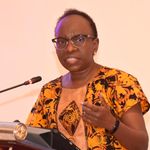
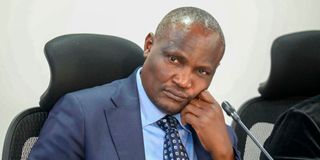
 Cabinet Secretary for National Treasury and Economic Planning John Mbadi Ng'ongo.

Photo credit: Dennis Onsongo | Nation Media Group

Cash drawn directly from the national government’s main account for domestically financed development projects, as a share of total expenditure, has fallen to a single-digit rate for the second year running, hurting the creation of new job opportunities for the growing skilled youth population.

Government ministries, departments, and agencies spent Sh335.08 billion on development projects from the exchequer against a total withdrawal of Sh3.57trillion for the financial year ended June 2025.
This is equivalent to 9.39 percent of total cash, which the national government spent to fund needs, including salaries, operation and maintenance of offices, and debt servicing costs, according to the latest data published by National Treasury Cabinet Secretary John Mbadi.

Development projects have traditionally been the main casualties of budget cuts as successive governments seek to realign expenditure through supplementary budgets to cater to programmes, which were not approved amidst the perennial shortfall in revenue estimates.

Treasury officials have argued there was little room for cuts in the recurrent votes, such as operation and maintenance costs for public offices.

Allocations to domestically funded projects for the year ended June 2025 were, for instance, cut from Sh458.87 billion to Sh351.34 billion, while recurrent expenditure, excluding debt servicing costs, was increased to Sh1.44 trillion from Sh1.35 trillion.

This financial year, ending June 2026, the lawmakers voted to increase total budget estimates for capital projects, including the portion from development financiers, by 14.9 percent to Sh721.52 billion.

The Budget and Appropriations Committee of the National Assembly has, however, warned that the budget will likely be cut in the course of the year, citing past experiences.

“The committee observed that while the financial year 2025/26 development expenditure is projected to increase, historically, development allocations tend to be front-loaded in the original estimates but are frequently revised downward in supplementary budgets,” the committee, chaired by Samuel Atandi (Alego Usonga), wrote in its report to the House.

“Therefore, the projected increase should be interpreted cautiously, as it may not translate into actual spending unless structural bottlenecks in development execution are addressed.”

Economists say reduced spending on development projects such as roads, water, power plants, housing, and electricity transmission lines slows down economic activities, hurting the creation of job opportunities and government revenue, largely from taxes.

Cement makers, steel manufacturers, contractors, and the thousands of workers employed in the infrastructure pipeline benefit from public spending and usually feel the pinch of a slowdown in public expenditure on development.

Cutting budgets for projects co-funded by development partners such as the World Bank and the African Development Bank usually affects implementation, as the financiers have clauses that largely require that they release their share after the government releases its portion.

Analysts have warned that continued deep cuts in the budget for development projects could undermine Kenya’s long-term economic growth, limiting job opportunities for the growing unemployed but skilled population.

“Development spending has already been cut to 3.5 percent of GDP [gross domestic product] over the past two fiscal years, significantly below budgeted plans,” analysts at global credit rating agency Moody’s wrote in a note on Kenya Tuesday last week.

“Domestically-financed public infrastructure projects in particular have repeatedly been scaled back to offset weaker-than-expected revenue, aimed at limiting fiscal slippage. Further cuts to development spending could undermine long-term growth and social outcomes.”

Analysis of data by the National Treasury shows the share of cash injected into capital projects from the exchequer has fallen from 23.02 percent in the year ended June 2017 to below 10 percent in the last two years.

This came in a period when the share of cash going into servicing public debt has more than doubled to Sh1.56 trillion (or 43.72 percent of total expenditure from the exchequer) from Sh707.89 billion (about 31.97 percent) in the year ended June 2020.

The share of expenditure on recurrent votes, such as remuneration of staff, operations, and maintenance, has, on the other hand, accounted for 40.43 percent of the spending from the government’s main account — about Sh1.44 trillion.

The Treasury is yet to publish the total expenditure on development projects last financial year— including the portion from development financiers— for last financial year.

The Public Finance Management Act requires that both the National and County governments allocate at least 30 percent of the budget to development spending over the medium-term (about three to five years).

The government has breached this legal provision in recent years, with spending on capital projects for the year ended June 2024 accounting for 25 percent of total expenditure.

“The actual development spending for the National Government was 25.1 percent, falling short of the principles outlined in the PFM Act Cap. [Chapter] 412. However, the forecast had initially projected it to exceed 30 percent,” the Treasury wrote in the 2024 Budget Review and Outlook Paper (BROP).

“This discrepancy was a result of spending rationalisation in the course of budget implementation. Therefore, in the financial year 2023/24, and the medium-term projections had been set above the 30 percent threshold.”

PAYE Tax Calculator

Note: The results are not exact but very close to the actual.