The Treasury is seeking MPs’ approval for an extra Sh8.4 billion, largely to cater for increased travel, hospitality, and other operational expenses linked to President William Ruto’s office in Nairobi.
Budget documents tabled in the Parliament show the State House allocation is set to more than double from the Sh7.68 billion initially approved to Sh16.1 billion if the MPs approve the revised estimates.
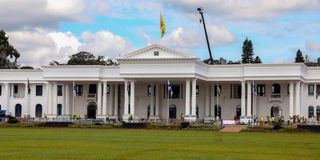
Nearly the entire increase is concentrated in the State House, Nairobi, whose expenditure has increased 2.4 times from Sh6.14 billion to Sh14.58 billion — a jump of Sh8.44 billion.
Recurrent budgets for State House facilities in Mombasa (Sh24.94 million) and Nakuru (Sh32.34 million), as well as State lodges (Sh103.123 million), remain unchanged, suggesting the additional funds are primarily meant to support operations at the main presidential office.
The single biggest jump appears under the broad and less transparent budget line labelled as “other operating expenses,” which is set to be added Sh4 billion. This category, which has, over the years, raised accountability questions due to lack of transparency in specific spending items, has seen allocation climb to Sh5.94 billion from Sh1.94 billion initially approved.
The cost of domestic travel and subsistence expenses for Dr Ruto’s office, which typically cover transport, accommodation and allowances during official tours, has grown about 5.6 times compared with initial allocation of Sh375.6 million to Sh2.12 billion.
Hospitality spending, on the other hand, has been adjusted from Sh337.7 million to Sh1.61 billion. The additional Sh1.27 billion budget signals an increase in functions, delegations, and receptions hosted at the State House for the period ending June 2026.
Fuel costs tied to the presidential fleet are also set to rise from Sh191.2 million to Sh600.4 million, while routine maintenance of vehicles and other transport equipment increases by 288 percent from Sh136.3 million to Sh530 million.
The Treasury has further approved a fresh budget of Sh141 million towards purchase of new cars for State House, marking a steep increase from Sh6.85 million initially approved to Sh147.9 million.
The sharp expansion in operational spending at the presidency comes at a time when the Treasury says the government is tightening expenditure to safeguard public finances.
In the 2026 Budget Policy Statement, the Treasury says that it is continuing to enforce austerity measures aimed at reducing recurrent spending and improving value for money in public expenditure.
“The government continues to implement measures to enhance expenditure control and ensure value for money in public spending,” it wrote in the 2026 BPS tabled in Parliament early February.
The Treasury lists key interventions as enforcement of austerity measures to cut recurrent expenditure such as printing, advertising, travel, communication supplies and services, training, hospitality, furniture, refurbishment, and vehicle purchase. Further interventions include the rollout of end-to-end e-procurement systems to increase transparency, governance reforms targeting State corporations, including privatisation, and deployment of a Human Resource Management System across government to improve wage bill management.
The expenditure numbers, however, suggest that recurrent spending controls in politically sensitive and security-related departments are still being tested.
Latest Treasury data on expenditures, for example, indicate the State House had exhausted its full-year budget halfway through the current financial year ending in June, having withdrawn Sh10.40 billion from the Exchequer by the seventh month in January against an annual allocation of Sh7.68 billion.
The spending means Dr Ruto’s office had used 135 percent of its full-year allocation with five months still remaining before the end of the financial year in June, highlighting the pressure that triggered the request for additional funding.
Article 223, which is implemented through Section 36(9) of the Public Finance Management (National Government) Regulations, permits State offices to exceed approved budget allocations by up to 10 percent to meet unforeseen and unavoidable needs.
The Constitution requires the Treasury to table in the House a mini-budget two months after withdrawal of unbudgeted money from the Consolidated Fund without the approval of the members of parliament.