The government plans to shift to a targeted registry for poor and vulnerable farmers to improve the flow of subsidised fertiliser, following mounting complaints over long queues, uneven access and inefficiencies in the current distribution model.
Farmers have in recent years complained of congestion at the National Cereals and Produce Board’s (NCPB) depots and difficulties accessing fertiliser at critical planting periods, largely during the long-rain season between March and May.
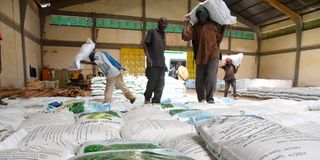
The pressure to improve the distribution of subsidised fertiliser mounted during last November’s public sector hearings on the budget for the next financial year, starting July.
The Agriculture, Rural and Urban Development sector working group plans to address the challenge through a proposed Vulnerable and Marginalised Groups (VMGs) system—a government database used to identify and support poor, disadvantaged and hard-to-reach households.
“Plans are underway to use the Vulnerable and Marginalised Groups (VMGs) system to support targeted distribution of the fertiliser,” the National Treasury wrote in the Draft 2026 Budget Policy Statement, highlighting the response from the agricultural sector group.
The proposed shift towards more targeted support within the subsidy programme, comes against the backdrop of fresh criticism from findings of a joint World Bank and Competition Authority of Kenya (CAK) study, which questions the effectiveness of the current fertiliser distribution framework.
The report, titled From Barriers to Bridges and published in November 2025, singled out the role of the NCPB and the design of the State-funded fertiliser subsidy programme in discouraging competition and efficient delivery.
The World Bank and CAK found in their study that the subsidy programme relies on a narrow distribution chain controlled by leading suppliers Yara and ETG.
This creates geographic distortions, the study adds, reducing the availability of high-demand fertiliser blends and locking out many private sector players.
Weak competition in the subsidised input market has, in turn, suppressed agricultural productivity, the World Bank and CAK argue, slowing growth in formal jobs across agri-processing, logistics, and retail value chains.
Kenya currently operates the second National Fertiliser Subsidy Programme (NFSP-2), introduced after the 2020 fertiliser crisis triggered by Covid-19 disruptions, global supply shocks, and rising input costs.
Under NFSP-2, the government negotiates framework agreements with select importers to supply fertiliser at fixed, below-market prices. Importers are compensated per bag sold, with distribution largely handled through NCPB depots on a consignment basis.
As of June 2025, subsidised fertiliser accounted for an estimated 30 percent to 40 percent of all fertiliser sold in the country, the study established, meaning the subsidy influences the entire market rather than targeted smallholder farmers.
Before this shift more than five years ago, fertiliser support was delivered under the National Value Chain Support Programme (NVSP), which used vouchers with cash values redeemable at private agro-dealers. That decentralised model allowed farmers to choose products and suppliers, while banks reimbursed agro-dealers in real time.
The World Bank and CAK recommend revisiting elements of the earlier approach. They suggest modifying NFSP-2 to allow more last-mile retailers to participate, strengthen price signals, and boost agri-tech solutions for extension services.
Early evaluations of NVSP, the report notes, showed positive impacts on access, productivity, market engagement, and overall value for money.