State eyes new earnings from water sales to Turkana oil fields

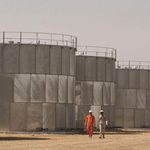
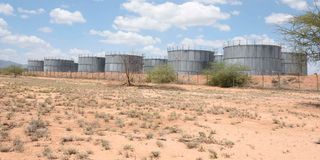
Tanks at Ngamia 8, in Lokichar, Turkana County on February 18, 2020.

Photo credit: File I Nation Media Group

The government is set to open a new revenue stream by supplying water for commercial oil production in the South Lokichar fields through a new 90-kilometre pipeline from Turkwel Dam.

A field development plan (FDP), which is awaiting ratification by Parliament, shows that the pipeline will also provide water for domestic use and irrigation across Turkana and West Pokot counties.
Commercial oil production is highly water-intensive, with water used in drilling, extraction and processing. Through Gulf Energy, Kenya targets to start commercial production in Turkana oil Blocks T6 and T7 by December 2026. The country’s oil ambitions have been delayed, with nearly 14 years having passed since the discovery of crude oil.

“After in-depth analysis, it was found that piping water from Turkwel dam was the most feasible option. It was then agreed that the national government would develop a 90km pipeline of water to Lokichar and that Gulf would pay for the water using a commercial tariff to be determined by the government,” the FDP reads in part.

Tariff plan

The tariff charge on water supplies to the Lokichar oil fields has yet to be determined. The cost of the pipeline and the source of funding have also not been disclosed.

The irrigation component will, however, be financed using funds from the newly created National Infrastructure Fund.

Gulf Energy, which fully acquired the oil project from Tullow Kenya BV, expects to start commercial production by December 2026. An estimated 20,000 barrels per day (bpd) will be produced in the first phase (2026–2032), before output is scaled up to 50,000 bpd from 2032.

The commercialisation plan shows that at least 2,000 acres of land, 1,000 each in Turkana and West Pokot, will be put under irrigation using water from the Turkwel Dam pipeline.

Six water points will be constructed across the two counties, from where residents will access clean and safe water for domestic use. It remains unclear whether users will be charged.

The water pipeline is one of the key investments the government is planning to support Kenya’s transition into an oil-producing country.

Evacuation plan

The other major project is a 640-kilometre metre gauge railway (MGR) from Rongai in Nakuru to South Lokichar in Turkana County, targeted for completion by December 2031 to ease crude oil evacuation.

The MGR extension, estimated to cost Sh220 billion, has been identified as a viable option for transporting crude oil from the fields to the port of Mombasa for export.

The government had earlier proposed a crude oil pipeline but dropped the plan due to concerns over its return on investment.

Follow ourWhatsApp channel for the latest business and markets updates.

PAYE Tax Calculator

Note: The results are not exact but very close to the actual.