Kenya has initiated the extension of lucrative incentives under the Special Economic Zones (SEZs) to oil and gas investors, signaling a policy shift that could fast-track the country’s long-delayed oil dream.
The government has proposed changes to the existing laws to bring upstream and midstream petroleum operations under the SEZ regime—a move that would unlock major incentives for investors involved in the exploration, transportation, and storage of petroleum products.
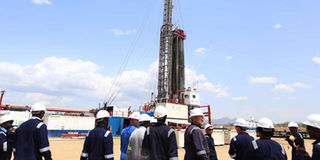
The Special Economic Zones (Amendment) Bill, 2026, which has been tabled in the National Assembly for approval, would open the door for oil firms to access tax breaks, regulatory flexibility, and investment protections previously reserved for export-oriented industries.
“The Bill, therefore, is intended to facilitate strategic investments in midstream and upstream petroleum operations by improving the legal and fiscal environment within Special Economic Zones,” Leader of Majority in the National Assembly Kimani Ichung’wah said in a memorandum on the Bill.
“In particular, it seeks to ensure that the SEZ regime accommodates the structure and operational needs of capital-intensive projects, including those undertaken under the petroleum exploration agreements.”
The upstream petroleum segment—commonly referred to as the Exploration and Production sector—covers the search for oil and gas deposits, drilling of wells, and extraction of hydrocarbons from underground or underwater reservoirs.
Midstream operations, on the other hand, focus on transporting crude oil and gas via pipelines, rail, trucks or barges, as well as storage, processing and marketing thus ensuring the continuity of supply chains from oil fields to refineries or export terminals such as the Port of Mombasa.
The inclusion of the two petroleum segments will create a raft of incentives that have previously made SEZs attractive to manufacturers and logistics firms. The haul of incentives includes a reduced corporate tax rate of 10 percent for the first 10 years, rising to 15 percent for the next decade, alongside VAT zero-rating, exemptions from customs duties and stamp duty, and 100 percent investment deductions.
The Bill also introduces a minimum 10-year validity period for licences issued to firms operating in oil and gas SEZs, offering long-term certainty to investors wary of abrupt regulatory changes.
The proposed law further removes the requirement that SEZ entities should be incorporated in Kenya, potentially easing entry for foreign oil majors that dominate global exploration and production.
The companies will, however, be subject to annual audits by the SEZ Authority throughout the licence period, with mandatory compliance fees, indicating a tighter oversight regime as sweeteners are expanded.
The reforms come against the backdrop of Kenya’s renewed push to unlock its oil potential, particularly in Turkana County, where discoveries made nearly one-and-a-half decades ago have yet to transition into full-scale production.
The Energy and Petroleum Ministry is presently recruiting an expert to undertake the first-ever competitive auction of 10 oil and gas blocks located in the Anza and Lamu basins, nearly a year after the process stalled due to the absence of requisite laws.
The sale of the 10 exploration blocks was initially targeted for September 2025, but this was later pushed forward to June this year at the earliest, as the State sought to enact the necessary laws in line with the Energy Act, 2019.
The laws have since been enacted, paving the way for Kenya to competitively sell licences for the oil and gas blocks for the first time. The 10 are part of the 50 blocks that the Ministry of Energy has prioritised for potential exploration, citing huge potential for oil and gas.
Kenya is keen to attract investors to tap the oil and gas reserves, mainly in Northern Kenya and on the Coast, as it seeks to build on the looming commercial exploration in Turkana County.
Through Gulf Energy, Kenya expects to start commercial production of the Turkana oil Block T6 and Block T7 by December 2026. An estimated 20,000 barrels per day(bpd) of crude oil will be produced in the first phase (2026-2032) before it is scaled up to 50,000 bpd from 2032.
The Ministry of Energy and the Cabinet recently approved Gulf Energy’s field development plan (FDP) for the Turkana oilfields. The plan is now awaiting a decision from Parliament before the end of next month.
Kenya plans to start commercial production of the crude oil in December this year and end a wait of over 13 years since the discovery of crude oil in the South Lokichar basin. The FDP shows that 600,000 bpd of crude oil will be exported every month in phase one. This will jump to 1.5 million bpd in phase two.