The government claims to have cleared the stock pending bills in the road sector, paying Sh123 billion exclusively from commercial bank loans.
The National Treasury says the payments cover arrears to contractors dating back as far as 2005, up to December 2024.
Last month, the exchequer indicated that it would pay Sh93 billion of pending road sector bills from commercial bank loans worth Sh104 billion, implying that lenders would provide additional financing to cover the extra Sh30 billion.
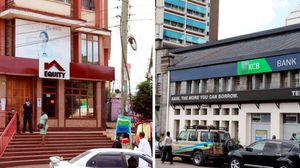
Settling the entire stock of pending bills implies that the planned Sh175 billion roads bond will only be used to repay commercial banks, including the Trade and Development Bank (TDB), KCB Bank Kenya, Absa Bank Kenya and UBA Kenya Bank.
These four lenders provided financing to clear the arrears ahead of the issuance of the roads bond programme, with the loans provided being bridge facilities.
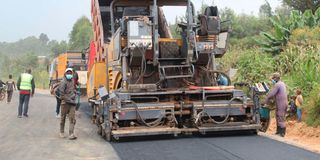
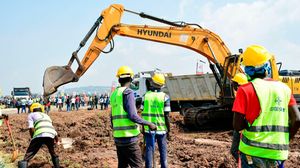
The settlement of road sector pending bills has enabled contractors to resume works, contributing to a rebound in activity for the construction sector in 2025.
“The bridge financing is almost complete. The money that the bond is going to raise will just pay back the money raised from the various commercial banks,” Treasury Cabinet Secretary John Mbadi said on Thursday.
“This month, we are clearing all pending bills for the sector up to December 2024.”
Securitisation of roads levy fund
The Ministry of Roads is coordinating the issuance of the Sh175 billion roads bond, with support from the Public Debt Management Office (PDMO).
Initially planned for November, the bond remains frozen with no new issuance date yet confirmed.
Investors in the roads bond will be paid using part of collections from the Roads Maintenance Levy Fund (RMLF), with the government securitising Sh7 of Sh25 raised from every sale of a litre of petrol or diesel.
The government has previously indicated plans to securitise a further Sh5 from the levy in order to raise a second Sh125 billion roads bond to cover future arrears from sector projects. This would bring the total value of the roads programme to Sh300 billion.
In July 2024, Kenya increased the fuel levy from Sh18 to Sh25 per litre.
While the securitisation of the levy has been welcomed as an innovative way to resolve sector arrears, the National Treasury has differed with the International Monetary Fund (IMF) over the treatment of the financing raised from the bond.
The exchequer has insisted that the balances do not constitute public debt, but the IMF considers them to be sovereign liabilities.
“The concern is an accounting matter on whether we should capture it as a sovereign debt or not. Our position as government is that once you sell a right to a special purpose vehicle (SPV), then there is no risk to the government at all,” Mr Mbadi said previously.
“The IMF feels that we should treat it as a sovereign debt. Whichever way, we will agree.”
A special purpose vehicle, Oak Assetco SPV Limited, has already been established to hold the securitised portion of the fuel levy.
Special purpose vehicles are distinct legal entities created to isolate a specific asset, liability or financial risk.
As part of the bonds programme, the Kenya Roads Board (KRB) has been making disbursements to road contractors from the bridge facility through its respective agencies: the Kenya National Highways Authority (KeNHA), the Kenya Urban Roads Authority (Kura), and the Kenya Rural Roads Authority (Kerra).
The construction sector has marked increased output in the backdrop of the payments, registering a growth rate of 5.7 percent in the quarter ended June 2025, to reverse a 3.7 percent contraction in the same period last year, according to the Kenya National Bureau of Statistics (KNBS) data.
Cement consumption increased by 23.9 percent to stand at 2,424,400 tonnes from 1,957,100 tonnes in the same quarter of 2024.
Meanwhile, the quantity of imported bitumen rose to 22,659,300 tonnes from 15,566,200 tonnes, and iron and steel imports increased to 526,606,400 tonnes from 222,112,300 tonnes.