Kenya’s security agencies are the biggest winners in the freshly tabled second supplementary budget for the current 2025-26 financial year, which proposes to raise spending by Sh17.29 billion to a total Sh4.66 trillion.
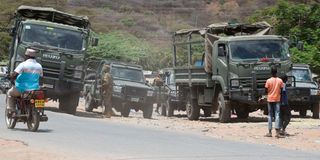
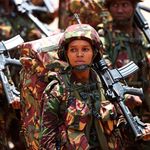
Documents from the National Treasury tabled in the National Assembly show that the National Intelligence Service (NIS) is earmarked for a Sh3.5 billion increase in its budget to Sh64.9 billion, while the allocation to the Internal Security and National Administration would be raised by Sh1.6 billion to Sh57.9 billion.
Together, the NIS and the State Department for Internal Security account for 29.2 percent of the proposed mini-budget.
The National Assembly is now caught in a race against time to consider and pass Supplementary Budget II, just two weeks before the end of the current financial year while simultaneously considering the Appropriations Bill 2026 which captures the estimates for 2026/27.
“I am advised the second supplementary estimates seek to revise allocations in respect of a few votes, largely for purposes of reallocation and regularisation of the expenditures. Noting the limited scope of the second supplementary estimates and the period between now and June 30, 2026, the estimates shall only be referred to the Budget and Appropriations Committee.
"The Committee may, where necessary, liaise with the relevant departmental committees under whose mandate the affected votes fall”, National Assembly Speaker, Moses Wetan'gula, said on Tuesday.
According to the National Treasury, the NIS budget has been raised because of enhanced security operations, while the extra cash allocation to the State Department for Internal Security is attributed to rising demand for national government coordination services.
The Sports, Arts and Social Development Fund is set for Sh4.1 billion increase in its budget, which is earmarked for financing capital grants to government agencies to support development and management of sports facilities.
The State Department for Micro, Small and Medium-sized Enterprises is the second biggest gainer with the proposed increase of its budget by Sh3.85 billion to Sh12.09 billion.
The increase reflects additional donor commitment towards the National Youth Opportunities Towards Advancement (NYOTA) programme, with the number of those targeted for skills training in the 2025/26 fiscal year being raised to 50,000 from the initial 17,500.
Spending pressures
Provision for additional financing for the construction of Mwache Dam in Kinango, Kwale County has pushed the allocation for the State Department for Water and Irrigation up by Sh2.3 billion to Sh60.33 billion.
The State Department for Youth Affairs and Creative Economy is set for a Sh1.94 billion increase in its allocation, which will be dedicated towards entrepreneurship and talent development.
Spending pressures for national examinations and assessments have necessitated a Sh1.5 billion increase in the budget for the State Department for Basic Education, which is now expected to close the financial year at Sh132.67 billion.
Between 2024 and 2025, the number of examination centres for the Kenya Certificate of Secondary Education increased from 10,755 to 10,771 while the number of candidates increased by 3.2 percent to 995,841.
In 2025, the number of candidates who sat for the Kenya Junior School Education Assessment stood at 1.11 million. The allocation for State House in the current financial year is set to increase by Sh1.0 billion in what is being attributed to enhanced operations and maintenance.
The National Treasury’s budget is set for a Sh2.5 billion cut as the government rationalises spending under the Contingencies Fund, which is the kitty designed to provide for rapid financing in the case of emergencies such as natural disasters, disease outbreaks and any unplanned emergencies.