The Narok County does not control a private revenue collection system that manages more than Sh5 billion in annual own-source revenue.
These damning revelations emerged during the Senate County Public Accounts Committee on Tuesday, when the administration of Governor Patrick Ntutu admitted that they are unable to access the backend of the system, which is run by Kenya Airports Parking Services (KAPS) Limited.
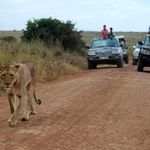
The county contracted KAPS in 2014 to collect access fees for the world-famous Maasai Mara National Reserve.
Appearing before the committee led by Homa Bay Senator Moses Kajwang’, Mr Ntutu disclosed that the deal with the company contains punitive clauses that make it difficult for the county government to terminate the contract.
Narok County Finance Executive David Muntet informed the committee that they could only view the revenue collected, not the underlying data.
Eyebrows raised
He told the committee that, unlike their deal with JamboPay—which collects revenue from other streams apart from park fees—where they have total access, the KAPS system has limited access.
“Only some of our staff have visibility of the system, unlike that of JamboPay, which is managed by our staff,” said Mr Muntet.
Raising more eyebrows, an audit report by Auditor-General Nancy Gathungu flagged the use of cash as a mode of payment despite automation, as well as incorrect charges to customers.
The report also identified cases where some clients were identified in the system as non-residents, only to produce identity cards at the point of entry, identifying themselves as East African residents.
In the financial year ended June 30, 2025, the county government realised Sh5.67 billion as its own source revenue, where Sh5.6 billion was from park fees, representing 91 percent of its total internal revenue.
Mr Kajwang’ termed the lack of control worrying, given that most of the county’s revenue is being collected by KAPS.
The county receives a big chunk of its revenue from the Maasai Mara.
This as the senators called for a forensic audit of the KAPS system by Ms Gathungu, terming the revenue collection deal between the two parties as “skewed”, where millions of both domestic and foreign tourists flock annually to enjoy rich fauna and flora species.
According to the Commission on Revenue Allocation, Narok County has an own source revenue potential of Sh8.5 billion.
“What guarantee are you giving us that the report you get is actually what has been collected? If you don’t have access to the back-end, then you cannot say with certainty that the Sh5 billion declared is what was actually collected,” said Mr Kajwang’.
Nairobi Senator Edwin Sifuna added: “This basically means you have put your full trust in the system.”
However, Governor Ntutu told the committee that they have stationed their own clerks at the game park’s gates who also record every entry before a reconciliation is done.
“Everything is open for all to see but we are in the process of coming up with our own system,” he said.
Nonetheless, the county boss admitted the KAPS contract has punitive clauses that makes it hard to part ways before the end of the contract.
Under the agreement, the county also remits 6.5 percent of the total monthly revenue processed and collected through the system as service fees.
But Senator Kajwang’ charged: “We want to have assurance that whatever is collected is recorded. We need a system audit of revenue collection in Narok.”
The audit report indicated that revenue officers stationed at the park gates are permitted to receive cash payments from clients for services rendered.
During the period under review, for instance, Sh26 million and $608,550 was collected in cash, exposing the county government to a heightened risk of revenue loss through theft, fraud, or misappropriation.
The report further said cash payments do not provide a reliable audit trail, thereby limiting the ability to independently verify the completeness and accuracy of revenue collected.
However, Governor Ntutu said the revenue system allows four modes of payment which includes card payments, mobile money, bank transfers and cash payments.
He argued that it was deliberately introduced to give customers various options for payments for efficient access of services within the national game reserve.
“All these payment modes are captured in the system and are verifiable real-time through various compliance applications both in KAPS offices and in the county government,” said Mr Ntutu.
“The revenue system provides a module for reconciliation for all modes of payment including cash and produces a daily summary report for all monies collected in the KAPS system. Therefore, there is no possibility for loss.”
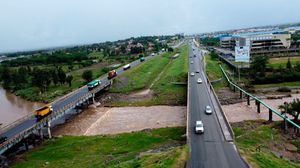
The committee also heard that most collections in other revenue streams dropped with the county government attributing the sharp decline to Trans Mara clashes and flooding in the Mara triangle.
“I don’t think insecurity can affect collection of land rates and flooding in Maasai Mara on a single business permit, an annual levy, which dropped by Sh6 million. Were the hotels operating without a licence?” posed Mr Sifuna.
Senator Kajwang’ added: “My feeling is that we are being treated to a lot of stories because you can see park fees grew by Sh1.1 billion meaning the tourism sector was booming.”
But the governor defended his administration saying they have managed to increase revenue collections from Sh1.3 billion when he assumed office to the current Sh5.9 billion and the target is to improve to Sh7 billion.
“We continue to work on other revenue streams to grow our own source revenue in order not to over rely on park fees and hospital fees,” said Mr Ntutu.