The National Treasury has avoided cash disbursements not approved by the National Assembly in its second mini-budget for the 2026/27 fiscal year, bucking a trend witnessed over the years. This indicates efforts to regain financial discipline following pressure by oversight agencies.
The Treasury had come under sharp scrutiny from oversight bodies like the Office of the Auditor-General for persistent disbursements of unapproved expenditures to government ministries, departments and agencies(MDAs).
While the Treasury is allowed to make the pre-approved disbursements under Article 223 of the Constitution, the exchequer has been accused of abusing the provision, including making unjustified appropriations.
The National Assembly’s Budget and Appropriations Committee (BAC) lauded the omission of unapproved spending in the second supplementary budget estimates and termed it a step in the right direction.
“The Committee noted that the National Treasury had not issued or disbursed any funds under Article 223 of the Constitution,” the BAC said in its report considering the second mini budget.
“This demonstrates a commitment to fiscal discipline in budget implementation, adherence to the approved budget framework and strengthens parliamentary oversight of public expenditure.”
Article 223 of the Constitution allows the national government to spend money that is not appropriated if the amount allocated prior is deemed insufficient or where a need has arisen for expenditure or if money has been withdrawn from the Contingencies Fund.
The government, however, must not spend more than 10 percent of the sum appropriated by Parliament for that financial year unless in special circumstances.
The approval of the National Assembly on any monies spent under the provision is still expected and ought to be sought within two months after the first withdrawal of the money. Disbursements from the clause have come under sharp scrutiny as MDAs are deemed to use the provision to bypass scrutiny of suspect expenditures.
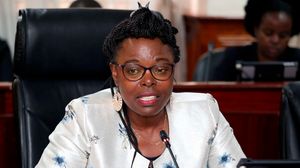
A recent audit report by Auditor-General Nancy Gathungu showed that MDAs spent Sh147.39 billion in the financial year 2022/23 without authorisation by Parliament.
Ms Gathungu deemed the use of the provision as a loophole prone to abuse by government entities looking to withdraw money from State coffers without public participation.
She warned that the lack of guidelines to inform emergency spending had enabled the constitutional provision to be misused. “Due to a lack of guidelines, MDAs have been requesting additional funding for items that could have been factored during the normal budget process. This is attributed to poor budget planning by MDAs,” said Ms Gathungu.
Withdrawals under the provisions hit a record Sh147.39 billion in the 2022/23 cycle from just Sh1.1 billion in the financial year 2014/15.
Ms Gathungu noted that despite the Contingencies Fund being allowed to hold as much as Sh10 billion to cater for emergency spending, the government has deliberately avoided using the facility due to the stringent conditions attached to it.
“Requests have remained low over the years, ranging from zero requests to a maximum of Sh3.1 billion per financial year,” added Ms Gathungu.
Some disbursements under Article 223 have been controversial, including spending on fuel and maize flour subsidies in the closing days of the Uhuru Kenyatta presidency.
The most controversial utilisation of the unapproved funds included the Sh6.09 billion buyback of Telkom Kenya from private equity firm Helios Investment Partners, which resulted in a Parliamentary inquest.
Under the first 2025/26 supplementary estimates, the Treasury was put to task over Sh60 million spent toward the Siaya International Trade and Investment Conference, which was cancelled following the death of former Prime Minister Raila Odinga.
“The Committee observed that the National Treasury has approved additional expenditures under Article 223 of the Constitution to respond to emerging needs. However, some expenditures were not justified, particularly Sh60 million spent towards the Siaya International Trade and Investment Conference, which did not take place,” the BAC said in an earlier report on its consideration of the first supplementary budget estimates.