Maize prices hit 20-month high despite duty-free imports offer

DNNAXDRYMAIZE1205a

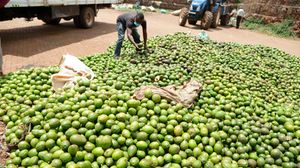
Workers dry maize by the roadside in Elburgon, Nakuru County.

Photo credit: File | Nation Media Group

The cost of staple maize has shot up to the highest levels in 20 months on the back of reduced supply this year, which prompted the government to allow duty-free importation of yellow maize to ease competition for the grain from animal feed manufacturers.

Data collated by the Kenya National Bureau of Statistics (KNBS) shows that a kilogramme of loose maize sold for an average of Sh71.24 in July, the highest price since November 2023, when the cost averaged Sh71.98.

The prices have continued rising despite the intervention by the Agriculture Cabinet Secretary, Mutahi Kagwe, in early April to allow duty-free importation of 5.5 million bags of yellow maize for the production of animal feeds.

The KNBS data suggests the retail price of a 90-kilogramme bag retailed as much as Sh6,400 ahead of the main harvesting season in Western and Southern Kenya (including Narok) regions, where farming is largely on a small scale.

Large-scale maize production in North Rift, the country’s food basket region, is not expected until October or November.

Erratic weather conditions, including floods in May 2024, hit production of maize last year, with official data showing a 6.1 percent fall in output to 44.7 million 90-kilogramme bags from 47.6 million in 2023.

The reduction in production marked a major miss of the government's target of 74 million bags in 2024, which was to set the country on a path to food security, buoyed by President William Ruto’s fertiliser subsidy programme.

That created competition for maize grain between flour millers and animal feed makers, prompting the latter to look for supplementary supply from Tanzania and passing the resultant costs to consumers.

The result has been the cost of two-kilogramme packet of sifted maize flour crossing the Sh160 mark for the first time since November 2023, while the retail cost for fortified flour crossed the Sh170 level on average from May, for the first time since February 2024.

The prices have continued to rise despite the government intervention to allow shipment of non-GMO yellow maize from outside the seven-nation East African Community trading bloc duty-free.

Without waiver of taxes under the special import window, maize imports will attract a duty of 50 percent.

"The objective is to reduce pressure on local white maize stocks by shifting animal feed millers to yellow maize. This will allow millers focused on human consumption to access available maize at fairer prices, ultimately leading to reduced production costs and more stable unga prices for consumers," Mr Kagwe wrote in the statement.

Before the intervention in April, millers were relying on Tanzania for supply, with farmers “holding minimal stock and traders speculating on price increase”, according to their lobby, the Cereal Millers Association (CMA).

At the time, the wholesale price for a 90-kilogramme bag in the domestic market had risen to Sh4,250-Sh4,300 per bag from Sh3,400-Sh3,500 in December 2024.

“The higher maize prices have strained cash flows, requiring more funds to maintain production capacity. Due to limited grain availability, many millers are operating on reduced schedules,” CMA chief executive Paloma Fernandes told the Business Daily on April 4. “With maize prices continuing to rise, the cost of maize flour is expected to increase proportionally.”

PAYE Tax Calculator

Note: The results are not exact but very close to the actual.