Sh15bn lecturers, teachers’ allocations top in fresh mini-budget

John Mbadi

Treasury Cabinet Secretary John Mbadi. He has proposed the dissolution of the Prison Farms Revolving Fund, formed in 1993, and the Prisons Industries Revolving Fund, formed in 1988.

Photo credit: File| Nation

The Treasury is lining up its first mini-budget for the current fiscal year, triggered by expenditure revisions in several sectors, including Sh15 billion for lecturers and teachers’ insurance.

The Treasury also disclosed that emergency requests to plug holes in the security sector, more allocations to donor projects that risk losing funding, and reducing training and conferences will be the basis for the supplementary budget expected next February when Parliament resumes sittings after Christmas recess.
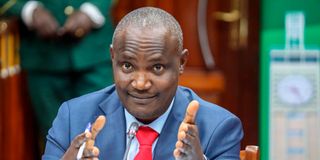
Treasury Cabinet Secretary John Mbadi said the Exchequer allocated Sh7 billion more to the teachers’ insurance cover after they were moved to the Social Health Authority (SHA), while lecturers were last month given Sh7.9 billion to end the strike, which they started in September.

The revisions aim to adjust expenditure in education, health, and security sectors, while cutting recurrent budgets on activities such as conferences, where the Treasury notes agencies have been extravagant.

“There have been issues around medical healthcare service provision to our disciplined forces, which have been enhanced. Again, under teachers, we are moving them to SHA, which is giving enhanced services, and so we are putting in additional funding of about Sh7 billion,” Mr Mbadi told the Business Daily.

The Treasury also plans to allocate more money under primary healthcare, which had been allocated Sh13 billion in the original budget, to cater to chronic emergency and critical illness, the CS said.

More budget revisions are expected to rein in agencies’ expenditures on recurrent activities as the Treasury promises a purge of unnecessary training and conferences.

“We may cut again on conferences and conferencing because again we feel there are too many conferences that public servants are engaging in,” said Mr Mbadi.

Treasury said it has already made several unplanned allocations through Article 223 of the Constitution, mainly to address security needs and provide funding to donor projects that were at risk of losing donor money due to expiring project timelines.

Article 223 of the Constitution allows the government to withdraw money from the Consolidated Fund Services (CFS) without the approval of Parliament.

However, the approval of Parliament for any spending under this Article shall be sought within two months after the first withdrawal of the money.

The Parliamentary Budget Office (PBO) last month warned that a Sh130 billion shortfall on government counterpart funding risked stalling 234 new and ongoing projects attached to Sh2.1 trillion in loans and grants.

The Treasury said it provided emergency funding to some of the donor projects to avoid loss of financing.

“We will also check around some donor projects where we also underprovided, and the money is available with donors. We don’t want the money to be taken away, especially where projects have advanced, some to near completion,” said Mr Mbadi.

He said the Treasury has already made several allocations under Article 223 of the Constitution as the basis for adjusting original expenditures approved in June.

A Sh7.9 billion allocation made last month to end a 49-day lecturers’ strike that had paralysed learning in public universities is also part of the items causing the Treasury to revise the current fiscal year’s budget, noting that it brought expenditure pressures.

While Treasury did not provide an overall figure associated with the expected supplementary budget, it noted that many of the expenditure revisions have been in the security sector, where funding requests have been sought several times under Article 223 of the Constitution.

The Treasury is also expected to make downward budget revisions on other areas due to revenue shortages that have been faced as the Kenya Revenue Authority (KRA) struggles to raise taxes.

During the three months to September 2025, the KRA missed its revenue targets by Sh90 billion.

“If revenue does not perform, we’ll have to reduce the budget in line with revenue collection because we don’t want to borrow more,” said Mr Mbadi.

In its last mini budget in June 2025, the government apportioned about Sh18.9billion, including a Sh11 billion cut to the roads budget, an Sh3.7 billion allocations to State House for domestic travel, and a Sh62 billion increase for the education sector in an earlier budget.

The Treasury has, since the last financial year, issued a series of mini-budgets (supplementary budgets) to manage the government’s finances due to persistent revenue shortfalls and increased spending needs. This strategy has been driven by the need to plug a significant budget deficit and pay accumulating pending bills.

PAYE Tax Calculator

Note: The results are not exact but very close to the actual.