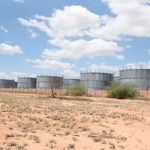
Kenya will extend the metre gauge railway (MGR) to South Lokichar in a project projected to cost Sh220 billion, marking a change from the earlier plan to build a pipeline to ferry crude oil from Turkana.
Documents tabled in Parliament show that 640 kilometres of MGR will be constructed from Rongai in Nakuru to South Lokichar in Turkana County by December 2031 to ease the evacuation of the crude oil from January 2032, when daily crude oil production will more than double to 50,000 stock barrels per day(stb/d).
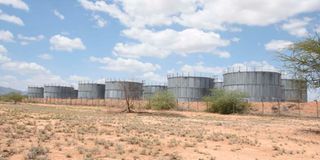
Kenya had earlier planned to build an 892-kilometre pipeline from the production fields in South Lokichar to the port of Mombasa.
But doubts in securing at least $1.5 billion (Sh193.87 billion) needed to fund this line and fears of delays in delivering the project forced a change in plan as Kenya races to end a 14-year wait in becoming an oil exporter.
Gulf Energy is set to start producing the first crude oil from Block 10BB and Block 13T in the South Lokichar basin by December and truck the early output of the commodity up to the Mombasa port in phase one of the project (2026-32).
“Notably, this rail extension represents a strategic shift from earlier plans to build a crude oil pipeline to Lamu (estimated at Sh193 billion),” the documents read in part.
“The ongoing feasibility assessments are examining these options (MGR or standard gauge railway) in detail, weighing cost, engineering challenges and future demand—to inform a government decision on the phase three rail extension.”
A comparison of the rail project shows that constructing an SGR line from Rongai to South Lokichar will cost upwards of Sh300 billion, making it costlier than an MGR, according to the documents.
MGR currently spans 1,082km from Mombasa to Malaba, cutting through Nairobi, Nakuru, Naivasha and Kisumu. It runs next to the SGR from the Mombasa port to Naivasha.
This means that crude oil could be transported solely on the MGR cargo train from South Lokichar to the port or be transferred to the SGR freight wagons in Naivasha.
The MGR will further be extended to Nakodok, Kenya’s border town with South Sudan, running parallel to the highway from Lodwar to the border.
An estimated 155 insulated and steam-heated train wagons will be loaded daily and taken to the storage tanks in Kenya Petroleum Refineries Limited at the port in phase two (from 2032). In phase one, 600 trucks will be used to transport the crude oil, with 100 trucks in a six-day schedule needed to transport 20,000 barrels per day.
Gulf Energy further aims to export two vessels of the Turkana oil every month in phase two, when daily production will have more than doubled from 20,000 stb/d. The local firm that is tasked with commercially producing the crude oil says delivery of the crude oil by railway before January 2032 will be key to averting transport challenges of the commodity.
However, the plan to extend the MGR has rattled the Lamu Port South –Sudan Ethiopia Transport (LAPSSET) officials, who told lawmakers that a pipeline would have also been used to ferry crude oil from South Sudan to the port of Lamu.
“On the Lokichar-Lamu crude oil pipeline, LAPSSET noted that it was concerning that the FDP (Field Development Plan) is not planning to evacuate the crude oil from South Lokichar using the pipeline as initially envisioned and that removal of the pipeline component would undermine the integrated design of the corridor and create coordination challenges,” read the documents further.
Gulf bought Block T6 (formerly 10BB) and Block T7 (previously 13T) from Tullow Kenya BV (the Kenyan subsidiary of British oil explorer) in a $120 million (Sh15.5 billion) deal that was closed in October 2025.
The Cabinet approved the commercialisation plan (Field Development Plan) that Gulf submitted late last year, paving the way for its ratification by Parliament within 90 days, which will allow for the start of the oil production.
Gulf disclosed that it had secured an onshore oil rig for $15 million (Sh1.93 billion) from Great Wall Drilling Company in the United Arab Emirates on a long-term lease arrangement.
The rig is expected to be shipped into Kenya before the end of this month as Gulf steps up efforts to start commercial production and meet the December 2026 target for the first oil.
Kenya is angling to become the third East African Community (EAC) country to commercially produce crude oil, after South Sudan and Uganda.
Uganda will become the second EAC economy to export crude oil from October this year. TotalEnergies and China National Offshore Oil Corporation will produce the oil from the Tilenga and Kingfisher fields.